Marty Paich

Jazz
Free Jazz
Smooth Jazz
 Viberate Rank: 202178
 Viberate Rank: 202178
 Monthly ListenersFollowers
 Subscribers
 Followers
 Followers
 FansTop Spotify Songs
| Track | 7-Day Streams | |
|---|---|---|
1 | 13.03K | |
2 | 1.44K | |
3 | 726 | |
4 | 598 | |
5 | 580 |
Top YouTube VideosMonthly ListenersFeatured in Playlists| Playlist | Followers | |
|---|---|---|
1 |  Ben Watt's SpinCycle Ben Watt | 23.18K |
2 |  Midnight Jazz Bar 🍸 by Don's Tunes Don's Tunes | 11.61K |
3 |  This Is Art Pepper Spotify | 10.59K |
4 |  Jamie Cullum's BBC Radio 2 Show jamiecullumofficial | 8.78K |
5 |  Songs About Los Angeles confuciusrex | 7.09K |
Audience| City | Monthly Listeners | |
|---|---|---|
1 |  | 1.34K |
2 |  | 485 |
3 |  | 404 |
4 |  | 379 |
5 |  | 366 |
See full performance history, audience data, playlist activity, rankings, comparisons, and more in Viberate music analytics. Start with a free trial, then continue with a paid plan.
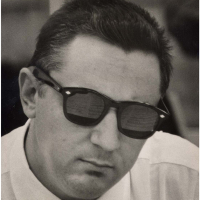
Marty Paich’s Spotify BioOne of the best-known arrangers of the post-World War II era, Marty Paich had much stronger jazz credentials than many of his peers, thanks to his active presence on the West Coast scene during the '50s. Paich was born in Oakland, CA, on January 23, 1925; he started out as a pianist, and was performing professionally at age 16. Along with the up-and-coming Pete Rugolo, he wrote arrangements for local bandleader Gary Nottingham. Tapped for military service in 1943, he continued to arrange while serving as the leader of the Army Air Corps band through 1946. Following his discharge, he used the G.I. Bill to further his musical education, enrolling at UCLA to study arranging under Mario Castelnuovo-Tedesco (who also helped train Nelson Riddle). He earned a master's degree from the Los Angeles Conservatory of Music in 1951, and quickly found work in the industry as both an arranger and pianist, working with Jerry Gray and Dan Terry early on.
Paich soon graduated to higher-profile gigs,… playing and arranging for Shelly Manne and Shorty Rogers (the latter on the big-band album Cool and Crazy) over 1953-1954, and also serving a stint as Peggy Lee's accompanist and musical director. He led his own groups as well, and in 1955 he began recording for a succession of labels that included Mode, Tampa, Candid (The Picasso of Big Band Jazz), Warner (I Get a Boot Out of You), and RCA Victor. He also toured with Dorothy Dandridge, and arranged (and performed on) the soundtrack to the Disney film Lady and the Tramp (1955). During the mid- to late '50s, Paich wrote arrangements for a who's who of West Coast jazz, including Chet Baker, Buddy Rich, Ray Brown, Dave Pell, and Stan Kenton, among others. Perhaps his most notable work came with Mel Tormé, whom he often backed with a ten-piece group dubbed the Dek-tette; the pairing resulted in the classic album Mel Tormé and the Marty Paich Dek-tette (aka Lulu's Back in Town), plus numerous other high-quality sessions through 1960. Additionally, Paich contributed the arrangements to altoist Art Pepper's 1959 masterpiece Art Pepper + Eleven: Modern Jazz Classics. Paich's work for both Tormé and Pepper reflected one of his greatest strengths as an arranger: making relatively small groups sound like full-size orchestras.
By the close of the '50s, Paich had already begun to branch out from his West Coast roots, arranging material for Ella Fitzgerald, Anita O'Day, and big-band leader Terry Gibbs. Around 1960, he elected to move away from his own recording career to focus on arranging for pop (and sometimes jazz) vocalists. Over the course of the decade, he worked with the likes of Ray Charles, Lena Horne, Helen Humes, Al Hirt, Andy Williams, Sammy Davis, Jr., Dean Martin, Frank Sinatra, Barbra Streisand, Astrud Gilberto, and Mahalia Jackson, among many others. He also composed music for films (including some animated Hanna-Barbera projects) and television shows, winning an Emmy for his work on Ironside. In the late '60s, he served as musical director on a succession of variety shows, including The Glen Campbell Good-Time Hour, The Smothers Brothers Comedy Hour (as Nelson Riddle's successor), and The Sonny and Cher Show.
After the early '70s, Paich's activity began to tail off, though he still worked sporadically as an orchestra conductor and string arranger, both on movie soundtracks and for artists like George Benson, Carly Simon, Elton John, and Kenny Loggins (a Grammy-nominated arrangement for "Only a Miracle"), not to mention his son David Paich's album rock supergroup Toto. He also helmed Sarah Vaughan's Songs of the Beatles project in 1980. In the late '80s, Paich reunited with a resurgent Tormé, reorganizing the Dek-tette for a series of highly acclaimed recordings and tours. He also continued to work on soundtracks into the '90s, frequently as a conductor and musical supervisor. Colon cancer claimed Paich's life on August 12, 1995. ~ Steve Huey, Rovi
Viberate is a music analytics platform built for A&Rs, artist managers, labels, booking agents, marketers, and artists.
It helps music professionals track artist growth, analyze audience data, monitor playlist activity, compare artists, follow song performance, and identify opportunities across the music market.
Public artist pages provide a free preview of selected artist data. Paid plans provide access to deeper analytics, historical data, charts, comparisons, playlist tools, exports, alerts, reports, and additional professional features.
Yes. Public Viberate artist pages provide selected artist analytics and music data for free.
Viberate also offers a 7-day free trial of the full platform. A credit card is required to start the trial. The trial includes access to the complete product so users can test deeper artist analytics, historical views, playlist insights, comparisons, charts, exports, alerts, and reporting features before choosing a paid plan.
Viberate provides artist analytics across streaming, playlists, social media, video, radio airplay, songs, and audience markets.
Users can analyze Spotify performance, Spotify and Apple Music playlists, YouTube activity, TikTok and Instagram growth, radio spins, song performance, audience locations, demographics, rankings, and overall artist momentum.
Artist profiles also connect to music charts, similar artists, and comparison tools, helping users benchmark performance and evaluate artists in context.
Viberate updates key artist and track data daily.
For followed artists and tracks, selected data is refreshed multiple times per day. This helps teams monitor playlist changes, streaming movement, audience growth, releases, and campaign performance with more current data.
Update frequency can vary depending on the metric and data source.
Yes. Viberate lets users compare up to five artists side by side across streaming, social media, audience, and engagement metrics.
Users can compare fanbase growth, audience demographics, locations, Spotify performance, social metrics, and other artist data over selected time periods.
Artist comparison can be used for A&R scouting, benchmarking, booking decisions, campaign planning, and evaluating artists with similar audiences or market positions.