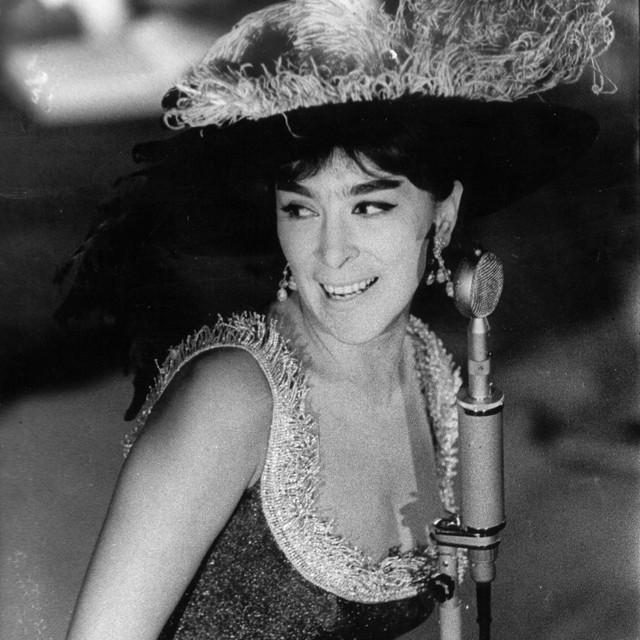
Marta Kubišová

European
Other European Music
Mainstream Pop
 Viberate Rank: 96279
 Viberate Rank: 96279
 Monthly ListenersFollowers
 Subscribers
 Followers
 Followers
 FansTop Spotify Songs
| Track | 7-Day Streams | |
|---|---|---|
1 | 36.14K | |
2 | 28.33K | |
3 | 19.91K | |
4 | 12.63K | |
5 | 9.39K |
Top YouTube VideosMonthly ListenersFeatured in Playlists| Playlist | Followers | |
|---|---|---|
1 |  CESKE VYPALOVACKY Aned | 64.69K |
2 | České hity 80’s & 90’s hdsrbinfez | 19.40K |
3 |  Czech songs schramhauser.jan | 13.60K |
4 |  Marek Ztracený největší hity Pavel | 13.37K |
5 | České hity / písničky CZ/SK 2023 Honza Štumpi | 12.49K |
Audience| City | Monthly Listeners | |
|---|---|---|
1 | | 59.74K |
2 | | 10.93K |
3 |  | 10.07K |
4 | | 3.74K |
5 | | 2.94K |
See full performance history, audience data, playlist activity, rankings, comparisons, and more in Viberate music analytics. Start with a free trial, then continue with a paid plan.
Marta Kubišová’s Spotify BioAlthough Marta Kubisová will probably always be listed as a singer and performer first, she came to prominence in a more political fashion, as one of the leading voices of protest against the Soviet-led invasion of Czechoslovakia in 1968. Born in 1942, Kubisová first came to the fore as a member of the legendary Czechoslovak pop group the Golden Kids in the 1960s. During the aforementioned Soviet incursion, Kubisová's song "Modlitba pro Martu" (Prayer for Marta) became one of the de facto anthems of resistance to the aggression of Russia. Blacklisting followed soon after, and once she had signed the anti-Communist Charter 77, Kubisová's career was effectively over. Fortunately, she was able to bear witness to the changes of 1989, when the Soviet power structure fell and the Czech Republic became a sovereign state under its own political and social power. Her first solo album, Songy a Balady, was released in 1969, and was followed -- thanks to the blacklisting -- by her second album,… Lampa, in 1990. A handful of albums and singles would follow to round out the 1990s, including a 1996 re-release of her debut, but by this time she was devoting much of her energy and interests to more social causes. In addition to her musical work, Kubisová is also an accomplished actress, appearing numerous times on television and in film both before and after her blacklisting. ~ Chris True, Rovi
Viberate is a music analytics platform built for A&Rs, artist managers, labels, booking agents, marketers, and artists.
It helps music professionals track artist growth, analyze audience data, monitor playlist activity, compare artists, follow song performance, and identify opportunities across the music market.
Public artist pages provide a free preview of selected artist data. Paid plans provide access to deeper analytics, historical data, charts, comparisons, playlist tools, exports, alerts, reports, and additional professional features.
Yes. Public Viberate artist pages provide selected artist analytics and music data for free.
Viberate also offers a 7-day free trial of the full platform. A credit card is required to start the trial. The trial includes access to the complete product so users can test deeper artist analytics, historical views, playlist insights, comparisons, charts, exports, alerts, and reporting features before choosing a paid plan.
Viberate provides artist analytics across streaming, playlists, social media, video, radio airplay, songs, and audience markets.
Users can analyze Spotify performance, Spotify and Apple Music playlists, YouTube activity, TikTok and Instagram growth, radio spins, song performance, audience locations, demographics, rankings, and overall artist momentum.
Artist profiles also connect to music charts, similar artists, and comparison tools, helping users benchmark performance and evaluate artists in context.
Viberate updates key artist and track data daily.
For followed artists and tracks, selected data is refreshed multiple times per day. This helps teams monitor playlist changes, streaming movement, audience growth, releases, and campaign performance with more current data.
Update frequency can vary depending on the metric and data source.
Yes. Viberate lets users compare up to five artists side by side across streaming, social media, audience, and engagement metrics.
Users can compare fanbase growth, audience demographics, locations, Spotify performance, social metrics, and other artist data over selected time periods.
Artist comparison can be used for A&R scouting, benchmarking, booking decisions, campaign planning, and evaluating artists with similar audiences or market positions.