Margaret Marshall

Classical
Opera
Choral
 Viberate Rank: 263830
 Viberate Rank: 263830
 Monthly ListenersFollowers
 Subscribers
 Followers
 Followers
 FansTop Spotify Songs
| Track | 7-Day Streams | |
|---|---|---|
1 | 4.31K | |
2 | 3.58K | |
3 | 3.09K | |
4 | 2.78K | |
5 | 2.58K |
Top YouTube VideosMonthly ListenersFeatured in Playlists| Playlist | Followers | |
|---|---|---|
1 |  This Is Haydn Spotify | 91.91K |
2 |  This is Vaughan Williams Spotify | 26.86K |
3 |  Mozart for Sleep Peaceful Classics | 14.86K |
4 |  Choir Classics Sony Classical & Jazz Sweden | 10.65K |
5 |  Mozart - Complete Chronological Catalogue based on Köchel catalogue K6 Ulysses' Classical | 9.54K |
Audience| City | Monthly Listeners | |
|---|---|---|
1 | | 1.38K |
2 |  | 1.37K |
3 |  | 1.23K |
4 |  | 1.18K |
5 |  | 1.07K |
See full performance history, audience data, playlist activity, rankings, comparisons, and more in Viberate music analytics. Start with a free trial, then continue with a paid plan.
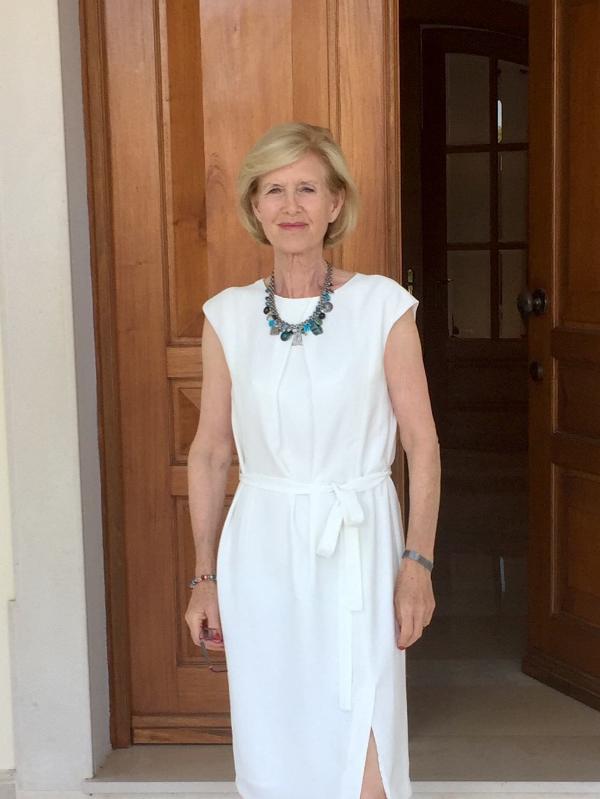
Margaret Marshall’s Spotify BioAn intelligent and musically perceptive artist, lyric soprano Margaret Marshall has excelled in the music of the Baroque period as readily as in Haydn, Mozart, and Strauss. She has become a formidable interpreter of the soprano parts in Britten's War Requiem, the masses of Bruckner, and Handel's Messiah. Popular with numerous conductors, she has made many recordings that are all representative of the repertory she does best. Marshall began her career after extensive training that included private study in Glasgow and at the Royal Scottish Academy of Music. Among the prominent singers with whom she worked were tenor Peter Pears and bass-baritone Hans Hotter. A first prize at Munich's International Competition in 1974 placed her in the public spotlight and concert engagements promptly followed, taking her to many of Europe's most celebrated venues. A recital debut at London's Wigmore Hall led to guest appearances with all of the major symphonies in the United Kingdom, as well as the Berl…in Philharmonic, the Orchestre de Paris, and in America, the Chicago and Boston symphonies and the New York Philharmonic. Only several years into her career, Marshall had already worked with such esteemed maestri as Muti, Mehta, Barenboim, Giulini, Haitink, and Abbado. Marshall's 1978 opera debut took place in Florence, where she sang Gluck's Euridice under the direction of Riccardo Muti. That engagement led to a recording of the role under the same conductor. Muti called for her when he conducted Le nozze di Figaro at Covent Garden, after which she performed the Countess at La Scala with the Scottish Opera and in Cologne. For her Salzburg debut in 1982 (as Fiordiligi), Muti was again on the podium and the soprano thereafter became a frequent guest at the famed festival. When she was introduced to the Vienna opera public in 1988, the role was once more Mozart's Countess. Other theaters that welcomed her included Berlin's Deutsche Oper, Hamburg's Staatsoper, Frankfurt, Cologne, Munich's Bayerischen Staatsopernchor, Toulouse, Zürich, and Parma. In addition to opera and orchestral appearances, Marshall has made a positive reputation as a recitalist, undertaking several American tours as well singing in many of Europe's best-known recital halls.
Viberate is a music analytics platform built for A&Rs, artist managers, labels, booking agents, marketers, and artists.
It helps music professionals track artist growth, analyze audience data, monitor playlist activity, compare artists, follow song performance, and identify opportunities across the music market.
Public artist pages provide a free preview of selected artist data. Paid plans provide access to deeper analytics, historical data, charts, comparisons, playlist tools, exports, alerts, reports, and additional professional features.
Yes. Public Viberate artist pages provide selected artist analytics and music data for free.
Viberate also offers a 7-day free trial of the full platform. A credit card is required to start the trial. The trial includes access to the complete product so users can test deeper artist analytics, historical views, playlist insights, comparisons, charts, exports, alerts, and reporting features before choosing a paid plan.
Viberate provides artist analytics across streaming, playlists, social media, video, radio airplay, songs, and audience markets.
Users can analyze Spotify performance, Spotify and Apple Music playlists, YouTube activity, TikTok and Instagram growth, radio spins, song performance, audience locations, demographics, rankings, and overall artist momentum.
Artist profiles also connect to music charts, similar artists, and comparison tools, helping users benchmark performance and evaluate artists in context.
Viberate updates key artist and track data daily.
For followed artists and tracks, selected data is refreshed multiple times per day. This helps teams monitor playlist changes, streaming movement, audience growth, releases, and campaign performance with more current data.
Update frequency can vary depending on the metric and data source.
Yes. Viberate lets users compare up to five artists side by side across streaming, social media, audience, and engagement metrics.
Users can compare fanbase growth, audience demographics, locations, Spotify performance, social metrics, and other artist data over selected time periods.
Artist comparison can be used for A&R scouting, benchmarking, booking decisions, campaign planning, and evaluating artists with similar audiences or market positions.