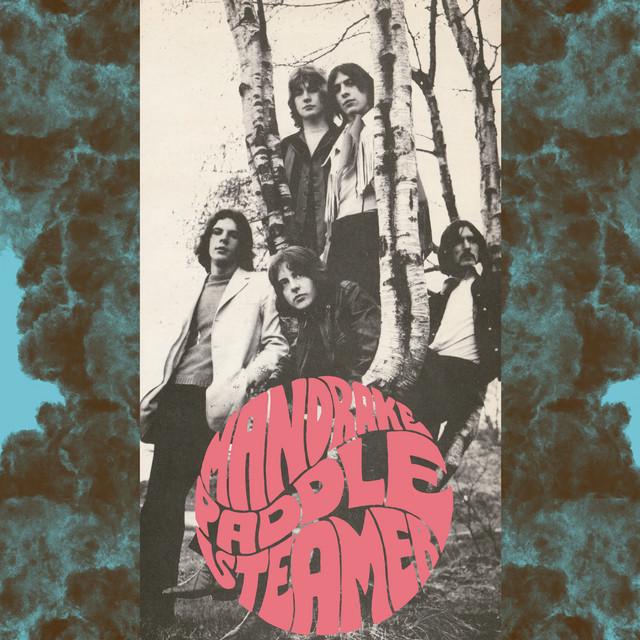
Mandrake Paddle Steamer

Rock
Psychedelic Rock
 Viberate Rank: 522795
 Viberate Rank: 522795
 Monthly ListenersFollowers
 Subscribers
 Followers
 Followers
 FansTop Spotify Songs
| Track | 7-Day Streams | |
|---|---|---|
1 | 68 | |
2 | 68 | |
3 | 24 | |
4 | 22 | |
5 | 11 |
Top YouTube VideosMonthly ListenersFeatured in Playlists| Playlist | Followers | |
|---|---|---|
1 |  El Sótano de Radio 3 Groovyfamily | 9.84K |
2 | 60s Psychedelic Trip andreas1965-71 | 8.21K |
3 | Psychedelic 60s Acid Rock & Heavy Psychadelia byggavdelningen | 5.51K |
4 |  '60s-'70s occult rock and horror folk 🧿 dialectic ego death 🧿 | 4.33K |
5 | Best Of Psych Sean Ono Lennon | 2.22K |
Audience| City | Monthly Listeners | |
|---|---|---|
1 | | 10 |
2 |  | 7 |
3 | | 5 |
4 | | 5 |
5 | | 4 |
See full performance history, audience data, playlist activity, rankings, comparisons, and more in Viberate music analytics. Start with a free trial, then continue with a paid plan.
Mandrake Paddle Steamer’s Spotify BioComprising Brian Engel (vocals), Martin Briley (b. London, England; guitar/vocals), Barry Nightingale (drums), Martin Hooker (keyboards) and Paul Riordan (bass/vocals), Mandrake Paddle Steamer were responsible for recording one of the most cherished singles of the psychedelic era - ‘Strange Walking Man’. Subsequently reissued by Bam Caruso in 1988, the song’s popularity has continued to revive interest in the band, and was eventually featured on a compilation CD issued by Forgotten Jewels Records in 1991. Unfortunately, Mandrake Paddle Steamer never received a similar level of acclaim in their era, and issued only one further single, ‘Sunlight Glide’, which was released on Parlophone Records in 1969 but only for the Swedish market. Engel left in August 1970, leaving Riordan and Briley to take over on vocals. David Potts subsequently replaced Nightingale on drums as the band shortened their name to Mandrake, but the departure of Briley hastened their demise. Engel and Briley joined up… again in the less celebrated Prowler and Liverpool Echo, the latter recording a single and an unreleased album, Liverpool Echo, for Spark Records in 1973. Briley then went on to play with Greenslade and enjoy a minor hit with the solo ‘Salt In My Tears’, before establishing himself as an in-demand session player and songwriter. Engel recorded two albums with Limey before joining the New Seekers.
Viberate is a music analytics platform built for A&Rs, artist managers, labels, booking agents, marketers, and artists.
It helps music professionals track artist growth, analyze audience data, monitor playlist activity, compare artists, follow song performance, and identify opportunities across the music market.
Public artist pages provide a free preview of selected artist data. Paid plans provide access to deeper analytics, historical data, charts, comparisons, playlist tools, exports, alerts, reports, and additional professional features.
Yes. Public Viberate artist pages provide selected artist analytics and music data for free.
Viberate also offers a 7-day free trial of the full platform. A credit card is required to start the trial. The trial includes access to the complete product so users can test deeper artist analytics, historical views, playlist insights, comparisons, charts, exports, alerts, and reporting features before choosing a paid plan.
Viberate provides artist analytics across streaming, playlists, social media, video, radio airplay, songs, and audience markets.
Users can analyze Spotify performance, Spotify and Apple Music playlists, YouTube activity, TikTok and Instagram growth, radio spins, song performance, audience locations, demographics, rankings, and overall artist momentum.
Artist profiles also connect to music charts, similar artists, and comparison tools, helping users benchmark performance and evaluate artists in context.
Viberate updates key artist and track data daily.
For followed artists and tracks, selected data is refreshed multiple times per day. This helps teams monitor playlist changes, streaming movement, audience growth, releases, and campaign performance with more current data.
Update frequency can vary depending on the metric and data source.
Yes. Viberate lets users compare up to five artists side by side across streaming, social media, audience, and engagement metrics.
Users can compare fanbase growth, audience demographics, locations, Spotify performance, social metrics, and other artist data over selected time periods.
Artist comparison can be used for A&R scouting, benchmarking, booking decisions, campaign planning, and evaluating artists with similar audiences or market positions.