Malcolm McLaren

Pop
Mainstream Pop
Indie Pop
 Viberate Rank: 57584
 Viberate Rank: 57584
 Monthly ListenersFollowers
 Subscribers
 Followers
 Followers
 FansTop Spotify Songs
| Track | 7-Day Streams | |
|---|---|---|
1 | 15.78K | |
2 | 11.11K | |
3 | 8.86K | |
4 | 7.86K | |
5 | 5.64K |
Top YouTube VideosMonthly ListenersFeatured in Playlists| Playlist | Followers | |
|---|---|---|
1 |  Best Tracks from Tarantino Films Spotify | 1.01M |
2 |  I Love My '80s Hip-Hop Spotify | 459.55K |
3 | Ignatious Pop 1 | 64.10K |
4 |  🗝️ IF U PLZ 🗝️ carolineplz | 63.72K |
5 |  Now 1 - 114 (1983 - 2023) Now That's What I Call Music 1 - 114 abundantmusic | 56.69K |
Audience| City | Monthly Listeners | |
|---|---|---|
1 | | 5.47K |
2 |  | 3.43K |
3 | | 2.09K |
4 |  | 2.07K |
5 | | 2.04K |
See full performance history, audience data, playlist activity, rankings, comparisons, and more in Viberate music analytics. Start with a free trial, then continue with a paid plan.
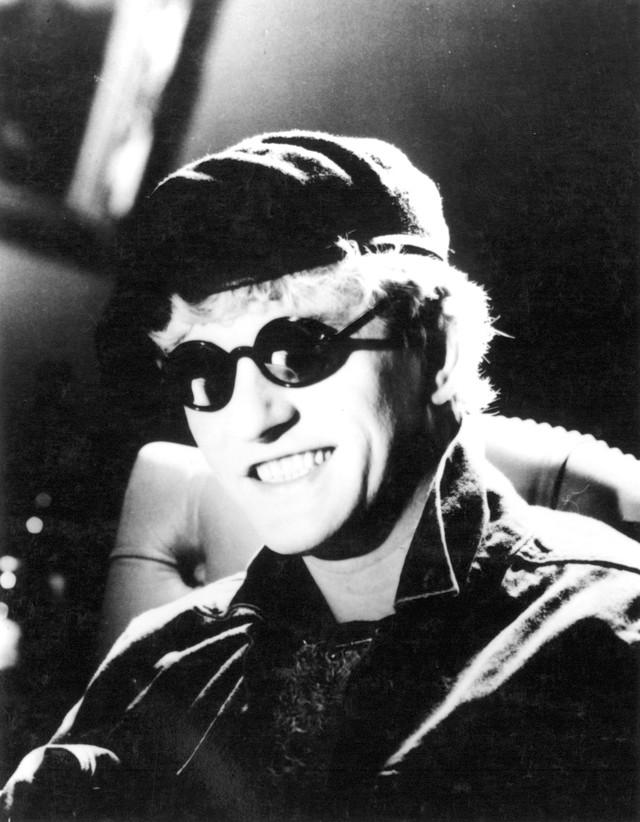
Malcolm McLaren’s Spotify BioMalcolm McLaren first came to prominence as the notorious manager of the Sex Pistols, the premier punk rock band of the late '70s. In the 1980s, McLaren turned performing artist himself, assembling eclectic recordings that were especially popular in Great Britain.
The son of Peter and Emily Isaacs McLaren, McLaren was actually raised by his grandmother, Rose Corre, who gave him home instruction until 1955. Like many who later entered the music business, he was educated in England's art colleges, lots of them. He attended St. Martin's College of Art (1963) and Harrow Art College (1964); was expelled from South East Essex (1965) and Chiswick Polytechnic (1966); and went to Croyden College of Art (1968) and finally Goldsmith's College (1969-1971). Meanwhile, he became especially interested in the obscure French Situationist international movement, which advocated provocative, even absurd actions both as political statement and performance art. The movement was founded in the 1950s and… gained its greatest attention during political upheavals in France in 1968 before dissolving. McLaren, who tried unsuccessfully to get to Paris during the May 1968 riots, would apply Situationist ideas to the field of pop promotion. (A good source for information on the Situationists and McLaren's adaptation of their teachings can be found in Greil Marcus' book Lipstick Traces: A Secret History of the Twentieth Century [1989].)
While attending Goldsmith's, McLaren began designing clothes, and after leaving college without a degree he opened his first London boutique in 1972. He and partner Vivienne Westwood were also employed designing costumes for such films as Mahler and That'll Be the Day (both 1974). While in New York at a boutique fair, McLaren met the members of the proto-punk group the New York Dolls, and in late 1974, he took over their management, dressing them in red leather and using the Soviet Union's hammer-and-sickle symbol in their stage set and publicity photographs. The concept was not well suited to America, where Communism remained an anathema, but it had no great impact on the career of the Dolls, who were on their last legs at that point, anyway. McLaren returned to the London clothing business in May 1975 and used what he'd learned with the Dolls in helping to assemble the Sex Pistols.
The extent to which McLaren instigated the Sex Pistols' brief, flamboyant career has been much debated. From their first record release in November 1976 to their breakup in January 1978, they were regularly found on both the record charts and the front pages of Britain's tabloids, renowned by fans for songs like "Anarchy in the U.K." and "God Save the Queen" and condemned by detractors as examples of moral turpitude. In 1979, the documentary film The Great Rock 'n' Roll Swindle suggested that McLaren had planned it all; he made his recording debut on the soundtrack album singing "You Need Hands."
His reputation as a manager established, McLaren began looking for other British talent to handle, briefly settling on the then-unknown Adam Ant before spiriting away Ant's backing band and using it to support a 14-year-old Burmese singer he had discovered, Annabella Lwin, in a band called Bow Wow Wow. McLaren's involvement extended to writing their debut single, "C'30, C'60, C'90, Go," a British Top 40 hit in 1980. "Go Wild in the Country" (lyrics by McLaren) and a remake of the Strangeloves hit "I Want Candy" hit the British Top Ten in 1982, but the band broke up in 1983, though not before McLaren tried adding a second singer, George O'Dowd, dubbed Lieutenant Lush. (O'Dowd, later known as Boy George, went on to form Culture Club.)
In the meantime, McLaren began making his own records, beginning with the single "Buffalo Gals," which combined traditional folk music with hip-hop. Credited to Malcolm McLaren & the World's Famous Supreme Team, it became a Top Ten hit in the U.K., paving the way for the late 1982 album Duck Rock, which reached the Top 20 and produced a Top 40 hit in "Soweto" and a Top Five hit in "Double Dutch." Both "Buffalo Gals" and "Double Dutch" made the U.S. dance charts in 1983, and in February 1984 the remix mini-LP D'Ya Like Scratchin' gave McLaren his first American album chart entry. McLaren next turned to opera, recording an adaptation of "Madame Butterfly" that made the British Top 20 in 1984; it introduced his second full-length album, Fans. Released in 1985, Swamp Thing was a contractual obligation collection of outtakes issued while its creator had moved to Hollywood to try to make his mark in the film business. He returned to music in 1989, signing to Epic Records for Waltz Darling, which produced Top 40 U.K. hits in the title track and "Something's Jumpin' in Your Shirt." The album featured guest vocalists as well as star instrumentalists Jeff Beck and Bootsy Collins.
Paris, released in Europe in 1994, marked its creator's move to France. In October 1998, a re-recording of "Buffalo Gals," "Buffalo Gals Stampede," credited to Malcolm McLaren & the World Famous Supreme Team Versus Rakim and Roger Sanchez, reached the British charts. During the 2000s McLaren was involved in the film and art world, including as co-producer of the movie adaptation of Eric Schlosser’s book Fast Food Nation. At the close of the decade he battled cancer, with his condition remaining undisclosed to the world until a deterioration in his condition led him to a clinic in Switzerland, where he died of mesothelioma on April 8, 2010 at the age of 64. His film montage/pastiche Paris: Capital of the 21st Century had received its U.S. premiere at the Swiss Institute in New York two months previously, on February 15. ~ William Ruhlmann, Rovi
Viberate is a music analytics platform built for A&Rs, artist managers, labels, booking agents, marketers, and artists.
It helps music professionals track artist growth, analyze audience data, monitor playlist activity, compare artists, follow song performance, and identify opportunities across the music market.
Public artist pages provide a free preview of selected artist data. Paid plans provide access to deeper analytics, historical data, charts, comparisons, playlist tools, exports, alerts, reports, and additional professional features.
Yes. Public Viberate artist pages provide selected artist analytics and music data for free.
Viberate also offers a 7-day free trial of the full platform. A credit card is required to start the trial. The trial includes access to the complete product so users can test deeper artist analytics, historical views, playlist insights, comparisons, charts, exports, alerts, and reporting features before choosing a paid plan.
Viberate provides artist analytics across streaming, playlists, social media, video, radio airplay, songs, and audience markets.
Users can analyze Spotify performance, Spotify and Apple Music playlists, YouTube activity, TikTok and Instagram growth, radio spins, song performance, audience locations, demographics, rankings, and overall artist momentum.
Artist profiles also connect to music charts, similar artists, and comparison tools, helping users benchmark performance and evaluate artists in context.
Viberate updates key artist and track data daily.
For followed artists and tracks, selected data is refreshed multiple times per day. This helps teams monitor playlist changes, streaming movement, audience growth, releases, and campaign performance with more current data.
Update frequency can vary depending on the metric and data source.
Yes. Viberate lets users compare up to five artists side by side across streaming, social media, audience, and engagement metrics.
Users can compare fanbase growth, audience demographics, locations, Spotify performance, social metrics, and other artist data over selected time periods.
Artist comparison can be used for A&R scouting, benchmarking, booking decisions, campaign planning, and evaluating artists with similar audiences or market positions.