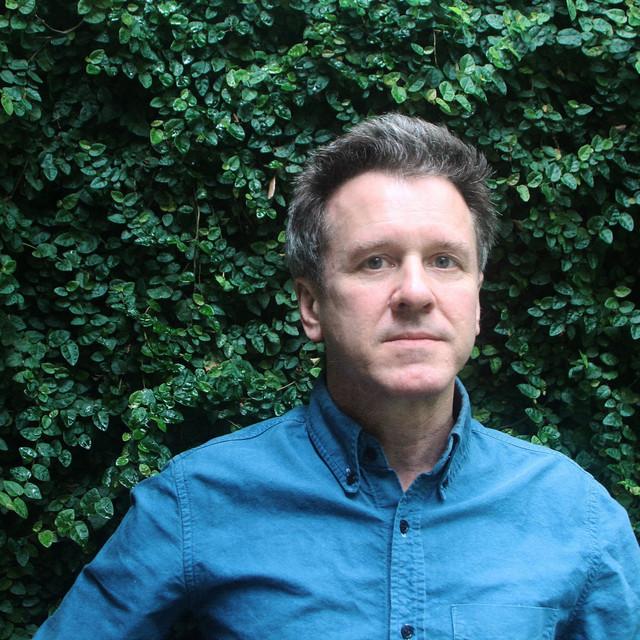
Mac McCaughan

Rock
Indie Rock
 Viberate Rank: 391814
 Viberate Rank: 391814
 Monthly ListenersFollowers
 Subscribers
 Followers
 Followers
 FansTop Spotify Songs
| Track | 7-Day Streams | |
|---|---|---|
1 | 957 | |
2 | 374 | |
3 | 307 | |
4 | 263 | |
5 | 221 |
Top YouTube VideosMonthly ListenersFeatured in Playlists| Playlist | Followers | |
|---|---|---|
1 | space rock & psychedelia Edson Alejandro Adame | 8.05K |
2 |  Urban Outfitters | IYKYK: New Releases Urban Outfitters | 6.98K |
3 |  KEXP's Song of the Day 2021 KEXP | 5.64K |
4 |  KEXP's Song of the Day 2017 KEXP | 5.40K |
5 |  dublab: The Sounds of Now dublab | 5.05K |
Audience| City | Monthly Listeners | |
|---|---|---|
1 | | 78 |
2 | | 74 |
3 | | 62 |
4 | | 43 |
5 | | 42 |
See full performance history, audience data, playlist activity, rankings, comparisons, and more in Viberate music analytics. Start with a free trial, then continue with a paid plan.
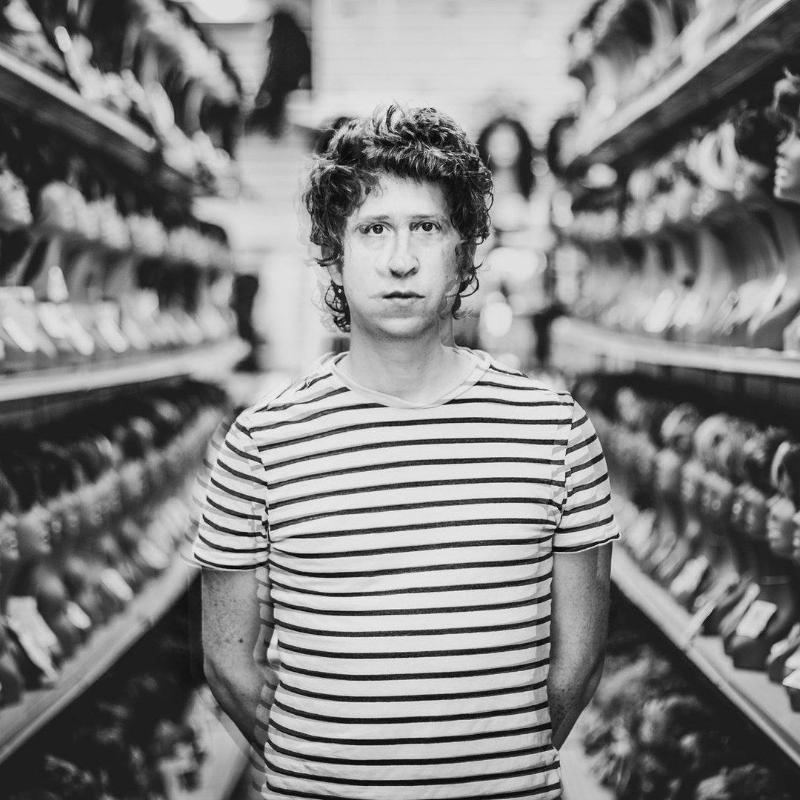
Mac McCaughan’s Spotify BioIndie rock icon Mac McCaughan made his name as a vocalist and songwriter of the band Superchunk, helping to guide them through a long, successful career on the back of his gut wrenchingly honest songs and splitting-at-the-seams vocals. Alongside that, he co-founded Merge, one of the most successful independent record labels to ever press wax. As if that weren't enough, his long-lived side project Portastatic released a string of increasingly more accomplished records and he's a solid collaborator whose range stretches from teaming with Robert Pollard in Go Back Snowball to recording an album of improvised synthesizer and harp duets with Mary Lattimore. Working under his own name in the 2010's he began to explore synthesizer music, adding it as a spice on 2015's Non-Believers, then splitting the ticket between keyboard compositions and indie rock on 2021's The Sound of Yourself. No matter the band, the style or enterprise, McCaughan's passion never dims and because of this, his bands,… his songs, his inimitable voice, and his still-going-strong label form a rock-solid cornerstone of indie rock.
Born in Ft. Lauderdale, Florida on July 12, 1967, Ralph Lee "Mac" McCaughan was 12 years old when his family moved to Durham, North Carolina. Young McCaughan was a fan of classic rock acts like AC/DC, Led Zeppelin, and the Who, and while in high school he caught an all-ages show featuring a pair of local hardcore bands, the Ugly Americans and A Number of Things, and he was soon checking out adventurous punk bands such as Minor Threat, Hüsker Dü, and the Minutemen. McCaughan formed a band called the Slushpuppies, featuring fellow punk convert Laura Ballance on bass, and went on to play guitar with A Number of Things. When he moved to New York City to attend Columbia University. McCaughan became frustrated with how hard it was to have a band there, and in 1987 he took time off from college and moved to Chapel Hill, a college town not far from Durham.
McCaughan soon re-formed the Slushpuppies with Ballance and started Merge Records to document the bands on the growing Chapel Hill scene. After putting out a cassette by Bricks (a short-lived project featuring McCaughan, Andrew Webster, and Laura Cantrell) and a handful of 7" singles, McCaughan and Ballance formed a new band with Mac on guitar and vocals, Cantrell on bass, Jack McCook on guitar, and Chuck Garrison on drums. Naming the band Chunk after Garrison's nickname, they cut a three-song EP that was released in 1989. After discovering a band in New York was already using the name Chunk, the group changed its name to Superchunk, and its first single using the new name, a tunefully ferocious rant against a lazy co-worker called "Slack Motherfucker," became an underground smash. Superchunk struck a deal with Matador Records, and released their self-titled debut album in 1990. Their second LP, 1991's No Pocky for Kitty, clicked with critics and fans, and the group became a growing presence on the indie rock scene. When Matador made a deal with Atlantic Records to give some of their artists major-label distribution, Superchunk parted ways with the label to maintain their independence, and with 1994's Foolish, they became Merge's flagship act.
McCaughan, meanwhile, stayed busy running Merge and pursuing side projects when not occupied with Superchunk. He played drums on the first album by Seam, 1992's Headsparks, and that same year he agreed to release a handful of lo-fi home recordings using the band name Portastatic on 18 Wheeler Records, a tiny label run by friend and fan Tom Scharpling (who would later become the host of the popular radio show The Best Show on WFMU). After cutting more songs, McCaughan issued a Portastatic album on Merge, I Hope Your Heart Is Not Brittle. In 2001, Superchunk went on hiatus and Portastatic became McCaughan's primary musical project, recording and touring regularly with a rotating cast of musicians. In 2002, he joined forces with Robert Pollard of Guided by Voices to form the ad-hoc group Go Back Snowball, who released the album Calling Zero in 2002.
In 2010, Superchunk returned to active duty with the album Majesty Shredding, and I Hate Music followed in 2013. By this time, Merge had grown impressively from a scrappy punk rock label into one of America's most successful independent record companies, over the years releasing albums by Neutral Milk Hotel, Bob Mould, Lambchop, the Mountain Goats, M. Ward, She & Him, the Magnetic Fields, Spoon, and Ex Hex. Merge enjoyed its greatest success with the Arcade Fire, pushing their 2007 album The Neon Bible to number two on the Billboard album charts, and their next two long-players, 2010's The Suburbs and 2013's Reflektor, all the way to number one. The same year that Merge celebrated its 25th anniversary, McCaughan set out to blaze a new trail and released his first solo album, the synth pop-influenced Non-Believers, in May 2015. He delved even further into electronic experimentation with Staring at Your Hologram, an instrumental album that deconstructed and remixed elements of Non-Believers, twisting the songs into far more abstract forms. The record was released in November of 2015. The next year McCaughan collaborated with choreographer Sarah Honer for a performance at that year's Moogfest. He played a network of synths and drum machines while Honer and a team of dancers enacted complex movements to the exploratory sounds. Studio recordings of the synth pieces were released in August of 2016 as Music for POMS, both digitally and as a limited-edition cassette. As Superchunk released a throwback album of the kind of high-energy fuzz pop they were known for with 2017's What a Time to Be Alive, McCaughan furthered his deepening fascination with synth sounds, collaborating with ambient harpist Mary Lattimore on a series of improvisations that was released in 2019 as the New Rain Duets album by the Three Lobed label. Before Superchunk got another chance to record, McCaughan finished his second solo album, The Sound of Yourself. The record alternates the kind of synthesizer pieces he had been exploring with a batch of thoughtful indie rock ballads and features appearances by many Merge artists such as Mackenzie Scott of TORRES and Matt Douglas of the Mountain Goats, along with members of Yo La Tengo. ~ Mark Deming, Rovi
Viberate is a music analytics platform built for A&Rs, artist managers, labels, booking agents, marketers, and artists.
It helps music professionals track artist growth, analyze audience data, monitor playlist activity, compare artists, follow song performance, and identify opportunities across the music market.
Public artist pages provide a free preview of selected artist data. Paid plans provide access to deeper analytics, historical data, charts, comparisons, playlist tools, exports, alerts, reports, and additional professional features.
Yes. Public Viberate artist pages provide selected artist analytics and music data for free.
Viberate also offers a 7-day free trial of the full platform. A credit card is required to start the trial. The trial includes access to the complete product so users can test deeper artist analytics, historical views, playlist insights, comparisons, charts, exports, alerts, and reporting features before choosing a paid plan.
Viberate provides artist analytics across streaming, playlists, social media, video, radio airplay, songs, and audience markets.
Users can analyze Spotify performance, Spotify and Apple Music playlists, YouTube activity, TikTok and Instagram growth, radio spins, song performance, audience locations, demographics, rankings, and overall artist momentum.
Artist profiles also connect to music charts, similar artists, and comparison tools, helping users benchmark performance and evaluate artists in context.
Viberate updates key artist and track data daily.
For followed artists and tracks, selected data is refreshed multiple times per day. This helps teams monitor playlist changes, streaming movement, audience growth, releases, and campaign performance with more current data.
Update frequency can vary depending on the metric and data source.
Yes. Viberate lets users compare up to five artists side by side across streaming, social media, audience, and engagement metrics.
Users can compare fanbase growth, audience demographics, locations, Spotify performance, social metrics, and other artist data over selected time periods.
Artist comparison can be used for A&R scouting, benchmarking, booking decisions, campaign planning, and evaluating artists with similar audiences or market positions.