Luke Solomon

Electronic
House
Disco house
 Viberate Rank: 124734
 Viberate Rank: 124734
 Monthly ListenersFollowers
 Subscribers
 Followers
 Followers
 FansTop Spotify SongsTop YouTube VideosMonthly ListenersFeatured in Playlists
| Playlist | Followers | |
|---|---|---|
1 |  Honey Dijon's track IDs Spotify | 76.26K |
2 |  Aluna's track IDs Spotify | 38.69K |
3 |  Martin Garrix Favorites Martin Garrix | 19.30K |
4 |  Funky Disco House Myron Scholten | 16.79K |
5 |  Toy Tonics westheoperative | 15.73K |
Audience| City | Monthly Listeners | |
|---|---|---|
1 | | 1.08K |
2 |  | 481 |
3 | | 421 |
4 | | 333 |
5 |  | 299 |
See full performance history, audience data, playlist activity, rankings, comparisons, and more in Viberate music analytics. Start with a free trial, then continue with a paid plan.
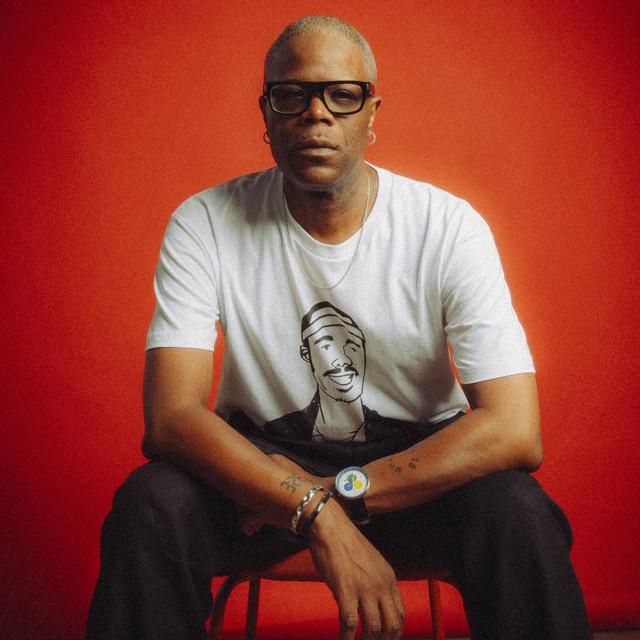
Luke Solomon’s Spotify BioLuke Solomon is an underacknowledged yet important figure in the world of dance music. The London-based DJ and producer has released countless records of sophisticated yet accessible house music, reflecting influences including disco, post-punk, and jazz. He's partially responsible for two productive, well-respected house labels: Classic, which he co-founded with Chicago house legend Derrick Carter in 1995, and Music for Freaks, co-run with Justin Harris since 1999. Solomon and Harris are also behind left-field house duo Freaks, who have released four full-lengths, beginning with 2000's The Beat Diaries, and dozens of singles, including "The Creeps (Get on the Dancefloor)," which hit the Top 10 of the U.K. singles chart in 2007. Solomon has released several mix CDs, including 2001's Thanks for Coming By... (with Carter), in addition to ambitious solo albums The Difference Engine (2008) and Timelines (2013). He's also served as an A&R director for Defected Records, helping propel… numerous underground club tracks toward chart success and even Grammy nominations. Solomon is a member of disco-house collective Powerdance, whose debut LP The Lost Art of Getting Down appeared in 2017.
Solomon first began to DJ as a Middlesex University student during the early '90s. After playing a gig with Derrick Carter, the two became friends, and launched Classic in 1995. The label quickly lived up to its name, releasing seminal records by the likes of Herbert, DJ Sneak, and Gemini. Solomon also started a long-lasting partnership with Justin Harris; in 1996, the two began releasing records as Robotic Movement and the Electric Imbalance Allstars, but it was their Freaks project which took off. After several singles on Phono and Plastic during 1996-1997, and following the release of Solomon's 1998 mix-CD In Motion, the duo released several singles on their newly established Music for Freaks label in 1999; "Turning Orange" was additionally released by Playhouse, and became a club hit. Freaks' debut full-length, The Beat Diaries, appeared in 2000, swiftly followed by Meanwhile, Back at the Disco... in 2001. Also during the year, Solomon and Carter released the double-CD mix Thanks for Coming By... on Classic.
By 2003, Freaks had become highly prolific, with a growing catalog of original productions as well as remixes for the Streets, the Human League, Markus Nikolai ("Bushes"), and dozens of others. Third Freaks album The Man Who Lived Underground appeared that year, and left-field electro single "The Creeps (You're Giving Me)," released by International Deejay Gigolo Records, became a major underground hit. Four years later, an updated version of the track, retitled "The Creeps (Get on the Dancefloor)," was released by Ministry of Sound-affiliated Data Records, reaching number nine on the U.K. singles chart. By this time, Solomon had started his solo career. Following 2005 label retrospective A Classic Decade, a double-CD mixed by himself and Carter, Solomon released several EPs with titles like Ghouls, Ghosts, and Monsters on labels such as Rekids, Crosstown Rebels, and Cajual throughout 2006 and 2007. His first solo album, The Difference Engine, was released by Rekids in 2008; updated version The Difference Engine Redux followed two years later. Solomon also co-produced and co-wrote Damian Lazarus' 2009 full-length Smoke the Monster Out, along with Arthur Jeffes (Penguin Cafe).
In 2011, Classic began regularly issuing vinyl again, after mainly existing as a digital label for several years. Solomon released full-length Minor Digital Experiment under his occasional alias the Digital Kid in 2012, in addition to mix CD Cutting Edge. Solomon's second album under his own name, Timelines, appeared in 2013. In contrast to the Detroit techno and post-punk influences of his first full-length, Timelines was filled with lushly arranged vocal house tunes. Freaks released their fourth album, Psych, on Italian label Rebirth in 2014. Solomon and Freaks continued regularly issuing singles on Classic and Music for Freaks as well as labels like Optimo Trax and Circus Company. Additionally, Solomon has mixed several volumes of his Unfinished Business series, as well as a 2015 mix on Strictly Rhythm (Strictly Jacked!) and two volumes of 4 to the Floor Presents Nu Groove, surveying the catalog of the short-lived but highly influential New York house label Nu Groove Records. Solomon also participated in Powerdance, a nu-disco collective featuring Al Doyle (Hot Chip, LCD Soundsystem), Danny Ward (Moodymanc, 2020 Soundsystem), James Duncan, and others. Their debut full-length, The Lost Art of Getting Down, was self-released in 2017. ~ Paul Simpson, Rovi
Viberate is a music analytics platform built for A&Rs, artist managers, labels, booking agents, marketers, and artists.
It helps music professionals track artist growth, analyze audience data, monitor playlist activity, compare artists, follow song performance, and identify opportunities across the music market.
Public artist pages provide a free preview of selected artist data. Paid plans provide access to deeper analytics, historical data, charts, comparisons, playlist tools, exports, alerts, reports, and additional professional features.
Yes. Public Viberate artist pages provide selected artist analytics and music data for free.
Viberate also offers a 7-day free trial of the full platform. A credit card is required to start the trial. The trial includes access to the complete product so users can test deeper artist analytics, historical views, playlist insights, comparisons, charts, exports, alerts, and reporting features before choosing a paid plan.
Viberate provides artist analytics across streaming, playlists, social media, video, radio airplay, songs, and audience markets.
Users can analyze Spotify performance, Spotify and Apple Music playlists, YouTube activity, TikTok and Instagram growth, radio spins, song performance, audience locations, demographics, rankings, and overall artist momentum.
Artist profiles also connect to music charts, similar artists, and comparison tools, helping users benchmark performance and evaluate artists in context.
Viberate updates key artist and track data daily.
For followed artists and tracks, selected data is refreshed multiple times per day. This helps teams monitor playlist changes, streaming movement, audience growth, releases, and campaign performance with more current data.
Update frequency can vary depending on the metric and data source.
Yes. Viberate lets users compare up to five artists side by side across streaming, social media, audience, and engagement metrics.
Users can compare fanbase growth, audience demographics, locations, Spotify performance, social metrics, and other artist data over selected time periods.
Artist comparison can be used for A&R scouting, benchmarking, booking decisions, campaign planning, and evaluating artists with similar audiences or market positions.