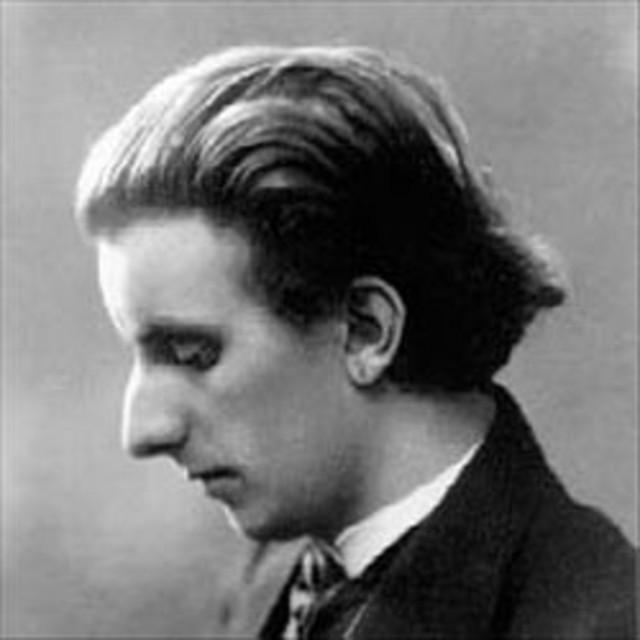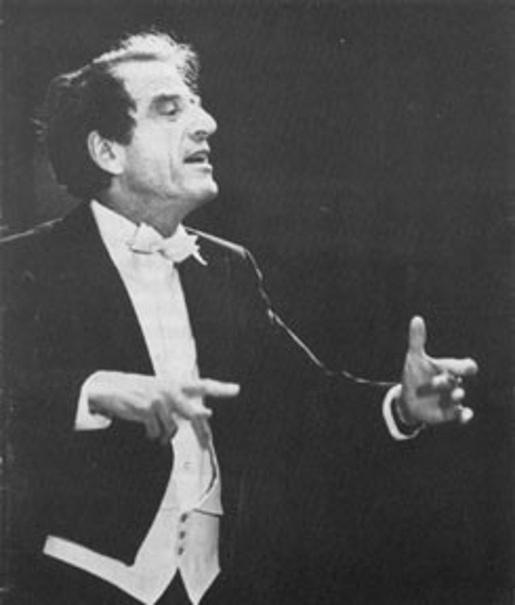
Lukas Foss

Classical
Chamber Music
 Viberate Rank: 472703
 Viberate Rank: 472703
 Monthly ListenersFollowers
 Subscribers
 Followers
 Followers
 FansTop Spotify SongsTop YouTube VideosMonthly ListenersFeatured in Playlists
| Playlist | Followers | |
|---|---|---|
1 |  Every Track Star* Song Track Star* | 36.85K |
2 |  NPR Classical NPR Music | 14.43K |
3 |  THE Complete Deutsche Grammophon ESSENTIALS Themistoklis Pantelopoulos | 3.20K |
4 |  Alex Ross's The Rest is Noise aidanosu | 2.70K |
5 |  Silent Film Music synnöve_granat | 2.10K |
Audience| City | Monthly Listeners | |
|---|---|---|
1 | | 28 |
2 |  | 26 |
3 | | 20 |
4 | | 17 |
5 |  | 14 |
See full performance history, audience data, playlist activity, rankings, comparisons, and more in Viberate music analytics. Start with a free trial, then continue with a paid plan.
Lukas Foss’ Spotify BioComposer, conductor, and educator Lukas Foss was an eclectic figure who contributed profoundly to the appreciation of 20th century concert music. His compositions reflected many of the current styles of his time, and he constantly explored new possibilities. Foss held high-profile conducting positions in the U.S. and elsewhere, introducing audiences to a variety of contemporary styles. He was extremely influential as an educator, and his music continued to attract new audiences in the 21st century; a collection of his works conducted by JoAnn Falletta, for whom he served as a mentor, was issued by the Buffalo Philharmonic in 2024.
Foss was born Lukas Fuchs in Berlin on August 15, 1922. His father, Martin Fuchs (later Martin Foss), was a noted philosopher. Lukas began his musical studies there with Julius Goldstein, but in 1933, his Jewish family fled Germany. In Paris, he studied piano with Lazare Levy, composition with Noel Gallon, orchestration with Felix Wolfes, and flute with Marcel… Moyse. The family moved on to the U.S. in 1937, taking the name Foss there. Lukas Foss studied at the Curtis Institute in Philadelphia, where one of his classmates was Leonard Bernstein; the two became lifelong friends. Foss later studied composition with Paul Hindemith at Yale and conducting with Serge Koussevitzky at the Berkshire Music Center from 1939 to 1943. By that time, his compositional career was already well underway, and his cantata Prairie won a New York Music Critics Award in 1942.
That work, like other early compositions by Foss, reflected the populist-neoclassic style of Aaron Copland but increasingly often struck out in new directions. Important early compositions were his Symphony No. 1 of 1944 and his opera The Jumping Frog of Calaveras County, based on a story by Mark Twain (1949). Foss served as the pianist of the Boston Symphony from 1944 to 1950 while focusing on composition during time off; he became the youngest composer ever to have received a Guggenheim Fellowship in 1945, and during 1950 and 1951, he was a fellow at the American Academy in Rome, Italy. Foss succeeded Arnold Schoenberg as a composition professor at the University of California at Los Angeles in 1953, teaching both composition and conducting. The list of his prominent students in both fields is long.
Foss continued to make time for conducting, serving from 1963 to 1970 as music director and conductor of the Buffalo Philharmonic Orchestra and also founding and directing an influential Center for Creative and Performing Arts in Buffalo. He was conductor of the Brooklyn Philharmonic from 1971 to 1990 and continued to serve there as conductor laureate. Foss later conducted the Kol Israel Orchestra in Jerusalem and the Milwaukee Symphony (1981-1986). Some of his compositions were atonal and showed the influence of serialism or chance procedures; many of his later works were eclectic or polystylistic. Foss taught composition and theory at Boston University beginning in 1991, and he continued to guest conduct orchestras in the U.S. and Europe. His later compositions included the Renaissance Concerto (1985) for flute and orchestra and the Concerto for band (2002). Foss struggled with Parkinson's disease in later years but remained active. Foss died in New York on February 1, 2009. ~ James Manheim, Rovi
Viberate is a music analytics platform built for A&Rs, artist managers, labels, booking agents, marketers, and artists.
It helps music professionals track artist growth, analyze audience data, monitor playlist activity, compare artists, follow song performance, and identify opportunities across the music market.
Public artist pages provide a free preview of selected artist data. Paid plans provide access to deeper analytics, historical data, charts, comparisons, playlist tools, exports, alerts, reports, and additional professional features.
Yes. Public Viberate artist pages provide selected artist analytics and music data for free.
Viberate also offers a 7-day free trial of the full platform. A credit card is required to start the trial. The trial includes access to the complete product so users can test deeper artist analytics, historical views, playlist insights, comparisons, charts, exports, alerts, and reporting features before choosing a paid plan.
Viberate provides artist analytics across streaming, playlists, social media, video, radio airplay, songs, and audience markets.
Users can analyze Spotify performance, Spotify and Apple Music playlists, YouTube activity, TikTok and Instagram growth, radio spins, song performance, audience locations, demographics, rankings, and overall artist momentum.
Artist profiles also connect to music charts, similar artists, and comparison tools, helping users benchmark performance and evaluate artists in context.
Viberate updates key artist and track data daily.
For followed artists and tracks, selected data is refreshed multiple times per day. This helps teams monitor playlist changes, streaming movement, audience growth, releases, and campaign performance with more current data.
Update frequency can vary depending on the metric and data source.
Yes. Viberate lets users compare up to five artists side by side across streaming, social media, audience, and engagement metrics.
Users can compare fanbase growth, audience demographics, locations, Spotify performance, social metrics, and other artist data over selected time periods.
Artist comparison can be used for A&R scouting, benchmarking, booking decisions, campaign planning, and evaluating artists with similar audiences or market positions.