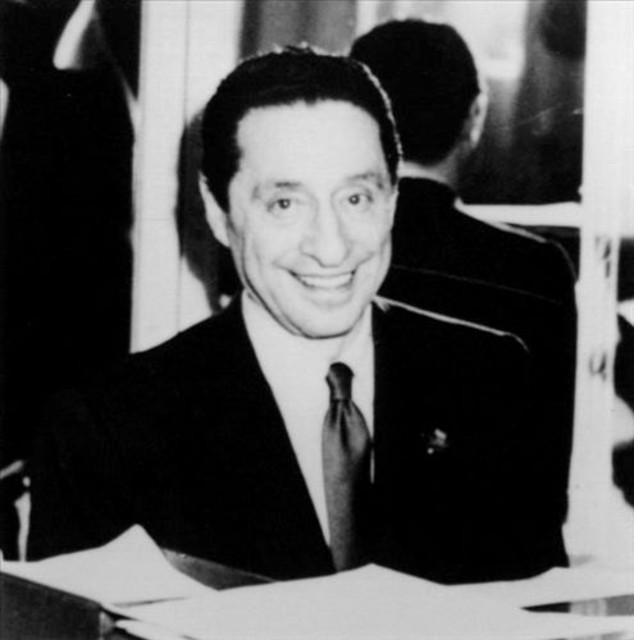
Lowell Mason

Classical
Choral
 Viberate Rank: 192017
 Viberate Rank: 192017
 Monthly ListenersFollowers
 Subscribers
 Followers
 Followers
 FansTop Spotify Songs
| Track | 7-Day Streams | |
|---|---|---|
1 | 36.53K | |
2 | 30.54K | |
3 | 14.52K | |
4 | 7.92K | |
5 | 5.38K |
Top YouTube Videos| Video | 7-Day Views | |
|---|---|---|
1 | 14 |
Monthly ListenersFeatured in Playlists| Playlist | Followers | |
|---|---|---|
1 |  Classical Crossover Spotify | 437.33K |
2 |  Classical Christmas Spotify | 303.98K |
3 |  Christmas 2026 🎄 Greatest Hits & Holiday Classics Mega Hits | 272.80K |
4 |  Christmas Carols Spotify | 216.27K |
5 |  Christmas Choir Spotify | 87.02K |
Audience| City | Monthly Listeners | |
|---|---|---|
1 |  | 2.67K |
2 |  | 1.70K |
3 |  | 1.65K |
4 |  | 1.45K |
5 | | 1.26K |
See full performance history, audience data, playlist activity, rankings, comparisons, and more in Viberate music analytics. Start with a free trial, then continue with a paid plan.
Lowell Mason’s Spotify BioDuring America's early years, there was a great deal of music-making, but little or no organized musical instruction. This composer of hymns, anthologist, and church choir conductor was a pioneer who worked through publishing, church organizations, and school systems to provide an invaluable direction.
Growing up in a musical family, Lowell Mason received his first training at the age of 13 in a singing school run by Amos Albee, who himself had gathered hymns into the collection The Norfolk Collection of Sacred Harmony in 1805. Mason also studied with Oliver Shaw, a blind composer of hymns and ballads. Only a few years later, Mason was directing a choir and leading the town band. He left for Savannah, GA, in 1812 and became a partner in a dry goods business and a bank clerk. He was also involved in church work and a missionary society. In 1817, he began to study composition and theory with Frederick L. Abel from Germany. His first hymns and anthems were composed then. He continued to… conduct choirs and play the organ in churches until 1827.
Mason's first collection of hymns and anthems was published in 1822. Up to 1872, he published over 48 collections of this type, as well as over 11 secular collections and at least 17 children's collections and musical exercise books. Thousands of individual pieces are contained within these volumes. The actual number of publications is difficult to determine because many of the books were published anonymously. From 1827 to 1832, Mason was president and music director of the Boston Handel and Haydn Society. In the summer of 1834, under the auspices of the Boston Academy of Music, Mason and other instructors held classes for music teachers, leading to music being taught experimentally in four Boston public schools in 1837 and as part of the permanent curriculum in 1838. From 1837 to 1845, Mason served as superintendent of music, taking off for one year to visit Europe for the first time, where he observed their educational systems and lecturing on congregational singing and his theories of musical education.
In the nineteenth century, a "proper" musical education was guided by European, mostly German, models. Mason's aesthetic preferences, as well as those of the early immigrant Moravian composers and others, were also along this line. Their actions served to spread musical knowledge, but unfortunately also took away appreciation of the power of native hymnody, such as shape-note singing in the southern states and the works of Billings and others. However, today the situation has for the most part changed, in the best American spirit, toward embracing all of the various lights of these early days. In 1855, Mason was awarded an honorary doctorate in music from New York University.
Viberate is a music analytics platform built for A&Rs, artist managers, labels, booking agents, marketers, and artists.
It helps music professionals track artist growth, analyze audience data, monitor playlist activity, compare artists, follow song performance, and identify opportunities across the music market.
Public artist pages provide a free preview of selected artist data. Paid plans provide access to deeper analytics, historical data, charts, comparisons, playlist tools, exports, alerts, reports, and additional professional features.
Yes. Public Viberate artist pages provide selected artist analytics and music data for free.
Viberate also offers a 7-day free trial of the full platform. A credit card is required to start the trial. The trial includes access to the complete product so users can test deeper artist analytics, historical views, playlist insights, comparisons, charts, exports, alerts, and reporting features before choosing a paid plan.
Viberate provides artist analytics across streaming, playlists, social media, video, radio airplay, songs, and audience markets.
Users can analyze Spotify performance, Spotify and Apple Music playlists, YouTube activity, TikTok and Instagram growth, radio spins, song performance, audience locations, demographics, rankings, and overall artist momentum.
Artist profiles also connect to music charts, similar artists, and comparison tools, helping users benchmark performance and evaluate artists in context.
Viberate updates key artist and track data daily.
For followed artists and tracks, selected data is refreshed multiple times per day. This helps teams monitor playlist changes, streaming movement, audience growth, releases, and campaign performance with more current data.
Update frequency can vary depending on the metric and data source.
Yes. Viberate lets users compare up to five artists side by side across streaming, social media, audience, and engagement metrics.
Users can compare fanbase growth, audience demographics, locations, Spotify performance, social metrics, and other artist data over selected time periods.
Artist comparison can be used for A&R scouting, benchmarking, booking decisions, campaign planning, and evaluating artists with similar audiences or market positions.