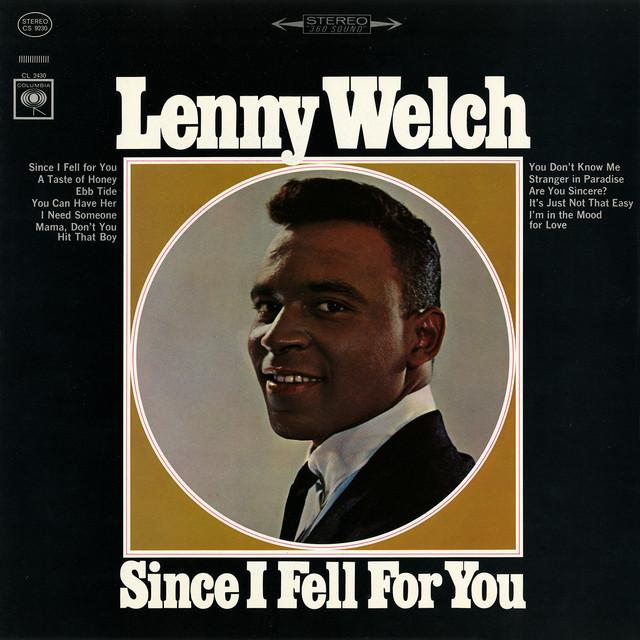
Lenny Welch

Pop
Mainstream Pop
Soul
 Viberate Rank: 189420
 Viberate Rank: 189420
 Monthly ListenersFollowers
 Subscribers
 Followers
 Followers
 FansTop Spotify Songs
| Track | 7-Day Streams | |
|---|---|---|
1 | 818 | |
2 | 815 | |
3 | 619 | |
4 | 586 | |
5 | 586 |
Top YouTube VideosMonthly ListenersFeatured in Playlists| Playlist | Followers | |
|---|---|---|
1 |  Mafia 2 - Game Soundtrack vstmn | 33.77K |
2 |  Essential Classics Essential Classics | 31.39K |
3 | Mafia 2 soundtrack dromedarbergen | 17.00K |
4 |  Golden Oldies Sourcery | 9.36K |
5 | Top 10,000 Songs of All Time Acclaimed Music | 9.20K |
Audience| City | Monthly Listeners | |
|---|---|---|
1 | | 282 |
2 | | 188 |
3 | | 175 |
4 | | 157 |
5 |  | 127 |
See full performance history, audience data, playlist activity, rankings, comparisons, and more in Viberate music analytics. Start with a free trial, then continue with a paid plan.
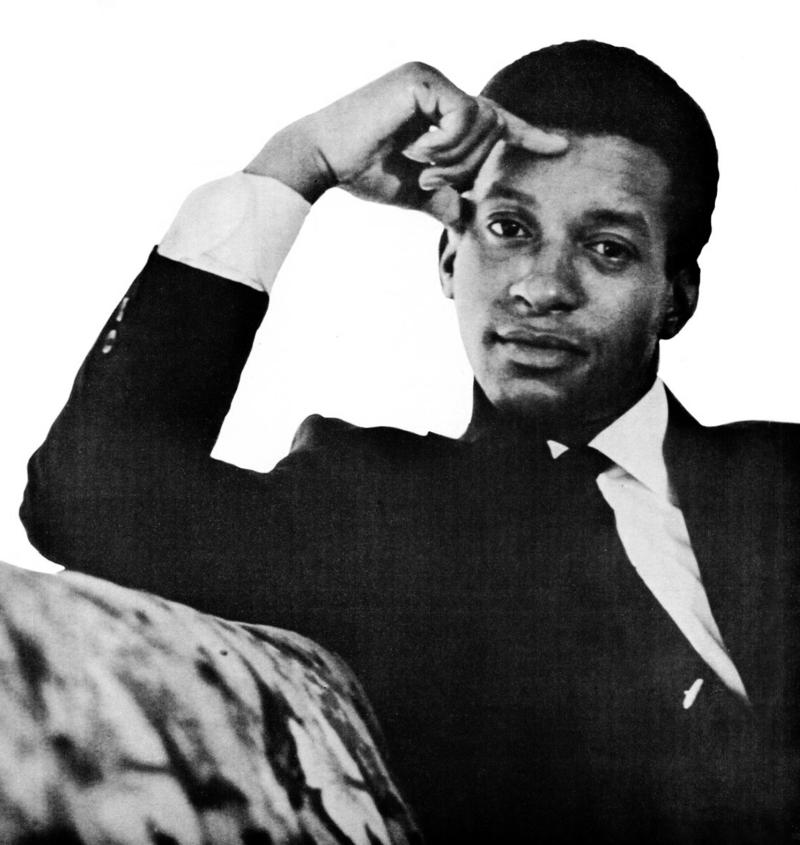
Lenny Welch’s Spotify BioSinger Lenny Welch was born Leon Welch on May 15, 1938 in Asbury Park, NJ. He started singing as a youngster, assembling groups and participating in talent shows. In his late teens, Welch and his group auditioned for Decca Records in New York. The executives loved "Lenny," which they called Leon, because name flowed better. Decca recorded Welch solo on a couple of promising 45s but the sales were dismal. Two years passed before his next break. Coley Wallace, a prize fighter, introduced Welch to Archie Bleyer, the owner of Cadence Records. The association clicked and "You Don't Know Me" was his first release, it made some noise, but it was the second Cadence single, "Since I Fell for You," a a number five pop hit in 1963, that brought the mass sells and accolades; he also scored with "Ebb Tide," and was on his way to becoming another Johnny Mathis when two devastating circumstances occurred.
For starters, and reasons unknown, Archie Bleyer folded Cadence in September of 1964, the label… he had started in December 1952. (Cadence had built the careers of many artists including Andy Williams, the Everly Brothers, and Johnny Tillotson; Andy Williams purchased the companies' masters from Bleyer and reissued them on his Barnaby label, but signed with Columbia Records to release his new recordings, while Bleyer retired to Wisconsin.) Lenny's last Cadence release, "If You See My Love" in 1964, charted at number 92. He also contributed vocals to Eddie Harris' 1964 LP Cool Sax, Warm Heart. But after a couple of hits and one LP release, Since I Fell for You in 1963, Welch was shopping for a new deal.
The second setback came from Uncle Sam. Lenny stayed involved in music while serving his country. He did record hops and weekend dates to promote his new releases on Kapp Records, but nothing significant happened until his duty ended. He landed with Kapp shortly after Cadence closed and charted with "Darling Take Me Back," "Two Different Worlds" (1965), "Please Help Me, I'm Falling" (1966), and "The Right to Cry" in 1967.
Unexpectedly, Welch then took another hiatus; this time to get his mind together, and to practice and research his musical skills and sell his image. While compared to Johnny Mathis and other ballad singers, Welch wasn't playing the cushy Las Vegas and Lake Tahoe gigs, his albums didn't sell like Mathis' or Andy Williams'. The leave of absence was a big mistake; he came back, and began gigging at some major clubs, but it never really happened for him like he envisioned. Attempted comebacks in the '70s didn't pan out, including a marvelous single on the Cur label entitled "To Be Loved/Glory of Love" b/w "My Heart Won't Let Me." Dwindling interest caused the handsome, velvet-voiced singer with the super personality to become a "whatever happened to . . ." topic. You can hear his work on Anthology (1958-1966), on Taragon Records, and the Collectables reissue of Since I Fell for You. He recorded three albums on Kapp: Two Different Worlds (1965), Rags to Riches (1966), and Lenny, in 1967. ~ Andrew Hamilton, Rovi
Viberate is a music analytics platform built for A&Rs, artist managers, labels, booking agents, marketers, and artists.
It helps music professionals track artist growth, analyze audience data, monitor playlist activity, compare artists, follow song performance, and identify opportunities across the music market.
Public artist pages provide a free preview of selected artist data. Paid plans provide access to deeper analytics, historical data, charts, comparisons, playlist tools, exports, alerts, reports, and additional professional features.
Yes. Public Viberate artist pages provide selected artist analytics and music data for free.
Viberate also offers a 7-day free trial of the full platform. A credit card is required to start the trial. The trial includes access to the complete product so users can test deeper artist analytics, historical views, playlist insights, comparisons, charts, exports, alerts, and reporting features before choosing a paid plan.
Viberate provides artist analytics across streaming, playlists, social media, video, radio airplay, songs, and audience markets.
Users can analyze Spotify performance, Spotify and Apple Music playlists, YouTube activity, TikTok and Instagram growth, radio spins, song performance, audience locations, demographics, rankings, and overall artist momentum.
Artist profiles also connect to music charts, similar artists, and comparison tools, helping users benchmark performance and evaluate artists in context.
Viberate updates key artist and track data daily.
For followed artists and tracks, selected data is refreshed multiple times per day. This helps teams monitor playlist changes, streaming movement, audience growth, releases, and campaign performance with more current data.
Update frequency can vary depending on the metric and data source.
Yes. Viberate lets users compare up to five artists side by side across streaming, social media, audience, and engagement metrics.
Users can compare fanbase growth, audience demographics, locations, Spotify performance, social metrics, and other artist data over selected time periods.
Artist comparison can be used for A&R scouting, benchmarking, booking decisions, campaign planning, and evaluating artists with similar audiences or market positions.