Lee Moses

R&B
Contemporary R&B
Soul
 Viberate Rank: 137309
 Viberate Rank: 137309
 Monthly ListenersFollowers
 Subscribers
 Followers
 Followers
 FansTop Spotify Songs
| Track | 7-Day Streams | |
|---|---|---|
1 | 14.54K | |
2 | 10.98K | |
3 | 5.04K | |
4 | 2.82K | |
5 | 2.70K |
Top YouTube VideosMonthly ListenersFeatured in Playlists| Playlist | Followers | |
|---|---|---|
1 |  70s R&B/Soul - The Golden Era Raul Gabriel - Music | 159.65K |
2 |  Vintage & Retro | Soul • Blues • Rock • Classic Vibes • Throwback Pop • Modern Oldies Retro Tones | 86.99K |
3 |  Boerderij van Dorst BNNVARA | 47.46K |
4 |  Sexy Blues Jarel Kingsberry | 47.35K |
5 |  Indications' Inspirations Durand Jones & The Indications | 35.68K |
Audience| City | Monthly Listeners | |
|---|---|---|
1 |  | 1.91K |
2 |  | 1.32K |
3 |  | 1.28K |
4 |  | 1.11K |
5 | | 1.04K |
See full performance history, audience data, playlist activity, rankings, comparisons, and more in Viberate music analytics. Start with a free trial, then continue with a paid plan.
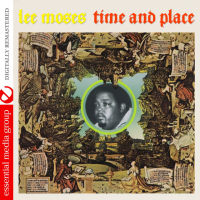
Lee Moses’ Spotify BioA powerful but enigmatic figure in soul, funk, and R&B (little is known about his life, especially from the mid-'70s onward), Lee Moses was a vocalist and guitarist who gained his largest audience more than a decade after his death. While most of his material was cut in New York City, Moses' vocal style was very much in the manner of Southern soul of the '60s, raw and passionate and unafraid to push the emotional boundaries of a song, while his guitar work was elemental and scratchy but full of fire, twisting blues, rock, and funk into a sound all his own. Moses' early singles (collected on How Much Longer Must I Wait? Singles & Rarities 1965-1972) were rough-hewn exercises in Stax-style soul, while his sole album, 1971's Time and Place, added a dash of funk and some hard rock accents to his musical personality.
Lee Moses was born on March 13, 1941, in Atlanta, and he attended Booker T. Washington High School, where he sang in talent shows and learned to play guitar. Moses formed his… first band, the Showstoppers, in the 1950s, and the group became a major draw in the Atlanta area. In the mid-'60s, Moses relocated to New York City and began working as a session guitarist, primarily working with producer and behind-the-scenes man Johnny Brantley, who had roots in Georgia. Moses' tough but expressive guitar style and gritty, impassioned vocals became one of the hallmarks of Brantley's productions. (Another musician who often worked on Brantley's mid-'60s sessions was Jimi Hendrix, and after Hendrix's death, some of the sessions Moses cut with Hendrix would be reissued on an album titled Moods.)
In 1967, Brantley helped Moses land a record deal with Musicor Records, and that year he released three singles for the label: "Reach Out, I'll Be There" b/w "Day Tripper," "Bad Girl (Part I)" b/w "Bad Girl (Part II)," and "I'm Sad About It" b/w "How Much Longer (Must I Wait)." Despite the strength of the material, Moses' Musicor sides did little business, and other 45s he issued that year for Dynamo ("Never in My Life" b/w "If Loving You Is a Crime [I'll Always Be Guilty]") and Lee John Records ("Diana [From N.Y.C.]" b/w "My Adorable One") fared no better. In 1971, Moses struck a deal with Maple Records, an offshoot of All Platinum Records, and they released his first full-length album, Time and Place, with Moses backed by his stage band the Disciples as well as members of the Ohio Players. The album, produced by Brantley, was a strong exercise in deep soul and taut funk, but it was sadly ignored upon release. After cutting a 1973 single for Gates Records -- a powerful version of "The Dark End of the Street" b/w "She's a Bad Girl" -- Moses decided he'd had enough of Brantley and the music business. He returned to the Atlanta area, where he played occasional club dates, but he never recorded again. Moses died in 1997 at the age of 56.
While Lee Moses enjoyed little recognition during his lifetime, after his death the Time and Place album was discovered by crate diggers and soul music obsessives, and original copies started to fetch high prices among collectors. In 2007, the British label Castle Music gave Time and Place a reissue on both vinyl and CD, with many of Moses' single sides added as a bonus. In 2016, the American archival label Future Days Records brought out a new edition of Time and Place that restored the album's original sequence, and three years later the same label issued How Much Longer Must I Wait? Singles & Rarities 1965-1972, which collected all of Moses' non-LP singles, adding three unreleased tracks to the mix. ~ Mark Deming, Rovi
Viberate is a music analytics platform built for A&Rs, artist managers, labels, booking agents, marketers, and artists.
It helps music professionals track artist growth, analyze audience data, monitor playlist activity, compare artists, follow song performance, and identify opportunities across the music market.
Public artist pages provide a free preview of selected artist data. Paid plans provide access to deeper analytics, historical data, charts, comparisons, playlist tools, exports, alerts, reports, and additional professional features.
Yes. Public Viberate artist pages provide selected artist analytics and music data for free.
Viberate also offers a 7-day free trial of the full platform. A credit card is required to start the trial. The trial includes access to the complete product so users can test deeper artist analytics, historical views, playlist insights, comparisons, charts, exports, alerts, and reporting features before choosing a paid plan.
Viberate provides artist analytics across streaming, playlists, social media, video, radio airplay, songs, and audience markets.
Users can analyze Spotify performance, Spotify and Apple Music playlists, YouTube activity, TikTok and Instagram growth, radio spins, song performance, audience locations, demographics, rankings, and overall artist momentum.
Artist profiles also connect to music charts, similar artists, and comparison tools, helping users benchmark performance and evaluate artists in context.
Viberate updates key artist and track data daily.
For followed artists and tracks, selected data is refreshed multiple times per day. This helps teams monitor playlist changes, streaming movement, audience growth, releases, and campaign performance with more current data.
Update frequency can vary depending on the metric and data source.
Yes. Viberate lets users compare up to five artists side by side across streaming, social media, audience, and engagement metrics.
Users can compare fanbase growth, audience demographics, locations, Spotify performance, social metrics, and other artist data over selected time periods.
Artist comparison can be used for A&R scouting, benchmarking, booking decisions, campaign planning, and evaluating artists with similar audiences or market positions.