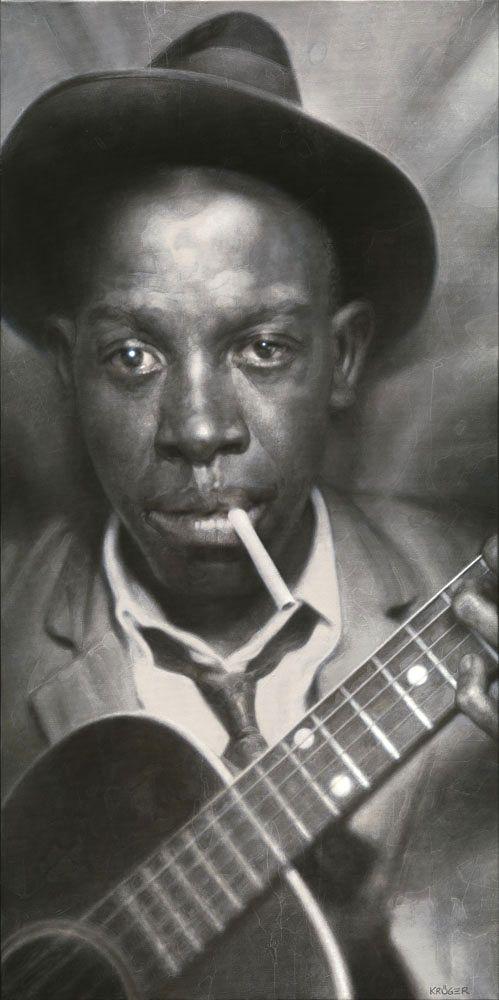
Lead Belly

Blues
Classic Blues
Country Blues
 Viberate Rank: 59334
 Viberate Rank: 59334
 Monthly ListenersFollowers
 Subscribers
 Followers
 Followers
 FansTop Spotify Songs
| Track | 7-Day Streams | |
|---|---|---|
1 | 27.64K | |
2 | 7.74K | |
3 | 7.37K | |
4 | 6.26K | |
5 | 6.26K |
Top YouTube Videos| Video | 7-Day Views | |
|---|---|---|
1 | 4.17K | |
2 | 3.24K | |
3 | 2.35K | |
4 | 219 | |
5 | 215 |
Monthly ListenersFeatured in Playlists| Playlist | Followers | |
|---|---|---|
1 |  Blues Masters Filtr Legacy Sweden | 226.82K |
2 |  Roots of Rock & Roll Spotify | 95.16K |
3 |  1000 Recordings to Hear Before You Die (Tom Moon): Album Index Ulysses' Classical | 94.30K |
4 | Wasteland Radio Expanded Neale Christopher Zeringue | 76.99K |
5 | Jazz · Blues · Soul · Funk · Swing Carles Sirvent | 59.35K |
Audience| City | Monthly Listeners | |
|---|---|---|
1 |  | 1.95K |
2 | | 1.68K |
3 | | 1.66K |
4 | | 1.65K |
5 |  | 1.58K |
See full performance history, audience data, playlist activity, rankings, comparisons, and more in Viberate music analytics. Start with a free trial, then continue with a paid plan.
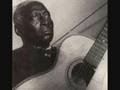
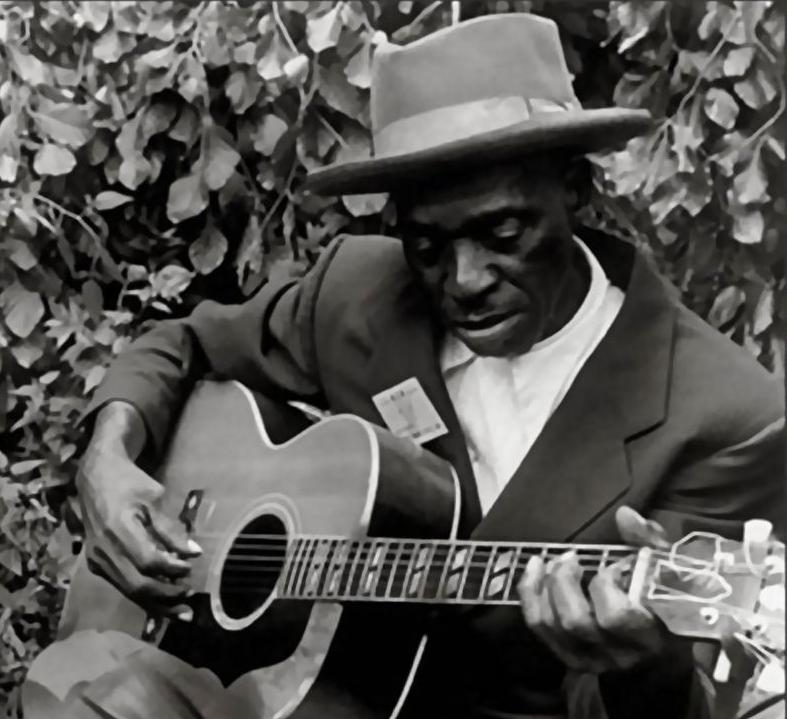
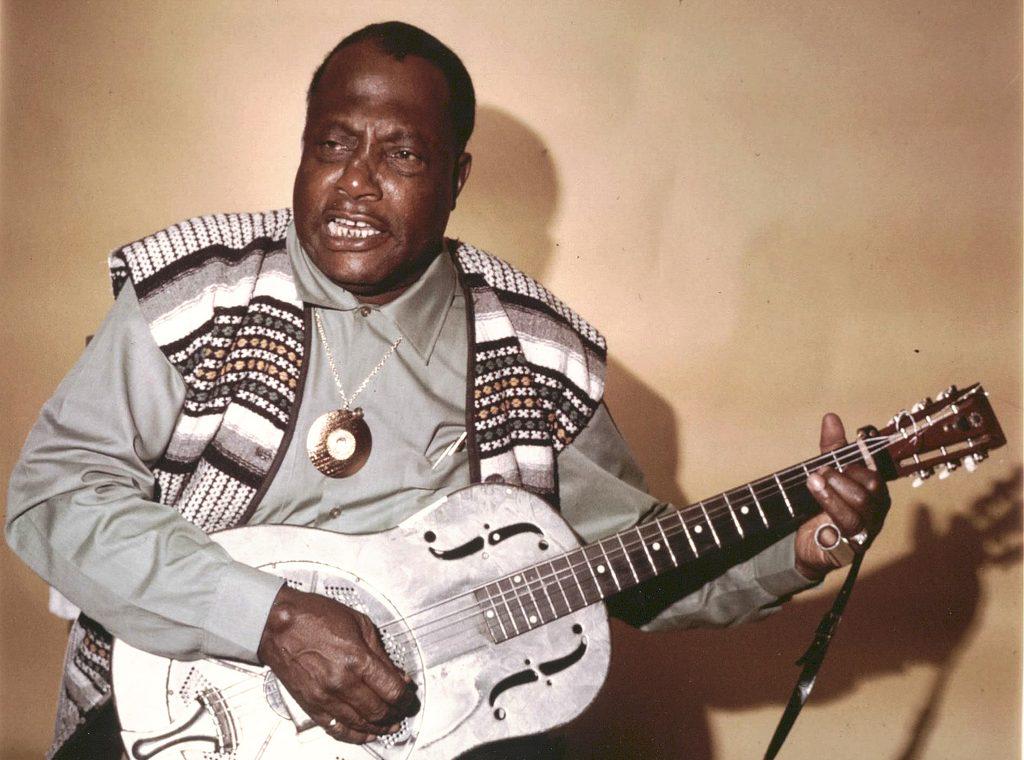
Lead Belly’s Spotify BioHuddie Ledbetter, known as Lead Belly, was a unique figure in the American popular music of the 20th century. Ultimately, he was best remembered for a body of songs that he discovered, adapted, or wrote, including "Goodnight, Irene," "Rock Island Line," "The Midnight Special," and "Cotton Fields." But he was also an early example of a folksinger whose background had brought him into direct contact with the oral tradition by which folk music was handed down, a tradition that, by the early years of the century, already included elements of commercial popular music. Because he was an African-American, he is sometimes viewed as a blues singer, but blues (a musical form he actually predated) was only one of the styles that informed his music. He was a profound influence on folk performers of the 1940s such as Woody Guthrie and Pete Seeger, who in turn influenced the folk revival and the development of rock music from the 1960s onward, which makes his induction into the Rock & Roll Hall of… Fame in 1988, early in the hall's existence, wholly appropriate.
Huddie Ledbetter was born on the Jeter Plantation near the community of Shiloh, which is in turn near the town of Mooringsport, LA. He was the only son of a sharecropper who moved his family to nearby Harrison County, TX, when the child was about five. Ledbetter attended school from the age of eight to about 12 or 13, after which he worked full-time on the farm his father had managed to buy. He had shown an early interest in music, learning the button accordion as a child and playing in the school band. He later added other instruments, eventually turning primarily to the guitar, having obtained his first one in 1903. By his teens, he was playing and singing for money at local dances. At about the age of 16, he moved to Shreveport, LA, where he lived for two years supporting himself as a performer. From the ages of about 18 to 20, he traveled around Texas and Louisiana, performing and supplementing his income as a farm worker. Falling ill, he returned home, where he recovered, married, and settled down to work as a farmer. In 1910, he and his wife moved to Dallas, TX. There, possibly around 1912, he met the young street musician Blind Lemon Jefferson, five years his junior, and the two teamed up to play around the Dallas area for the next several years. During this period, he switched from the six-string to the 12-string guitar, the instrument that became his trademark.
Ledbetter moved back to Harrison County around 1915. In June, he was arrested due to an incident the specifics of which are lost to history. Eventually, he was convicted of carrying a pistol illegally and sentenced to 30 days on a chain gang. He escaped and moved to Bowie County, TX, where he lived under the name Walter Boyd and returned to performing while also working as a sharecropper. In December 1917, he was arrested and charged with the murder of Will Stafford, the husband of one of his cousins, and with "assault to murder" another man. He was convicted of both charges, the first carrying a sentence of five to 20 years, the second two to ten years, to be served consecutively. In prison, he gained his nickname, Lead Belly, and learned many songs from inmates. In January 1924, he sang for Texas Governor Pat Neff, including a specially written song in which he asked for a pardon. As Neff reached the end of his term as governor in January 1925, he actually did pardon Lead Belly, such that, instead of serving the minimum of seven years required by his sentences, he served six years, seven months, and eight days.
Lead Belly moved to Houston initially, then returned home before settling in Mooringsport. In January 1930, he was involved in a stabbing incident that led to his being charged with "assault with intent to murder." He was convicted, given a sentence of six to ten years, and sent to Angola Prison. There he was a model prisoner, and due to budgetary restrictions brought on by the Depression, he was able to participate in an early release program. He applied for such release in June 1933 and was told that he would be released the following year if Governor O.K. Allen approved the petition.
Song collector John Lomax, in the employ of the Library of Congress, visited Angola in July 1933 with his son Alan Lomax, looking for folk songs to record. They were introduced to Lead Belly, whom they recorded. This initial session, which has not been released commercially, included a song Lead Belly called "Irene" that he had learned from an uncle. Subsequent research has demonstrated that the song was not a traditional folk song, but rather in its original form was written and published in 1886 by African-American songwriter Gussie Lord Davis under the title "Irene, Good Night." But the version taught to Lead Belly by his uncle was much altered from Davis' original.
A year passed without any action being taken on Lead Belly's petition for early release. John and Alan Lomax returned to Angola in the summer of 1934, and they recorded another session with Lead Belly. A few of these recordings were released commercially by Elektra Records in 1966 in a box set called The Library of Congress Recordings and were reissued in 1991 by Rounder Records on a CD called Midnight Special. As that title indicates, among the songs was "Midnight Special," a song Lead Belly first heard during his incarceration in Texas in the early 1920s and which he adapted. The session also included "Governor O.K. Allen," a song Lead Belly had written to encourage the governor to sign his petition of release. The Lomaxes took a record of the song to the governor's office, though there is no evidence that he actually listened to it. But on July 25, 1934, he signed Lead Belly's petition, commuting his sentence to three to ten years, and since Lead Belly had already served four and a half years, he was released on August 1, 1934. In later years, the state of Louisiana repeatedly denied the legend that Lead Belly had sung his way out of prison for a second time.
Upon his release, Lead Belly initially moved to Shreveport, but in the fall of 1934 he sought out John Lomax, who was living in Texas, and went to work for him, acting as his chauffeur and assistant on further trips to prisons in search of songs. At the Cummins Prison Farm in Arkansas, Lead Belly first heard a prisoner perform "Rock Island Line," a song he added to his repertoire and altered extensively. In the winter of 1934-1935, he accompanied Lomax north, where they made a series of appearances at academic and scholarly gatherings such as the annual meeting of the Modern Language Association (MLA) in Philadelphia and lecture-performances at Yale and Harvard. They attracted considerable media attention, including articles in major newspapers and appearances on radio and newsreel versions of Time Marches On. Lead Belly signed a management agreement with Lomax and was in turn signed for a series of recordings by the American Record Corporation (ARC), which issued records on a variety of low-priced labels and also owned the venerable Columbia Records label. The ARC recordings, 40 sides, were made in January, February, and March 1935, though ARC only released two singles at the time, with a third issued the following year. Viewing Lead Belly as a blues artist, ARC emphasized that aspect of his large repertoire, but the records did not sell well in the blues market and most of the recordings remained unissued for decades. The first extensive release of them came with the Columbia Records LP Includes Legendary Performances Never Before Released in 1970, and more of them appeared on Columbia/Legacy's King of the 12-String Guitar in 1991. During this period, Lead Belly also made more recordings for the Library of Congress, some of which appeared on the 1966 Elektra LP and on the 1991 Rounder albums Midnight Special and Gwine Dig a Hole to Put the Devil In.
In March 1935, John Lomax, who had found Lead Belly unreliable during a northeast tour, severed his relationship with the singer, and Lead Belly returned to Louisiana. There he obtained legal representation and sought more money from Lomax, and over a period of months the two worked out a settlement that allowed Lomax to use Lead Belly's songs in his book Negro Folk Songs as Sung by Lead Belly, published in 1936. In February 1936, Lead Belly moved back north, settling in New York City and attempting to build a career as a performer. From 1937 to 1939, he made more recordings for the Library of Congress at the behest of Alan Lomax, some of which have appeared on the Elektra and Rounder albums already mentioned. He was taken up by left-wing activists who increasingly used folk music as a forum for the expression of their political beliefs, and though he himself appears to have had only a limited interest in politics in general, his fervor for civil rights, expressed in such songs as "The Bourgeois Blues," concurred with theirs. He became part of a community of urban folk musicians, including Aunt Molly Jackson, Woody Guthrie, Pete Seeger, and the team of Sonny Terry & Brownie McGee, among others.
In March 1939, Lead Belly was arrested for stabbing a man in New York. While on parole before trial, he made his second set of commercial recordings for Musicraft Records, a session arranged by Alan Lomax to help pay his legal bills. The recordings were issued initially on a Musicraft album called Negro Sinful Tunes and have since been reissued by such labels as Stinson, Everest, and Collectables. Lead Belly was convicted of third-degree assault and served an eight-month sentence.
The singer was busy in 1940, appearing on the network radio series Folk Music of America and Back Where I Come From and launching his own weekly 15-minute program on local WNYC, a show that ran for a year. He also undertook his third set of commercial recordings in June, this time for RCA Victor and accompanied on some tracks by the Golden Gate Quartet. These sessions resulted in an album called The Midnight Special and Other Southern Prison Songs, released on RCA's Bluebird imprint. A 1964 compilation of the material on RCA was called Midnight Special, there was a 1989 collection called Alabama Bound, and in 2003, as part of its Secret History of Rock & Roll series, Bluebird issued When the Sun Goes Down, Vol. 5: Take This Hammer, a compilation containing all 26 tracks that were recorded. In August 1940, Lead Belly also returned to recording for the Library of Congress, and some of these tracks have turned up on the previously mentioned Elektra set as well as on the Rounder albums Gwine Dig a Hole to Put the Devil In and Let It Shine on Me (1991).
In May 1941, Lead Belly recorded his first session for Asch Records, a tiny independent label run by Moses Asch. Lead Belly went on to record extensively for Asch and its successors, Disc and Folkways, this material later reissued both by Smithsonian/Folkways (from the 1990s on) and by various small labels that acquired rights to it. In 1944, he moved to the West Coast, where he remained for the better part of two years. While there, he signed to Capitol Records and did three sessions for the label in October 1944 that resulted in a series of singles. Later, Capitol issued such compilation albums as Classics in Jazz (1953) and Leadbelly: Huddie Ledbetter's Best (1962), drawn from these sessions. Back in New York from 1946 on, Lead Belly continued to record for Folkways, his 1948 recordings later turning up on a series of LPs called Leadbelly's Last Sessions and gathered together into a four-CD box set by Smithsonian/Folkways in 1994.
By 1948, he was beginning to suffer unexplained spells of numbness in his legs, and was often forced to walk with a cane and perform sitting down. In May 1949, he toured in France, but his increasing physical difficulties led to a visit to a doctor who diagnosed him as having contracted amyotrophic lateral sclerosis (ALS), better known as Lou Gehrig's Disease, an incurable condition leading to paralysis and death. Returning to the U.S., he was able to manage a few more performances, including ones in Texas and Oklahoma in June. (The Texas show was recorded and later released by Playboy Records under the title Leadbelly, erroneously marketed as the singer's last concert.) But he was soon bedridden, and he died at 61 in December.
Lead Belly's fame began to increase almost immediately after his death. In 1950, his song "Irene," now called "Goodnight, Irene," was recorded by the Weavers, a folk group including Pete Seeger and other musicians acquainted with Lead Belly, and became a number one pop hit, with hit covers by such pop singers as Frank Sinatra and a number one country recording by Ernest Tubb and Red Foley. The Weavers then adapted a Lead Belly song called "If It Wasn't for Dickey" (itself based on the Irish folk song "Drimmer's Cow") into "Kisses Sweeter Than Wine," which they took into the Top 40 in 1951 and which Jimmie Rodgers covered for a Top Ten hit in 1957. In 1956, the Lonnie Donegan Skiffle Group reached the Top Ten in the U.K. and the U.S. with their recording of "Rock Island Line," taken directly from Lead Belly's version, setting off the British skiffle fad that inspired many later British rock stars, including the Beatles. (Johnny Cash scored a Top 40 country hit with his version in 1970.) "The Midnight Special" in Lead Belly's version had first reached the charts for the Tiny Grimes Quintet in 1948. Paul Evans had a Top 40 hit with it in 1960, and Johnny Rivers also took it into the Top 40 in 1965. Lead Belly's "Cotton Fields" (aka "Old Cotton Fields at Home") was a Top 40 hit for the Highwaymen in 1961. All of these songs have become standards. When the folk revival hit in the late '50s, its practitioners frequently covered other songs associated with Lead Belly in arrangements that recalled his.
Lead Belly's own recordings, in addition to the more legitimate reissues on Rounder, Columbia/Legacy, RCA Victor, Capitol, and Smithsonian/Folkways, have turned up on a dizzying number of labels in the digital era, especially as they have come into the public domain in Europe (where copyrights extend only 50 years). Confusing as this discography may be, it is a testament to the continuing influence of Lead Belly on contemporary music. ~ William Ruhlmann, Rovi
Viberate is a music analytics platform built for A&Rs, artist managers, labels, booking agents, marketers, and artists.
It helps music professionals track artist growth, analyze audience data, monitor playlist activity, compare artists, follow song performance, and identify opportunities across the music market.
Public artist pages provide a free preview of selected artist data. Paid plans provide access to deeper analytics, historical data, charts, comparisons, playlist tools, exports, alerts, reports, and additional professional features.
Yes. Public Viberate artist pages provide selected artist analytics and music data for free.
Viberate also offers a 7-day free trial of the full platform. A credit card is required to start the trial. The trial includes access to the complete product so users can test deeper artist analytics, historical views, playlist insights, comparisons, charts, exports, alerts, and reporting features before choosing a paid plan.
Viberate provides artist analytics across streaming, playlists, social media, video, radio airplay, songs, and audience markets.
Users can analyze Spotify performance, Spotify and Apple Music playlists, YouTube activity, TikTok and Instagram growth, radio spins, song performance, audience locations, demographics, rankings, and overall artist momentum.
Artist profiles also connect to music charts, similar artists, and comparison tools, helping users benchmark performance and evaluate artists in context.
Viberate updates key artist and track data daily.
For followed artists and tracks, selected data is refreshed multiple times per day. This helps teams monitor playlist changes, streaming movement, audience growth, releases, and campaign performance with more current data.
Update frequency can vary depending on the metric and data source.
Yes. Viberate lets users compare up to five artists side by side across streaming, social media, audience, and engagement metrics.
Users can compare fanbase growth, audience demographics, locations, Spotify performance, social metrics, and other artist data over selected time periods.
Artist comparison can be used for A&R scouting, benchmarking, booking decisions, campaign planning, and evaluating artists with similar audiences or market positions.