Lazer Sword

Electronic
Downtempo
Other Electronic Music
 Viberate Rank: 479404
 Viberate Rank: 479404
 Monthly ListenersFollowers
 Subscribers
 Followers
 Followers
 FansTop Spotify Songs
| Track | 7-Day Streams | |
|---|---|---|
1 | 72 | |
2 | 31 | |
3 | 24 | |
4 | 24 | |
5 | 15 |
Top YouTube VideosMonthly ListenersFeatured in Playlists| Playlist | Followers | |
|---|---|---|
1 | Panoramabar Music Roman Wäger | 7.69K |
2 |  Boiler Room Robert Brown | 6.66K |
3 | Stones Throw Records Hallvard Fauske Ekdahl | 5.43K |
4 | Witch House / Chillwave / Vaporwave / Cloud Rap - 91 Waves Danny Balkwill | 3.99K |
5 |  futurebeats kyle hovey | 3.81K |
Audience| City | Monthly Listeners | |
|---|---|---|
1 |  | 14 |
2 | | 9 |
3 |  | 9 |
4 | | 9 |
5 | | 8 |
See full performance history, audience data, playlist activity, rankings, comparisons, and more in Viberate music analytics. Start with a free trial, then continue with a paid plan.
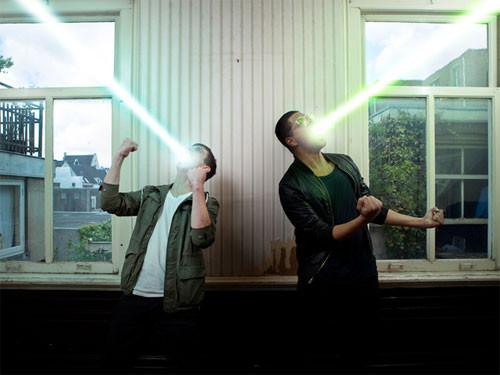
Lazer Sword’s Spotify BioLazer Sword are a San Francisco-based production duo that combine hip-hop, electro, and dubstep for a quirky kind of dance music that works just as well in the headphones as it does at the club. Formed by Antaeus Roy (aka Lando Kal) and Bryant Rutledge (aka Low Limit), Lazer Sword began by playing wild, eclectic DJ sets and uploading their sample-heavy, head-nodding beats on the Internet. By way of the Web they joined a loosely affiliated set of producers creating “slaptop beats,” “blap,” and “turbo crunk,” one of which was the Megasoid crew from Montreal. In 2008, Megasoid featured the duo on a couple of their Speed Knots mixtapes. Then, a year later, the Lazer Sword track “Gucci Sweatshirt” saw official release on 12” courtesy of Innovative Leisure. The label released the duo’s “Shot in the Nite” single in 2010 with the Nintendo-loving cut “Koopa Boss Mode” on the flipside before releasing the Lazer Sword full-length debut. By the time their second, more sophisticated album Memory… arrived in 2012 on Modeselektor's Monkeytown imprint, Roy was living in Berlin and Rutledge had moved to Los Angeles. ~ David Jeffries, Rovi
Viberate is a music analytics platform built for A&Rs, artist managers, labels, booking agents, marketers, and artists.
It helps music professionals track artist growth, analyze audience data, monitor playlist activity, compare artists, follow song performance, and identify opportunities across the music market.
Public artist pages provide a free preview of selected artist data. Paid plans provide access to deeper analytics, historical data, charts, comparisons, playlist tools, exports, alerts, reports, and additional professional features.
Yes. Public Viberate artist pages provide selected artist analytics and music data for free.
Viberate also offers a 7-day free trial of the full platform. A credit card is required to start the trial. The trial includes access to the complete product so users can test deeper artist analytics, historical views, playlist insights, comparisons, charts, exports, alerts, and reporting features before choosing a paid plan.
Viberate provides artist analytics across streaming, playlists, social media, video, radio airplay, songs, and audience markets.
Users can analyze Spotify performance, Spotify and Apple Music playlists, YouTube activity, TikTok and Instagram growth, radio spins, song performance, audience locations, demographics, rankings, and overall artist momentum.
Artist profiles also connect to music charts, similar artists, and comparison tools, helping users benchmark performance and evaluate artists in context.
Viberate updates key artist and track data daily.
For followed artists and tracks, selected data is refreshed multiple times per day. This helps teams monitor playlist changes, streaming movement, audience growth, releases, and campaign performance with more current data.
Update frequency can vary depending on the metric and data source.
Yes. Viberate lets users compare up to five artists side by side across streaming, social media, audience, and engagement metrics.
Users can compare fanbase growth, audience demographics, locations, Spotify performance, social metrics, and other artist data over selected time periods.
Artist comparison can be used for A&R scouting, benchmarking, booking decisions, campaign planning, and evaluating artists with similar audiences or market positions.