Larry Polansky

Classical
Classical Crossover
 Viberate Rank: 950561
 Viberate Rank: 950561
 Monthly ListenersFollowers
 Subscribers
 Followers
 Followers
 FansTop Spotify SongsTop YouTube VideosMonthly ListenersFeatured in Playlists
| Playlist | Followers | |
|---|---|---|
1 |  Alex Ross's The Rest is Noise aidanosu | 2.70K |
2 |  The Sound of Tzadik The Sounds of Spotify | 1.01K |
Audience| City | Monthly Listeners | |
|---|---|---|
1 | | 5 |
2 | | 3 |
3 |  | 3 |
See full performance history, audience data, playlist activity, rankings, comparisons, and more in Viberate music analytics. Start with a free trial, then continue with a paid plan.
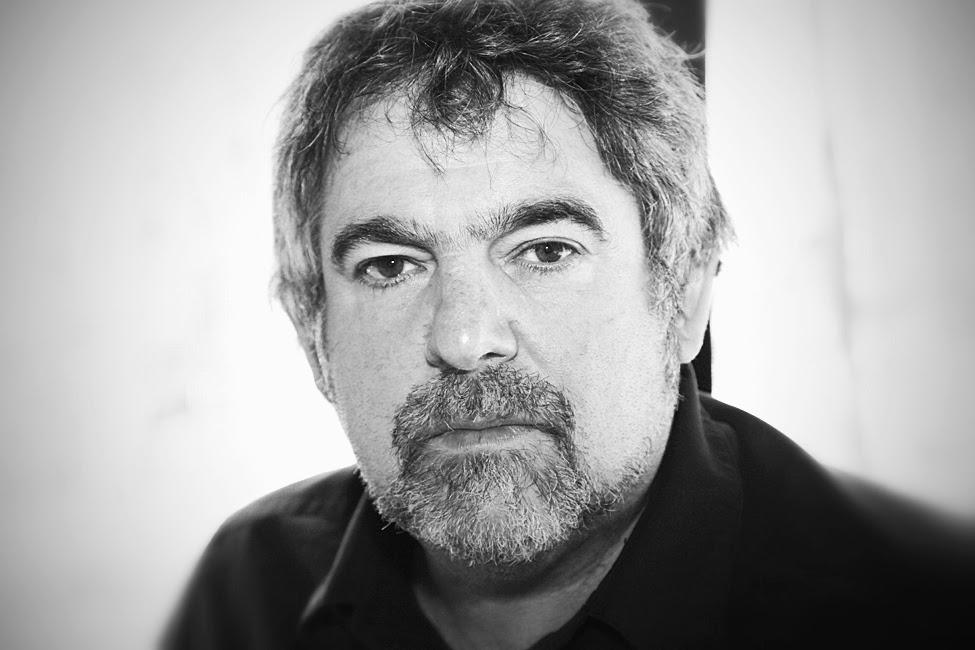
Larry Polansky’s Spotify BioLarry Polansky was a prolific composer, multi-instrumentalist, and educator who wrote and arranged many works for a variety of instrumentations. He was a core member of the Frog Peak Music composer's collective and a widely published music theorist who co-wrote HSML, or Hierarchical Music Specification Language, with Phil Burk and David Rosenboom, as well as other computer software.
Polansky was born on October 16, 1954, in New York. His brother is author Steven Polansky. Larry attended the New College of Florida, where he studied with Ron Riddle. He then attended the University of California, Santa Cruz, earning bachelor's degrees in music and mathematics in 1976. In 1977, he studied with James Tenney at Toronto's York University, completing his master's with Ben Johnston at the University of Illinois Urbana-Champaign in 1978. Polansky took an assistant professor post at Mills College in 1981, later becoming the director of the Center for Contemporary Music there; he remained at Mills… until 1990. In 1984, he and his wife, composer and ethnomusicologist Jody Diamond, co-founded and co-directed the composer's collective Frog Peak Music; its membership has included Lou Harrison, Frederic Rzewski, and Anthony Braxton, among others.
While teaching at Mills, Polansky teamed with Phil Burk and David Rosenboom to write the music programming language Hierarchical Music Specification Language (HMSL), which allowed for musical notation and performance on computers. In 1990, Polansky took an assistant professor post at Dartmouth College and co-founded the annual Leonardo Music Journal as part of the Leonardo: The International Society of the Arts, Sciences, and Technology; it was published through MIT Press. He earned the Fullbright Fellowship for the 1995-1996 season, which allowed him to teach and study at La Trobe University in Melbourne, Australia, in 1996. He would go on to hold the positions of Jacob Straus Professor of Music and co-director of the Bregman Electronic Music Studio at Dartmouth. In 2001, he and Judith Tick issued the critical edition of Ruth Crawford Seeger's The Music of American Folk Song. That year, Polansky earned the Sony Music Fellowship. His 2010 album, The World's Longest Melody, contained his compositions from the '70s to the 2000s and featured the Zwerm Guitar Quartet, among other performers, including Polansky. Dartmouth named him professor emeritus in 2013 when he took a teaching post at UC Santa Cruz, remaining there until 2019 when that school named him emeritus as well. Polansky died on May 9, 2024, in Santa Cruz. Recordings of his compositions appear on the Artifact, New World Records, and Tellus labels; The Theory of Impossible Melody features the use of HMSL. ~ Keith Finke & Joslyn Layne, Rovi
Viberate is a music analytics platform built for A&Rs, artist managers, labels, booking agents, marketers, and artists.
It helps music professionals track artist growth, analyze audience data, monitor playlist activity, compare artists, follow song performance, and identify opportunities across the music market.
Public artist pages provide a free preview of selected artist data. Paid plans provide access to deeper analytics, historical data, charts, comparisons, playlist tools, exports, alerts, reports, and additional professional features.
Yes. Public Viberate artist pages provide selected artist analytics and music data for free.
Viberate also offers a 7-day free trial of the full platform. A credit card is required to start the trial. The trial includes access to the complete product so users can test deeper artist analytics, historical views, playlist insights, comparisons, charts, exports, alerts, and reporting features before choosing a paid plan.
Viberate provides artist analytics across streaming, playlists, social media, video, radio airplay, songs, and audience markets.
Users can analyze Spotify performance, Spotify and Apple Music playlists, YouTube activity, TikTok and Instagram growth, radio spins, song performance, audience locations, demographics, rankings, and overall artist momentum.
Artist profiles also connect to music charts, similar artists, and comparison tools, helping users benchmark performance and evaluate artists in context.
Viberate updates key artist and track data daily.
For followed artists and tracks, selected data is refreshed multiple times per day. This helps teams monitor playlist changes, streaming movement, audience growth, releases, and campaign performance with more current data.
Update frequency can vary depending on the metric and data source.
Yes. Viberate lets users compare up to five artists side by side across streaming, social media, audience, and engagement metrics.
Users can compare fanbase growth, audience demographics, locations, Spotify performance, social metrics, and other artist data over selected time periods.
Artist comparison can be used for A&R scouting, benchmarking, booking decisions, campaign planning, and evaluating artists with similar audiences or market positions.