Kolibri

European
Russian Folk
Schlager
 Viberate Rank: 68874
 Viberate Rank: 68874
 Monthly ListenersFollowers
 Subscribers
 Followers
 Followers
 FansTop Spotify Songs
| Track | 7-Day Streams | |
|---|---|---|
1 | 155.51K | |
2 | 18.47K | |
3 | 14.75K | |
4 | 9.81K | |
5 | 5.97K |
Top YouTube VideosMonthly ListenersFeatured in Playlists| Playlist | Followers | |
|---|---|---|
1 |  Top 50 - Ukraine Spotify | 42.11K |
2 | Russian Music Alena Bobrel | 27.89K |
3 |  Top Songs - Ukraine Spotify | 25.98K |
4 |  ХІТ FM 2027 - ТОП 50 УКРАЇНА - HIT FM UKRAINE - УКРАЇНСЬКІ ХІТИ - ХІТ ФМ УКРАЇНА ТОП ХІТІВ Sounds of Someday | SOS | 11.81K |
5 | What_Stance Demo 1245878128 | 11.41K |
Audience| City | Monthly Listeners | |
|---|---|---|
1 |  | 35.55K |
2 | | 22.37K |
3 | | 16.77K |
4 |  | 8.30K |
5 | | 5.70K |
See full performance history, audience data, playlist activity, rankings, comparisons, and more in Viberate music analytics. Start with a free trial, then continue with a paid plan.
Kolibri’s Spotify BioAn exotic outgrowth of the Leningrad Rock Club, Kolibri flourished at the crossroads of two cultural eras, enchanting hard rock-calloused audiences with their vocal harmonies and feminine wiles. Led by eccentric diva Natalya Pivovarova (formerly of Sergei Kuryohin's group Pop-Mehanika [Pop Mechanic]), they sang their skipping melodies over the recorded instrumental tracks of other St. Petersburg musicians. With their feet in a number of stylistic camps including new wave, art rock, Russian chanson, cabaret, and '60s Soviet film music, Kolibri never relinquished artistic control to their musical collaborators, priming the scene for other autonomous women rockers of the post-Soviet period. A female vocal septet, Kolibri first graced the stage on March 8, 1988. This performance, originally conceived as a one-time only event, took place at the Leningrad Rock Club's celebration of International Women's Day. But the all-female format, spearheaded by ambitious singer Pivovarova, gained… attention in the boy's club of Russian rock, and the group continued to perform sporadically.
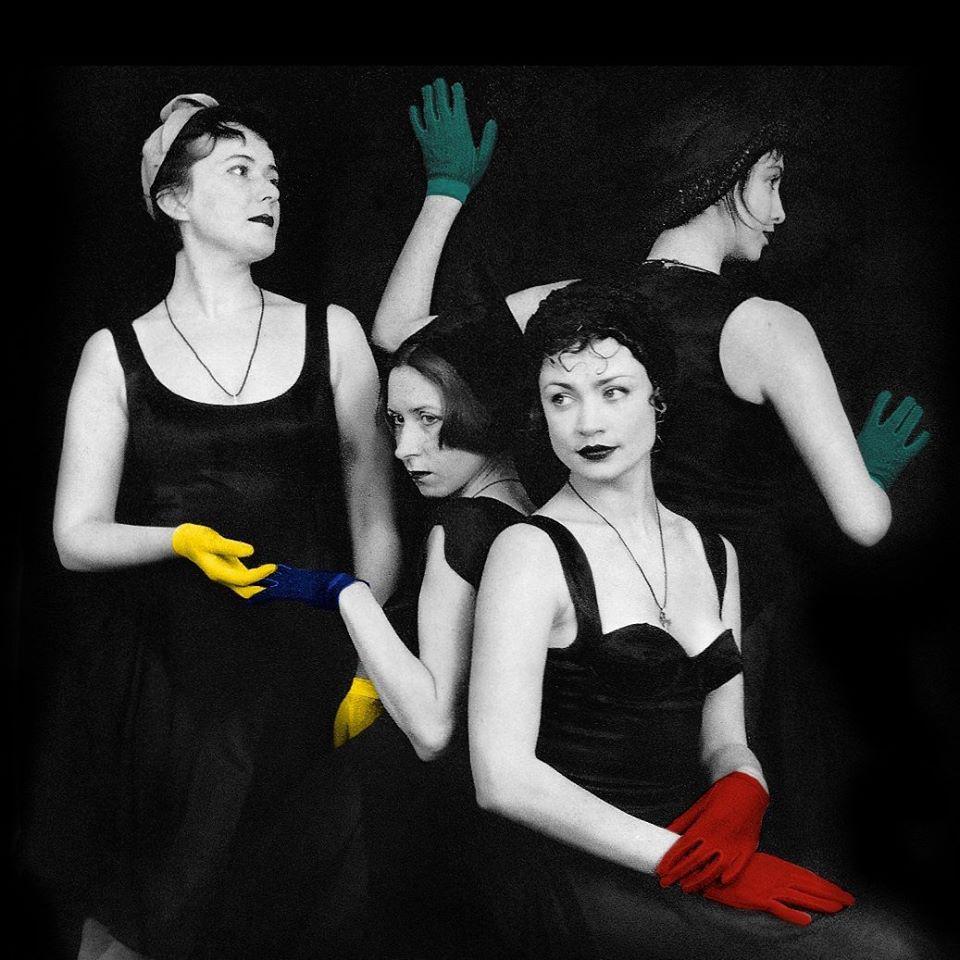
Not until 1990 did the group really get serious. Seven women became five: Natalya Pivovarova, Elena Udanova, Inna Volkova, Olga Feshenko, and Irina Sharovatova. The instrumental tracks for their 1991 debut, Manera Povedeniya (Style of Conduct), were written and recorded with the participation of members of important St. Petersburg rock groups like Televizor (Television) and Akvarium (Aquarium). Singing over these recorded instrumentals, the members of the group began to tour Russia and Europe. Like other experimental collectives of the era (Zvuki My and Auktyon, for example), Kolibri asserted their nonconformity with theatrical stage antics and costuming, in their case identical black ballet outfits and colored gloves. The album was re-released on vinyl by the Russian label FeeLee, and later appeared in the United States as well. In this period, Olga Feshenko left the group, and a film, Kolibri v Parizhe I Doma (Kolibri in Paris and at Home) was made documenting the group's performances.
Kolibri's second album, Malenkie Tragedii (Small Tragedies), was produced with the help of studio musician Yuri Sobolevym and guitarist Alesandr Gnatuk. Starting in 1994, songs from the album found their way onto the radio hit parade, in particular "Zheltiy List Oceniy" (Yellow Leaf of Autumn), written by Elena Udanova. The same year they recorded Naiydi Desyat Otlichiy (Find Ten Differences), widely considered their best album. This time they received instrumental support from Vyacheslav Koshelev and drummer Igor Cheridnik of the group Prepinaki, as well as from Aleksandr Belyaev of Televizor and Nautilus Pompilius. Another famous Petersburg musician produced the album: Andei Muratov, who was then playing keyboards for DDT.
In 1995, director Evgeniy Mitrofanov shot an award-winning music video for Kolibri's song "Volna" (Wave), while two years later, 1997's Bez Sahara (Without Sugar) was a combined effort with the popular Petersburg collective Tequila Jazz, who also joined the four ladies on-stage in Kolibri's first performance using live instrumentation. In 1998 Kolibri took part in another film project, Alkesandr Bashirov's Zheleznaya Pyata Oligarchy (The Iron Heel of Communism), which won prizes at several international film festivals. The same year the group lost its charismatic leader, Natalya Pivovarova, who struck out on her own with a new group, Sous (Sauce), as well as several producing gigs. Now whittled down to a trio, Kolibri took on a pair of male musicians: Andrei Gradovich (guitar) and Oleg Emirov (keyboards). Many were quick to write off their efforts after Pivovarova's departure, but the group continued to write and record thanks to a new contract with Real Records, and to perform annually at Sergei Kuryohin's experimental music festival, SKIF. ~ Sabrina Jaszi, Rovi
Viberate is a music analytics platform built for A&Rs, artist managers, labels, booking agents, marketers, and artists.
It helps music professionals track artist growth, analyze audience data, monitor playlist activity, compare artists, follow song performance, and identify opportunities across the music market.
Public artist pages provide a free preview of selected artist data. Paid plans provide access to deeper analytics, historical data, charts, comparisons, playlist tools, exports, alerts, reports, and additional professional features.
Yes. Public Viberate artist pages provide selected artist analytics and music data for free.
Viberate also offers a 7-day free trial of the full platform. A credit card is required to start the trial. The trial includes access to the complete product so users can test deeper artist analytics, historical views, playlist insights, comparisons, charts, exports, alerts, and reporting features before choosing a paid plan.
Viberate provides artist analytics across streaming, playlists, social media, video, radio airplay, songs, and audience markets.
Users can analyze Spotify performance, Spotify and Apple Music playlists, YouTube activity, TikTok and Instagram growth, radio spins, song performance, audience locations, demographics, rankings, and overall artist momentum.
Artist profiles also connect to music charts, similar artists, and comparison tools, helping users benchmark performance and evaluate artists in context.
Viberate updates key artist and track data daily.
For followed artists and tracks, selected data is refreshed multiple times per day. This helps teams monitor playlist changes, streaming movement, audience growth, releases, and campaign performance with more current data.
Update frequency can vary depending on the metric and data source.
Yes. Viberate lets users compare up to five artists side by side across streaming, social media, audience, and engagement metrics.
Users can compare fanbase growth, audience demographics, locations, Spotify performance, social metrics, and other artist data over selected time periods.
Artist comparison can be used for A&R scouting, benchmarking, booking decisions, campaign planning, and evaluating artists with similar audiences or market positions.