 Viberate
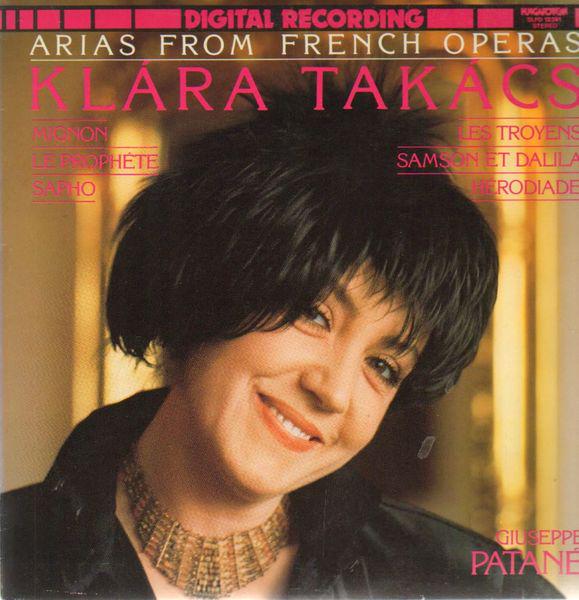
Klára Takács
 HUNClassical, Opera
N/A monthly listeners
 HUNClassical, Opera

Budapest, Hungary-born Klára Takács is a well-known classical and operatic musician. She has won over audiences everywhere with her expressive performances and flawless vocal style. Takács demonstrates her command of the genre by skillfully navigating its complex melodies and challenging vocal range. Her voice has a deep, passionate resonance that engrosses listeners in each composition's intricate fabric.
Takács excels in the field of opera. The characters come to life because to her engaging stage presence and her ability to express a range of complicated emotions through voice. She can play a humorous ingenue or a tragic heroine, and she always nails the essence of the part. Audiences are taken to a another realm by Takács's subtle and engrossing interpretation of the material.
Hungary has a long history of music, and Takács was influenced by the great composers and performers who came before her. She was born and reared in Hungary. She has gained the admiration of her followers and the respect of her peers for her unwavering commitment to her profession and quest of perfection. In the realm of classical and operatic music, Klára Takács is a remarkable virtuoso whose potential is unbounded.
Budapest, Hungary-born Klára Takács is a well-known classical and operatic musician whose captivating performances have enthralled audiences. "Nisi Dominus, RV 608: Cum dederit," one of her best songs, demonstrates her remarkable vocal range and control. Listeners are taken to a another world by the eerie melodies of "Christus, S3/R478: Passion and Resurrection: Resurrexit (Soloists and Chorus)". In Takács' "Christus, S3/R478: Christmas Oratorio: Die heiligen drei Konige (March of the Three Magi)," the festive nativity celebration is brought to life.
The stirring choral work "Christus, S3/R478: Christmas Oratorio: Stabat Mater speciosa (Chorus)" demonstrates Takács's virtuosity. Peace and tranquility are evoked by the ethereal beauty of "Christus, S3/R478: Christmas Oratorio: Hirtenspiel en der Krippe (Pastoral Music at the Manger)". "Il poveretto" demonstrates Takács's emotional range and her capacity to express genuine feelings via vocalization.
Takács's voice melds perfectly with the chorus in "Christus, S3/R478: After Epiphany: Die Grundung der Kirche (The Founding of the Church) (Chorus)," producing a melodic experience. Melancholic and sensitive, "6 Romanze (1838): No. 6." "Deh, pietoso, oh Addolorata" demonstrates her range as a vocalist. "Christus, S3/R478: After Epiphany: Die Seligpreisungen (The Beatitudes) (Baritone, Chorus)" is a profoundly poignant and spiritually inspiring performance by Takács.
Last but not least, Takács's capacity to portray intense emotions through her voice is demonstrated in the eerie and melancholic "Requiem in D Minor, K. 626: Sequence: VI. Lacrimosa dies illa". These songs, along with others in Klára Takács's discography, have cemented her reputation as a well-liked performer of opera and classical music. Audiences all throughout the world are still enthralled and inspired by her performances.
The gifted Budapest, Hungary-born operatic and classical musician Klára Takács has put out a number of outstanding CDs in recent years. "Verdi: Songs (2014)" is one of her most recent CDs, and it features her amazing vocal range and rendition of Verdi's works. This album has a number of Verdi's enthralling songs, each expertly and deeply rendered by Takács, taking listeners on a riveting trip.
Klára Takács also released "Lieder eines fahrenden Gesellen, Blumine, Kindertotenlieder (2014)" in addition to "Verdi: Songs (2014)". Gustav Mahler composed a number of pieces for this record, and Takács's strong voice expertly conveys the spirit and feelings of these works. For lovers of classical and operatic music, this CD is a must-listen because of her amazing ability to capture the richness and depth of Mahler's compositions.
Additionally, "Vivaldi: Domine Ad Adiuvandum Me Festina, Rv 593 / Credo, Rv 592 / Sacrum, Rv 586 (2014)" was released by Klára Takács, demonstrating her range and proficiency in Baroque music. She gives each of Vivaldi's holy masterpieces life on this album, delivering it with accuracy and clarity. This record is a mesmerizing listen thanks to Takács' attention to detail and her ability to conjure the spiritual essence of Vivaldi's music.
Klára Takács has been captivating listeners with her exceptional talent and love of classical and operatic music via her latest CDs. She makes these classic pieces come to life through her interpretations, letting listeners completely lose themselves in the deep and passionate realm of classical music. Admirers of classical and operatic music as well as Klára Takács fans will surely find these recordings to be a worthwhile addition to their library.
Over her career, Budapest, Hungary-born Klára Takács, a musician specializing in opera and classical music, has worked with a number of well-known performers. Her partnerships with Giuseppe Verdi, Antonio Vivaldi, Franz Liszt, and Antal Dorati are a few of the more significant ones among them.
Antonio Vivaldi and I had a notable cooperation on the song "Nisi Dominus, RV 608: Cum dederit." Takács enhances Vivaldi's complex work with her remarkable voice abilities in this tune. When combined, they produce an enthralling musical performance that highlights each member's unique talent.
An additional significant joint effort is with Franz Liszt and Antal Dorati on the song "Christus, S3/R478: Passion and Resurrection: Resurrexit (Soloists and Chorus)." Liszt's beautiful composition and Dorati's excellent orchestration come together to create a compelling performance by Takács. These gifted musicians' combined efforts produce an enthralling performance of this intriguing work.
Although Takács has worked with other artists on a number of songs, her collaboration with Giuseppe Verdi on "Il poveretto" deserves special attention. Through her exploration of the emotional depth and complexity of Verdi's music, Takács demonstrates her versatility in this partnership. It's clear that Takács and Verdi work well together to create a compelling and poignant musical experience.
To sum up, Klára Takács has worked on a number of noteworthy projects in the fields of opera and classical music. Among her most significant professional partnerships were those with Giuseppe Verdi, Franz Liszt, Antal Dorati, and Antonio Vivaldi. Through these partnerships, Takács has demonstrated her extraordinary vocal prowess and capacity to evoke strong feelings and depth in the songs she delivers.
Viberate is a professional music analytics service that provides a complete data overview of Klára Takács, covering audience data, Spotify playlists and stats, individual track performance, and cross-platform metrics including Spotify, YouTube, streaming, and radio airplay analytics. The platform also includes full social media analytics across Instagram, TikTok, and Facebook, as well as insights from Apple Music playlists, SoundCloud, Beatport, Shazam, and Deezer, alongside artist charts, streaming charts, genre charts, and genre analytics to support A&R discovery, benchmarking, and strategic decision-making.
