Kirk Lightsey

Jazz
Smooth Jazz
Bebop
 Viberate Rank: 523142
 Viberate Rank: 523142
 Monthly ListenersFollowers
 Subscribers
 Followers
 Followers
 FansTop Spotify Songs
| Track | 7-Day Streams | |
|---|---|---|
1 | 32 | |
2 | 28 | |
3 | 24 | |
4 | 22 | |
5 | 16 |
Top YouTube VideosMonthly ListenersFeatured in Playlists| Playlist | Followers | |
|---|---|---|
1 |  Deep Spiritual Jazz Neil Lampert | 7.30K |
2 | Gilles Peterson 🔊 (BBC 6 Music) reacharound98 | 4.00K |
3 | Fender Rhodes Jazz brettsylvester | 3.71K |
4 |  Smooth Jazz Instrumental kostoin | 2.32K |
5 |  Serious Jazz Listener : modal free avant hard post bop malaparte | 2.06K |
Audience| City | Monthly Listeners | |
|---|---|---|
1 | | 9 |
2 |  | 7 |
3 |  | 6 |
4 |  | 4 |
5 | | 4 |
See full performance history, audience data, playlist activity, rankings, comparisons, and more in Viberate music analytics. Start with a free trial, then continue with a paid plan.
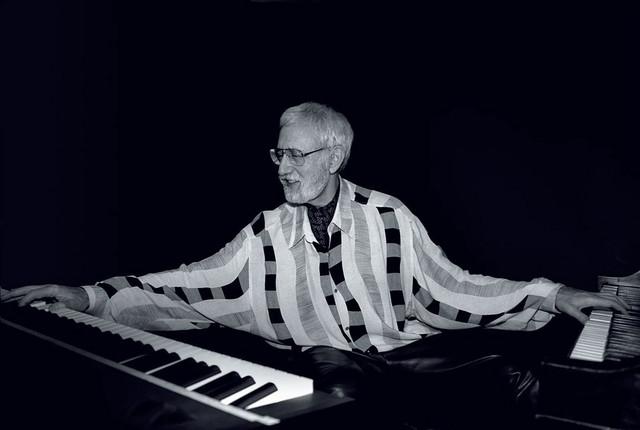
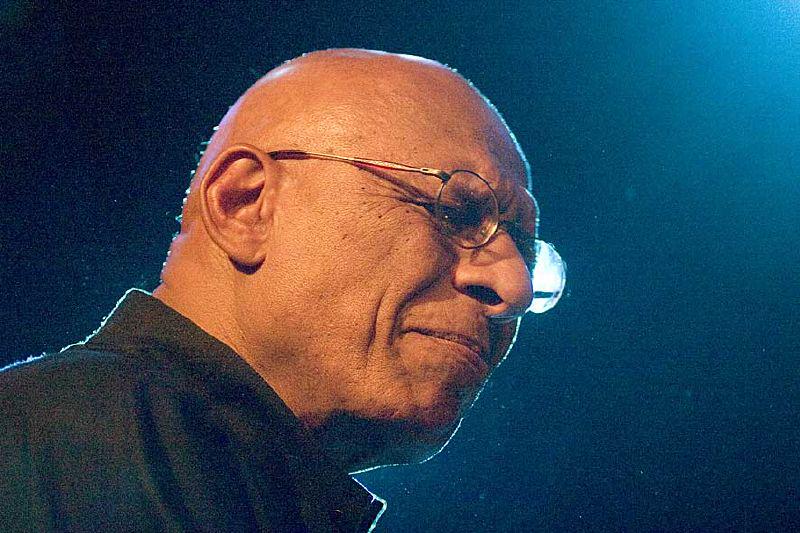
Kirk Lightsey’s Spotify BioPianist and flutist Kirk Lightsey is a sophisticated improvisor with a lithe touch and a bent toward expansive, post-bop, modal jazz and warmly rendered standards. Born in Detroit, Michigan in 1935, Lightsey first began playing piano at age five and grew up listening to swing and big-band music via radio and his mother's record collection. Later, he studied privately with legendary teacher Gladys Wade Dillard, who also tutored similar Detroit luminaries as Barry Harris and Tommy Flanagan. It was while attending Cass Technical High School alongside classmates Paul Chambers, Ron Carter, and Hugh Lawson that the pianist became interested in jazz. At school, he played clarinet in the orchestra, but afternoons were spent playing piano at Barry Harris' house, where he learned to improvise. Although he was talented enough on clarinet to earn a scholarship to Wayne State University in 1954, he instead chose to pursue a career as a jazz pianist.
Gigs followed, including hits with Joe Henderson, …Yusef Lateef, Melba Liston, and others. He also found commercial work touring with Arthur Bragg's Rhythm and Blues Show, where he backed performers like T-Bone Walker, Della Reese, and the Four Tops. After a tour in the Army, during with time he played clarinet in the Fort Knox Army Band, he moved back to Detroit where he played regularly with Cecil McBee, and worked as a studio musician for Motown Records. He also continued to hone his skills studying with classical pianist Boris Maximovich. During the '60s, he made his recorded debut as a sideman on a handful of albums with trumpeter Chet Baker, beginning with 1966's Groovin' with the Chet Baker Quintet. He also recorded with Sonny Stitt for 1967's Pow, and began expanding his scope, working with singer Damita Jo and managing the production group In Stage. He also reconnected with his wind instrument roots, and began playing the flute on occasion. During the '70s, a job as pianist and music director for singer O.C. Smith brought him to Los Angeles, where he also found work with luminaries like Bobby Hutcherson, Pharoah Sanders, Harold Land, and many more. In 1974, he paired with saxophonist Rudolph Johnson for Habiba on the Gallo label, after which he joined Dexter Gordon's group, touring with the saxophonist for five years.
Lightsey's own work increased in the '80s after he signed with the then-new French Sunnyside label and released his debut solo album, 1982's Lightsey 1. He followed up with the trio date Isotope, featuring bassist Jesper Lundgaard and drummer Eddie Gladden, on Criss Cross. More well-regarded albums followed for Sunnyside, including 1984's Lightsey 2, 1985's Lightsey Live, and 1986's Everything Is Changed. He closed out the decade by pairing with trumpeter Marcus Belgrave for the 1987 quintet session Kirk n' Marcus. Poignantly, he had also reunited with Chet Baker for a European tour in 1988, when the trumpeter died tragically after a fall from a hotel window in Amsterdam. There were also albums with Woody Shaw, Jim Pepper, David "Fathead" Newman, and more. Around this time, the pianist also joined the supergroup the Leaders, recording several albums alongside trumpeter Lester Bowie, saxophonist Arthur Blythe, saxophonist Chico Freeman, bassist Cecil McBee, and drummer Famoudou Don Moye.
Over the next decade, Lightsey remained in-demand, recording with fellow Detroiters Wendell Harrison, and Marcus Belgrave, David Murray, and Bill Pierce, among others. He also released several albums, including 1990's Nat King Cole tribute From Kirk to Nat, and 1994's Goodbye Mr. Evans. Since the mid-'90s, Lightsey has lived in France, where he continues to tour and record. In 2004, he issued the live album The Nights of Bradley's, and rejoined the Leaders for 2007's Spirits Alike. A year later, he paired with vocalist Louise Gibbs for Everybody's Song But Our Own. The live Solo Piano en Argentina (recorded at the Festival Internacional de Jazz de Buenos Aires) appeared in 2013. He then joined bassist Tibor Elekes and drummer Famoudou Don Moye for the 2015 trio album Le Corbu. Two years later, he collaborated with vocalist Marilena Paradisi on Some Place Called Where. ~ Matt Collar, Rovi
Viberate is a music analytics platform built for A&Rs, artist managers, labels, booking agents, marketers, and artists.
It helps music professionals track artist growth, analyze audience data, monitor playlist activity, compare artists, follow song performance, and identify opportunities across the music market.
Public artist pages provide a free preview of selected artist data. Paid plans provide access to deeper analytics, historical data, charts, comparisons, playlist tools, exports, alerts, reports, and additional professional features.
Yes. Public Viberate artist pages provide selected artist analytics and music data for free.
Viberate also offers a 7-day free trial of the full platform. A credit card is required to start the trial. The trial includes access to the complete product so users can test deeper artist analytics, historical views, playlist insights, comparisons, charts, exports, alerts, and reporting features before choosing a paid plan.
Viberate provides artist analytics across streaming, playlists, social media, video, radio airplay, songs, and audience markets.
Users can analyze Spotify performance, Spotify and Apple Music playlists, YouTube activity, TikTok and Instagram growth, radio spins, song performance, audience locations, demographics, rankings, and overall artist momentum.
Artist profiles also connect to music charts, similar artists, and comparison tools, helping users benchmark performance and evaluate artists in context.
Viberate updates key artist and track data daily.
For followed artists and tracks, selected data is refreshed multiple times per day. This helps teams monitor playlist changes, streaming movement, audience growth, releases, and campaign performance with more current data.
Update frequency can vary depending on the metric and data source.
Yes. Viberate lets users compare up to five artists side by side across streaming, social media, audience, and engagement metrics.
Users can compare fanbase growth, audience demographics, locations, Spotify performance, social metrics, and other artist data over selected time periods.
Artist comparison can be used for A&R scouting, benchmarking, booking decisions, campaign planning, and evaluating artists with similar audiences or market positions.