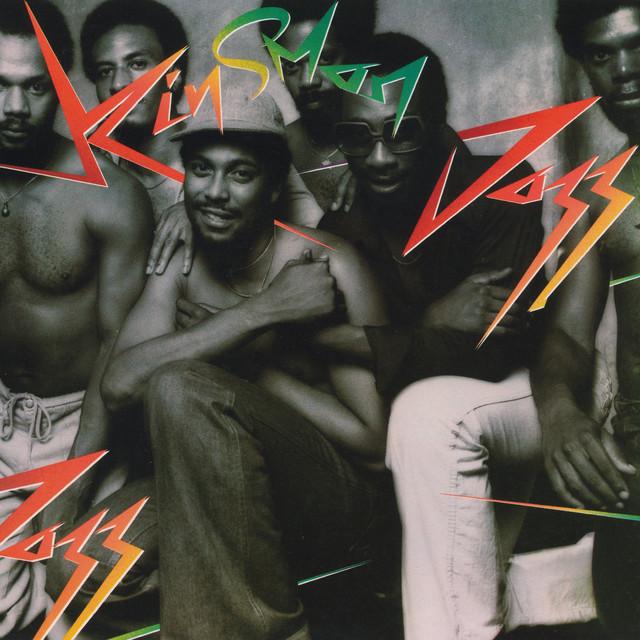
Kinsman Dazz

R&B
Funk
Disco house
 Viberate Rank: 453540
 Viberate Rank: 453540
 Monthly ListenersFollowers
 Subscribers
 Followers
 Followers
 FansTop Spotify SongsTop YouTube VideosMonthly ListenersFeatured in Playlists
| Playlist | Followers | |
|---|---|---|
1 |  Funky Disco House Myron Scholten | 16.79K |
2 |  Rare Disco | Italo / Synth-pop / Boogie / Zouk Patty | 4.21K |
3 |  Rush Hour Records Mick Zegers | 3.65K |
4 |  la puissance de la fonk ® mozinor mozinor | 3.16K |
5 |  Tonno's Diskos Tonno Disko | 3.01K |
Audience| City | Monthly Listeners | |
|---|---|---|
1 |  | 37 |
2 |  | 27 |
3 | | 12 |
4 | | 9 |
5 | | 7 |
See full performance history, audience data, playlist activity, rankings, comparisons, and more in Viberate music analytics. Start with a free trial, then continue with a paid plan.
Kinsman Dazz’s Spotify BioThe roots of Kinsman Dazz lie in Cleveland, OH, where they formed in 1976. "Kinsman" is taken from both the street and the name of the lounge where they worked as the house band -- the Kinsman Grill, located on the corner of East 128th and Kinsman Rd. "Dazz" sounds like "Jazz," which they liked to play, and which also was the buzz word of a hit by Brick, entitled "Dusic." Loosely, they were the mergers of two groups: Bell Telephunk and Mother Braintree. Loosely, of course, because from 1976 to 1978, when their self-titled debut LP dropped, the band had gone through nearly 30 lineup changes. Neither Telephunk nor Braintree ever recorded, though the latter toured with Edwin Starr for over a year as his road band. Larry Ross, the leader of Mother Braintree, was never a part of Kinsman Dazz, or the later Dazz Band. The brothers Wiley, Michael and Issac, were members though, and another ex-Braintree member, Pierre Demudd, joined when they signed with Motown, but was not with them when they… recorded for 20th Century. Despite what you may have read elsewhere, neither was Sennie "Skip" Martin ("Let It Whip"), a San Francisco native. He didn't join until they signed with Motown. Martin was plucked from Mighty Generation, a group from Youngstown, OH, who had gigged all the way to San Jose, CA, where Martin joined them. When they returned to Youngstown, Skip came along and met the members of Kinsman Dazz when they came there to play a gig.
Bobby Harris served as the group's defacto leader, while Earth, Wind & Fire's Philip Bailey acted as Kinsman Dazz's mentor; he co-wrote songs, arranged, sung backing vocals and produced the two 20th Century LPs. The lineup of Kinsman Dazz was ever-changing -- even as their first LP hit the streets, the revolving door swung back and forth. By the time Dazz came out, guitarist/songwriter Michael Calhoun had vanished. He later surfaced on a couple of obscure 45s, released on tiny labels in his native Cleveland, OH, before disappearing. ~ Andrew Hamilton, Rovi
Viberate is a music analytics platform built for A&Rs, artist managers, labels, booking agents, marketers, and artists.
It helps music professionals track artist growth, analyze audience data, monitor playlist activity, compare artists, follow song performance, and identify opportunities across the music market.
Public artist pages provide a free preview of selected artist data. Paid plans provide access to deeper analytics, historical data, charts, comparisons, playlist tools, exports, alerts, reports, and additional professional features.
Yes. Public Viberate artist pages provide selected artist analytics and music data for free.
Viberate also offers a 7-day free trial of the full platform. A credit card is required to start the trial. The trial includes access to the complete product so users can test deeper artist analytics, historical views, playlist insights, comparisons, charts, exports, alerts, and reporting features before choosing a paid plan.
Viberate provides artist analytics across streaming, playlists, social media, video, radio airplay, songs, and audience markets.
Users can analyze Spotify performance, Spotify and Apple Music playlists, YouTube activity, TikTok and Instagram growth, radio spins, song performance, audience locations, demographics, rankings, and overall artist momentum.
Artist profiles also connect to music charts, similar artists, and comparison tools, helping users benchmark performance and evaluate artists in context.
Viberate updates key artist and track data daily.
For followed artists and tracks, selected data is refreshed multiple times per day. This helps teams monitor playlist changes, streaming movement, audience growth, releases, and campaign performance with more current data.
Update frequency can vary depending on the metric and data source.
Yes. Viberate lets users compare up to five artists side by side across streaming, social media, audience, and engagement metrics.
Users can compare fanbase growth, audience demographics, locations, Spotify performance, social metrics, and other artist data over selected time periods.
Artist comparison can be used for A&R scouting, benchmarking, booking decisions, campaign planning, and evaluating artists with similar audiences or market positions.