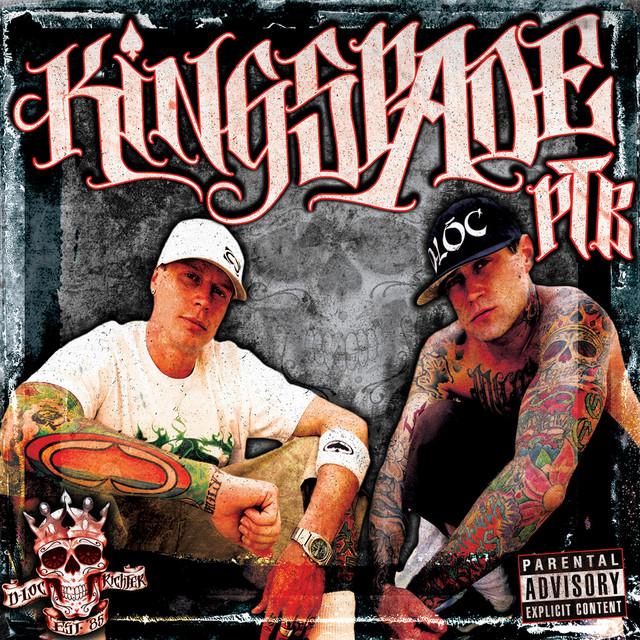
Kingspade

Hip Hop
Contemporary Hip Hop
 Viberate Rank: 167660
 Viberate Rank: 167660
 Monthly ListenersFollowers
 Subscribers
 Followers
 Followers
 FansTop Spotify Songs
| Track | 7-Day Streams | |
|---|---|---|
1 | 3.94K | |
2 | 3.21K | |
3 | 2.00K | |
4 | 1.71K | |
5 | 1.55K |
Top YouTube VideosMonthly ListenersFeatured in Playlists| Playlist | Followers | |
|---|---|---|
1 | For Adults: 420 weed music thejebba | 12.49K |
2 | Tokyo Drift mainmonk | 10.18K |
3 | some shit v4 yuv41 | 9.92K |
4 |  90 Hip Hop Music ventryhd | 6.35K |
5 | SubWoofer Heavy Hitters Calee | 4.00K |
Audience| City | Monthly Listeners | |
|---|---|---|
1 | | 733 |
2 | | 532 |
3 | | 516 |
4 | | 474 |
5 | | 406 |
See full performance history, audience data, playlist activity, rankings, comparisons, and more in Viberate music analytics. Start with a free trial, then continue with a paid plan.
Kingspade’s Spotify BioAlthough they still draw from the same California hardcore punk and Beastie Boys eclecticism as Orange County rap-metal outfit the Kottonmouth Kings, Johnny Richter (Tim McNutt) and D-Loc (Dustin Miller) splintered off to create a more strictly rap group, Kingspade, in the early 2000s. Still a part of the Suburban Noize family, Richter and D-Loc spit their stoner rhymes over beats with heavy Southern bass and G-funk party grooves instead of rap-rock fusion. The two knew each other as childhood friends in Placentia, CA, way before the formation of the Kottonmouth Kings. Richter was not an original member of Kottonmouth, but he had been friends with the entire band. Richter became an official MC/vocalist in time for their second album, Hidden Stash (1999), after another member departed. Richter and D-Loc debuted as Kingspade on the sixth Kottonmouth Kings LP, Fire It Up, in 2004. Carving out a new fan base from Suburban Noize's cult following, they released their eponymous full-length… later that August and returned in 2007 with PTB, an acronym for "P-Town (as in Placentia) Ballers." ~ Cyril Cordor
Viberate is a music analytics platform built for A&Rs, artist managers, labels, booking agents, marketers, and artists.
It helps music professionals track artist growth, analyze audience data, monitor playlist activity, compare artists, follow song performance, and identify opportunities across the music market.
Public artist pages provide a free preview of selected artist data. Paid plans provide access to deeper analytics, historical data, charts, comparisons, playlist tools, exports, alerts, reports, and additional professional features.
Yes. Public Viberate artist pages provide selected artist analytics and music data for free.
Viberate also offers a 7-day free trial of the full platform. A credit card is required to start the trial. The trial includes access to the complete product so users can test deeper artist analytics, historical views, playlist insights, comparisons, charts, exports, alerts, and reporting features before choosing a paid plan.
Viberate provides artist analytics across streaming, playlists, social media, video, radio airplay, songs, and audience markets.
Users can analyze Spotify performance, Spotify and Apple Music playlists, YouTube activity, TikTok and Instagram growth, radio spins, song performance, audience locations, demographics, rankings, and overall artist momentum.
Artist profiles also connect to music charts, similar artists, and comparison tools, helping users benchmark performance and evaluate artists in context.
Viberate updates key artist and track data daily.
For followed artists and tracks, selected data is refreshed multiple times per day. This helps teams monitor playlist changes, streaming movement, audience growth, releases, and campaign performance with more current data.
Update frequency can vary depending on the metric and data source.
Yes. Viberate lets users compare up to five artists side by side across streaming, social media, audience, and engagement metrics.
Users can compare fanbase growth, audience demographics, locations, Spotify performance, social metrics, and other artist data over selected time periods.
Artist comparison can be used for A&R scouting, benchmarking, booking decisions, campaign planning, and evaluating artists with similar audiences or market positions.