Kid Congo Powers

Punk
Punk Rock
Indie Rock
Alternative Rock
 Viberate Rank: 293581
 Viberate Rank: 293581
 Monthly ListenersFollowers
 Subscribers
 Followers
 Followers
 FansTop Spotify Songs
| Track | 7-Day Streams | |
|---|---|---|
1 | 370 | |
2 | 162 | |
3 | 136 | |
4 | 132 | |
5 | 127 |
Top YouTube VideosMonthly ListenersFeatured in Playlists| Playlist | Followers | |
|---|---|---|
1 |  FIP Radio (en live) Matthou | 13.27K |
2 |  Crème de la CREEM: New Music Friday CREEM | 3.93K |
3 |  The Sound of Punk Blues The Sounds of Spotify | 3.52K |
4 |  FIP : Les morceaux en continu (maj toutes les heures) Guillaume | 3.27K |
5 |  DECOUVERTE DE LA SEMAINE TOP Charles Lemoine | 2.43K |
Audience| City | Monthly Listeners | |
|---|---|---|
1 |  | 810 |
2 |  | 683 |
3 |  | 651 |
4 |  | 466 |
5 |  | 391 |
See full performance history, audience data, playlist activity, rankings, comparisons, and more in Viberate music analytics. Start with a free trial, then continue with a paid plan.
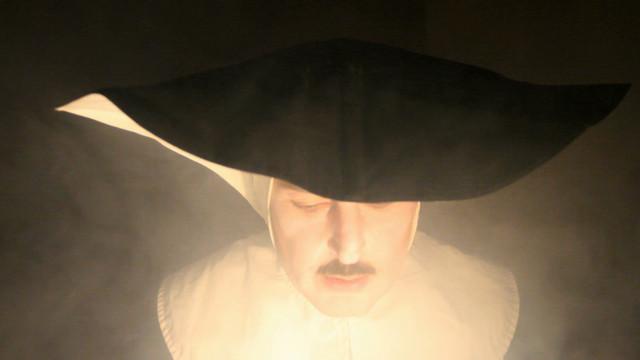
Kid Congo Powers’ Spotify BioA distinctive presence at the nexus where roots music meets punk, Kid Congo Powers played with a number of celebrated bands, including the Gun Club, the Cramps, and Nick Cave & the Bad Seeds, before he struck out on his own as a solo artist. As a guitarist, Powers can play carefully sculpted noise or sturdy leads that merge his love of punk, glam, and the blues, and his melodic sense is ragged but right, primal rock and roll that's expressive and impassioned. After years as a sideman, Powers finally made his solo debut with 2005's Philosophy and Underwear, and debuted his band the Pink Monkey Birds on 2009's Dracula Boots. A memorable one-off gig with Near Death Experience was preserved on 2023's Live in St. Kilda.
Kid Congo Powers was born Brian Tristan on March 27, 1959, in La Puente, California. He was raised in a second-generation Mexican-American household, and grew up on a diet of Mexican and Chicano music; the first concert he saw was by the legendary East L.A. band Thee… Midniters. In his early teens, he became a glam rock devotee, spending his evenings at Rodney Bingenheimer's notorious English Disco in Hollywood, where he indulged his musical interests and explored his sexuality as a young gay man. In 1976, Powers discovered punk rock, and founded a Ramones fan club; he later created a fan newsletter for the influential L.A. synth-punk band the Screamers. After a spell in New York City, where he shared a flat with Lydia Lunch, Powers came back to Los Angeles, and with his friend Jeffrey Lee Pierce, he formed a band called Creeping Ritual, which quickly evolved into the Gun Club. Though Powers was still learning to play, his open-tuned slide work worked powerfully in context, and the group became the talk of the L.A. underground scene.
As the Gun Club's popularity grew, Powers was persuaded to join the pioneering psychobilly band the Cramps after guitarist Bryan Gregory left the group. Powers signed on, and appeared on their second album, 1981's Psychedelic Jungle, but a legal battle with their record company put the group on hold for the better part of two years, and not long after the February 1983 shows that were recorded for the EP Smell of Female, Powers left the Cramps and rejoined the Gun Club, appearing on their 1984 album The Las Vegas Story. In 1986, he was invited to join Nick Cave & the Bad Seeds, and took part in the recording of 1988's Tender Prey and 1990's The Good Son, as well as touring with the group. Powers occasionally worked with the Gun Club during this period, and he would rejoin them in 1990 after amicably leaving the Bad Seeds. Powers dropped out of the Gun Club before the recording of 1993's Lucky Jim, which proved to be their last album. Powers and Pierce staged a handful of Gun Club reunion shows in 1996, but the group's story came to a close in 1996 with the death of Jeffrey Lee Pierce.
Powers teamed with Sally Norvell to form the duo Congo Norvell, who debuted in 1994 with the LP Music to Remember Him By, and he joined Bob Bert of Sonic Youth and Pussy Galore and Jerry Teel of Boss Hog in the Knoxville Girls, whose self-titled debut was issued in 1999. In 2005, New York Night Train Records issued Solo Cholo, a collection of songs Powers cut with several different bands, including Die Haut and Khan. The same year, Powers' proper solo debut arrived, Philosophy and Underwear. As Powers began refining his skills as a songwriter and vocalist, he ramped up his recording and touring schedule, and formed a band to accompany him on his projects. Fusing primitive, swampy rock & roll, garage rock, and fractured blues with East L.A. Chicano rock and a dash of punk and psychedelia, Powers dubbed his new band the Pink Monkey Birds. The group initially featured Powers on guitar and vocals, Jack Martin on guitar, Kiki Solis on bass, and Ron Miller on drums. By the time the band recorded its first album, Dracula Boots, in 2009, Martin was out and Jesse Roberts had stepped in on guitar and keyboards. Kid Congo & the Pink Monkey Birds continued to tour regularly, racking up more miles than Powers had since the '90s, and they released Gorilla Rose in 2011 and Haunted Head in 2013. In 2016, Powers and the group delivered their fourth album, La Arana Es la Vida. The LP introduced a new Pink Monkey Birds lineup: Jesse Roberts parted ways with the band, and Powers recruited guitarist Mark Cisneros to fill the vacancy in the group.
In 2018, Powers contributed slide guitar to Giant Sand's Returns to Valley of Rain, and in 2022 he published Some New Kind of Kick: A Memoir, chronicling his life and musical career. 2023's Live in St. Kilda documented an unusual performance for Powers. He was friends with Kim Salmon, the leader of the celebrated Australian punk band the Scientists, and when Salmon published an autobiography, he invited Powers to perform at his publication day party in St. Kilda, Australia. Powers was unable to bring his own band, so he was accompanied by the Near Death Experience, which included Harry Howard of Crime and the City Solution, Edwina Preston of Atom, and Dave Graney and Clare Moore of the Moodists and the Coral Snakes. The show was recorded, and Live in St. Kilda was issued by In the Red Records. ~ Mark Deming, Rovi
Viberate is a music analytics platform built for A&Rs, artist managers, labels, booking agents, marketers, and artists.
It helps music professionals track artist growth, analyze audience data, monitor playlist activity, compare artists, follow song performance, and identify opportunities across the music market.
Public artist pages provide a free preview of selected artist data. Paid plans provide access to deeper analytics, historical data, charts, comparisons, playlist tools, exports, alerts, reports, and additional professional features.
Yes. Public Viberate artist pages provide selected artist analytics and music data for free.
Viberate also offers a 7-day free trial of the full platform. A credit card is required to start the trial. The trial includes access to the complete product so users can test deeper artist analytics, historical views, playlist insights, comparisons, charts, exports, alerts, and reporting features before choosing a paid plan.
Viberate provides artist analytics across streaming, playlists, social media, video, radio airplay, songs, and audience markets.
Users can analyze Spotify performance, Spotify and Apple Music playlists, YouTube activity, TikTok and Instagram growth, radio spins, song performance, audience locations, demographics, rankings, and overall artist momentum.
Artist profiles also connect to music charts, similar artists, and comparison tools, helping users benchmark performance and evaluate artists in context.
Viberate updates key artist and track data daily.
For followed artists and tracks, selected data is refreshed multiple times per day. This helps teams monitor playlist changes, streaming movement, audience growth, releases, and campaign performance with more current data.
Update frequency can vary depending on the metric and data source.
Yes. Viberate lets users compare up to five artists side by side across streaming, social media, audience, and engagement metrics.
Users can compare fanbase growth, audience demographics, locations, Spotify performance, social metrics, and other artist data over selected time periods.
Artist comparison can be used for A&R scouting, benchmarking, booking decisions, campaign planning, and evaluating artists with similar audiences or market positions.