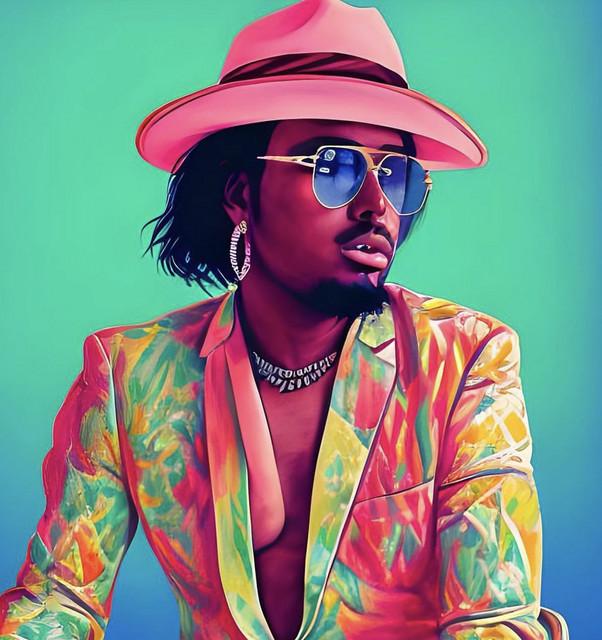
Kent Jones

Hip Hop
Contemporary Hip Hop
Trap
Mainstream Pop
 Viberate Rank: 16974
 Viberate Rank: 16974
 Monthly ListenersFollowers
 Subscribers
 Followers
 Followers
 FansTop Spotify Songs
| Track | 7-Day Streams | |
|---|---|---|
1 | 526.32K | |
2 | 27.49K | |
3 | 15.46K | |
4 | 9.13K | |
5 | 8.61K |
Top YouTube Videos| Video | 7-Day Views | |
|---|---|---|
1 | 2.54K | |
2 | 1.06K | |
3 | 847 | |
4 | 618 | |
5 | 588 |
Monthly ListenersFeatured in Playlists| Playlist | Followers | |
|---|---|---|
1 |  2016 vibes🫧 h | 1.69M |
2 |  Top Hits of 2016 Spotify | 401.19K |
3 | 2016 2017 2018 nostalgic ch3rr1z | 306.92K |
4 |  2014 tumblr girls ✈️🌴💕 Lita B | 207.48K |
5 |  Jonas Brothers Complete Collection Jonas Brothers | 185.93K |
Audience| City | Monthly Listeners | |
|---|---|---|
1 |  | 13.89K |
2 |  | 12.73K |
3 |  | 11.47K |
4 | | 10.30K |
5 | | 8.98K |
See full performance history, audience data, playlist activity, rankings, comparisons, and more in Viberate music analytics. Start with a free trial, then continue with a paid plan.
Kent Jones’ Spotify BioSinger/rapper Kent Jones earned credibility as a multi-instrumentalist and producer before he took his melodic mix of R&B, hip-hop, and pop to the mainstream in 2016 with the Top Ten double-platinum hit "I Don't Mind." An affiliate of Cool & Dre and DJ Khaled -- he has appeared on two of Khaled's number one albums -- Jones started building his solo full-length discography in the late 2010s with a trio of mixtapes. In the 2020s, he has scored another charting single as a featured artist on D-Nice's "No Plans for Love," and has headlined tracks such as the Rick Ross collaboration "Bout That."
Born and raised in Tallahassee, Kent Jones (full name Daryl Kent Jones, sometimes credited as Daryl Jones) first became involved in music via his church. His interests then turned to jazz, with the work of Quincy Jones a formative discovery as he continued to broaden his range as an instrumentalist on drums, bass, and keyboards. He later became interested in hip-hop and especially admired the work of… Dr. Dre and Timbaland, producers whose use of bass inspired his own booming productions. He relocated to Miami to work extensively with Cool & Dre, a move that in turn placed him in the path of the production duo's close associate DJ Khaled. Jones landed a joint label deal with Cool & Dre's Epidemic and DJ Khaled's Epic-distributed We the Best. Tours, his first mixtape, arrived in July 2015, and three months later, the Game released The Documentary 2, featuring Jones' writing and production on the track "Dollar and a Dream." The following April, the Tours cut "Don't Mind" was issued as a single, and truly made Jones' name known as it became a number eight pop hit on the Hot 100, reaching number nine in the U.K. while also faring well in Canada and across Europe and Scandinavia.
Over the next couple years, Jones released two more tapes, Too Much Too Soon and The LUH Tape, and was featured on tracks by DJ Khaled, DNCE, Fat Joe and Remy Ma, and E-40, among others. The singles "Merengue" and "I Like It" were out by the end of the decade. Still with Epic, Jones re-emerged in 2021 with a handful of co-productions and featured appearances, as well as singles as a lead artist. Among these were DJ Khaled's "We Going Crazy," D-Nice's "No Plans for Love" (also featuring Ne-Yo), and Jones' own "Bout That" (on which he was joined by Rick Ross). The D-Nice collaboration, a radio hit, peaked at number four on Billboard's Adult R&B Airplay chart. ~ Andy Kellman & David Jeffries, Rovi
Viberate is a music analytics platform built for A&Rs, artist managers, labels, booking agents, marketers, and artists.
It helps music professionals track artist growth, analyze audience data, monitor playlist activity, compare artists, follow song performance, and identify opportunities across the music market.
Public artist pages provide a free preview of selected artist data. Paid plans provide access to deeper analytics, historical data, charts, comparisons, playlist tools, exports, alerts, reports, and additional professional features.
Yes. Public Viberate artist pages provide selected artist analytics and music data for free.
Viberate also offers a 7-day free trial of the full platform. A credit card is required to start the trial. The trial includes access to the complete product so users can test deeper artist analytics, historical views, playlist insights, comparisons, charts, exports, alerts, and reporting features before choosing a paid plan.
Viberate provides artist analytics across streaming, playlists, social media, video, radio airplay, songs, and audience markets.
Users can analyze Spotify performance, Spotify and Apple Music playlists, YouTube activity, TikTok and Instagram growth, radio spins, song performance, audience locations, demographics, rankings, and overall artist momentum.
Artist profiles also connect to music charts, similar artists, and comparison tools, helping users benchmark performance and evaluate artists in context.
Viberate updates key artist and track data daily.
For followed artists and tracks, selected data is refreshed multiple times per day. This helps teams monitor playlist changes, streaming movement, audience growth, releases, and campaign performance with more current data.
Update frequency can vary depending on the metric and data source.
Yes. Viberate lets users compare up to five artists side by side across streaming, social media, audience, and engagement metrics.
Users can compare fanbase growth, audience demographics, locations, Spotify performance, social metrics, and other artist data over selected time periods.
Artist comparison can be used for A&R scouting, benchmarking, booking decisions, campaign planning, and evaluating artists with similar audiences or market positions.