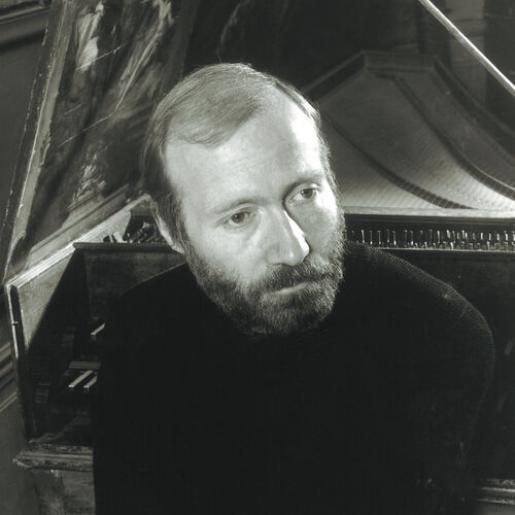
Kenneth Gilbert

Classical
Classical Crossover
Chamber Music
 Viberate Rank: 383505
 Viberate Rank: 383505
 Monthly ListenersFollowers
 Subscribers
 Followers
 Followers
 FansTop Spotify Songs
| Track | 7-Day Streams | |
|---|---|---|
1 | 1.27K | |
2 | 443 | |
3 | 419 | |
4 | 183 | |
5 | 138 |
Top YouTube VideosMonthly ListenersFeatured in Playlists| Playlist | Followers | |
|---|---|---|
1 |  Wir Entdecken Komponisten Deutsche Grammophon (DG) | 4.55K |
2 |  Rameau - Best of Deutsche Grammophon (DG) | 3.51K |
3 | Clássicas vibrações ARTHUR AYRES | 3.18K |
4 | Bach Works Catalogue (Bach-Werke-Verzeichnis) Ulysses' Classical | 2.78K |
5 |  carmilla 🦇🩸💋⚰️ type b negative | 2.45K |
Audience| City | Monthly Listeners | |
|---|---|---|
1 |  | 138 |
2 |  | 99 |
3 |  | 97 |
4 |  | 89 |
5 |  | 86 |
See full performance history, audience data, playlist activity, rankings, comparisons, and more in Viberate music analytics. Start with a free trial, then continue with a paid plan.
Kenneth Gilbert’s Spotify BioKenneth Gilbert has entwined scholarship and performance more closely than almost any other figure in the field of early music, making scholarship an art and performance a means of investigation. He has made well over 50 recordings, written numerous articles and reviews, and edited new publications of music by François Couperin, Domenico Scarlatti, Bach, Frescobaldi, and Rameau, among many others.
Gilbert was born and raised in Montreal, Quebec, Canada; his last name is pronounced as in French (zheel-BAIR). He has always retained strong ties to that city, but his career has been international. After studies at the Quebec Conservatory in Montreal he went to Europe, where his teachers included Nadia Boulanger and Maurice Duruflé. Gilbert's harpsichord teacher in France was Italian-born Landowska protégé Ruggero Gerlin. In 1953 Gilbert won a major European organ prize, and for much of the first part of his career he was primarily occupied with that instrument. He served as organist and… music director at the Queen Mary Road United Church (now Rosedale Queen Mary United Church) in Montreal for 15 years, designing and supervising the installation of a new organ there. From 1957 to 1974 he taught at the Quebec Conservatory.
In the early 1960s, Gilbert won financial support from the Quebec government and later from the Canada Council to return to Europe for research purposes, and he began to become familiar with the original engraved printings of some of the monuments of Baroque keyboard music. A four-volume Gilbert edition of François Couperin's keyboard works published between 1968 and 1972 was the first of a series of harpsichord publications, and from about 1965 onward, Gilbert's interests as a performer shifted to the harpsichord.
Although he lived mostly in France in the 1970s and 1980s, Gilbert was active all over Europe, in Canada (where he was richly garlanded with national honors), and in the U.S. He taught at several European conservatories and universities, and in 1988 he became the first Canadian, and one of few foreigners of any nationality, to hold the post of professor at the Paris Conservatoire. Gilbert's recordings have been released on the Harmonia Mundi and Archiv labels, as well as a host of more specialized lines. He has focused on French music, and his recordings of works such as the Premier livre de clavecin by Chambonnières are considered standards. But he has also made major Bach recordings, including, for example, a 1989 Archiv release on which he performed the Art of the Fugue.
Viberate is a music analytics platform built for A&Rs, artist managers, labels, booking agents, marketers, and artists.
It helps music professionals track artist growth, analyze audience data, monitor playlist activity, compare artists, follow song performance, and identify opportunities across the music market.
Public artist pages provide a free preview of selected artist data. Paid plans provide access to deeper analytics, historical data, charts, comparisons, playlist tools, exports, alerts, reports, and additional professional features.
Yes. Public Viberate artist pages provide selected artist analytics and music data for free.
Viberate also offers a 7-day free trial of the full platform. A credit card is required to start the trial. The trial includes access to the complete product so users can test deeper artist analytics, historical views, playlist insights, comparisons, charts, exports, alerts, and reporting features before choosing a paid plan.
Viberate provides artist analytics across streaming, playlists, social media, video, radio airplay, songs, and audience markets.
Users can analyze Spotify performance, Spotify and Apple Music playlists, YouTube activity, TikTok and Instagram growth, radio spins, song performance, audience locations, demographics, rankings, and overall artist momentum.
Artist profiles also connect to music charts, similar artists, and comparison tools, helping users benchmark performance and evaluate artists in context.
Viberate updates key artist and track data daily.
For followed artists and tracks, selected data is refreshed multiple times per day. This helps teams monitor playlist changes, streaming movement, audience growth, releases, and campaign performance with more current data.
Update frequency can vary depending on the metric and data source.
Yes. Viberate lets users compare up to five artists side by side across streaming, social media, audience, and engagement metrics.
Users can compare fanbase growth, audience demographics, locations, Spotify performance, social metrics, and other artist data over selected time periods.
Artist comparison can be used for A&R scouting, benchmarking, booking decisions, campaign planning, and evaluating artists with similar audiences or market positions.