Keith Green

Rock
Pop Rock
Christian Music
 Viberate Rank: 40441
 Viberate Rank: 40441
 Monthly ListenersFollowers
 Subscribers
 Followers
 Followers
 FansTop Spotify Songs
| Track | 7-Day Streams | |
|---|---|---|
1 | 31.68K | |
2 | 22.88K | |
3 | 15.80K | |
4 | 11.24K | |
5 | 10.76K |
Top YouTube VideosMonthly ListenersFeatured in Playlists| Playlist | Followers | |
|---|---|---|
1 |  Dear Anthony: Questlove's Defense Of Yacht Rock, Smooth Soul & Dentist Office Pop Ahmir Khalib Thompson | 78.25K |
2 | 90s & 2000s Christian Throwbacks Cornerstone Church | 25.90K |
3 |  250th Anniversary AckAckREog | 21.98K |
4 |  Hymns: 3,000 Traditional Hymns by Modern Artists brucekonold | 15.52K |
5 | Christian Hymns Traditional Scott Ritchie | 12.49K |
Audience| City | Monthly Listeners | |
|---|---|---|
1 |  | 2.81K |
2 |  | 2.30K |
3 | | 2.20K |
4 | | 1.99K |
5 | | 1.90K |
See full performance history, audience data, playlist activity, rankings, comparisons, and more in Viberate music analytics. Start with a free trial, then continue with a paid plan.
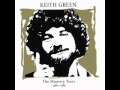
Keith Green’s Spotify BioA pioneer of CCM music, influential singer/songwriter Keith Green rose to success in the late '70s pairing a pop-oriented soft rock sound with overtly religious messages. Born in Sheepshead Bay, Brooklyn, in 1953, Green developed his musical talent at an early age, signing a deal with Decca Records when he was only 11 years old. Touted by Decca as an emerging teen idol, Green's finesse as a songwriter made him an exception from the norm and, in 1965, he became the youngest member of publishing rights agency ASCAP. His success was short-lived, however, as more prominent teen idols like Donny Osmond soon stole the spotlight. Barely out of his teens, Green married fellow musician Melody Steiner in 1973 and two soon became deeply involved in the Christian faith. Both staff writers for CBS Records, the Greens began opening their California home to those in need, providing a safe environment for fellow seekers. Their homegrown outreach eventually developed into Last Days Ministries, a… non-profit organization that would continue to operate for decades to come. Green's reemergence as a Christian recording artist came in 1977 with the release of For Him Who Has Ears to Hear on Sparrow Records. With a soft rock style reminiscent of Elton John or Leo Sayer, Green appealed to both secular and religious audiences, though his messages were distinctly Christian.
Following his second album, 1978's No Compromise, he left Sparrow and instituted a personal policy that would offer fans his music for free. This leap of faith saw the Greens mortgaging their home to privately finance 1980's So You Want to Go Back to Egypt. Pioneering a model that wouldn't gain traction until nearly 30 years later, the album was offered through mail order and at concerts on a pay-what-you-want basis in the hopes of further spreading his faith-based message. Following a 1981 set called The Keith Green Collection, he delivered what would be his last album, Songs for the Shepherd. On July 28, 1982, just a few months after the album's release, Green and two of his children were killed in a plane crash during what was to be an aerial tour of the Last Days Ministries property. A pair of posthumously released albums, 1983's The Prodigal Son and 1984's Jesus Commands Us to Go!, were rescued from the vault. Several more compilations and anthologies have been released over the ensuing decades as well as a number of tribute albums. Following his death, Green's wife Melody continued to lead their ministry and, in 1989, published a biography of her late husband titled No Compromise. Decades after his death, Green's legacy and influence still resonate in the CCM world. ~ Timothy Monger, Rovi
Viberate is a music analytics platform built for A&Rs, artist managers, labels, booking agents, marketers, and artists.
It helps music professionals track artist growth, analyze audience data, monitor playlist activity, compare artists, follow song performance, and identify opportunities across the music market.
Public artist pages provide a free preview of selected artist data. Paid plans provide access to deeper analytics, historical data, charts, comparisons, playlist tools, exports, alerts, reports, and additional professional features.
Yes. Public Viberate artist pages provide selected artist analytics and music data for free.
Viberate also offers a 7-day free trial of the full platform. A credit card is required to start the trial. The trial includes access to the complete product so users can test deeper artist analytics, historical views, playlist insights, comparisons, charts, exports, alerts, and reporting features before choosing a paid plan.
Viberate provides artist analytics across streaming, playlists, social media, video, radio airplay, songs, and audience markets.
Users can analyze Spotify performance, Spotify and Apple Music playlists, YouTube activity, TikTok and Instagram growth, radio spins, song performance, audience locations, demographics, rankings, and overall artist momentum.
Artist profiles also connect to music charts, similar artists, and comparison tools, helping users benchmark performance and evaluate artists in context.
Viberate updates key artist and track data daily.
For followed artists and tracks, selected data is refreshed multiple times per day. This helps teams monitor playlist changes, streaming movement, audience growth, releases, and campaign performance with more current data.
Update frequency can vary depending on the metric and data source.
Yes. Viberate lets users compare up to five artists side by side across streaming, social media, audience, and engagement metrics.
Users can compare fanbase growth, audience demographics, locations, Spotify performance, social metrics, and other artist data over selected time periods.
Artist comparison can be used for A&R scouting, benchmarking, booking decisions, campaign planning, and evaluating artists with similar audiences or market positions.