Justin Vernon

Rock
Folk Rock
Indie Folk
 Viberate Rank: 112735
 Viberate Rank: 112735
 Monthly ListenersFollowers
 Subscribers
 Followers
 Followers
 FansTop Spotify Songs
| Track | 7-Day Streams | |
|---|---|---|
1 | 27.86K | |
2 | 8.81K | |
3 | 8.69K | |
4 | 6.68K | |
5 | 5.07K |
Top YouTube VideosMonthly ListenersFeatured in Playlists| Playlist | Followers | |
|---|---|---|
1 |  Bob Dylan: Covered Spotify | 135.98K |
2 | While You Work (@whileyouwork) Eli Feghali | 81.75K |
3 |  Chill Pop 2026 PressPlay | 59.57K |
4 |  Best of Indie 2020 Spotify | 58.82K |
5 |  The Blacklist - All Songs volinarb | 57.28K |
Audience| City | Monthly Listeners | |
|---|---|---|
1 |  | 2.03K |
2 | | 1.66K |
3 | | 1.27K |
4 | | 1.26K |
5 | | 1.23K |
See full performance history, audience data, playlist activity, rankings, comparisons, and more in Viberate music analytics. Start with a free trial, then continue with a paid plan.
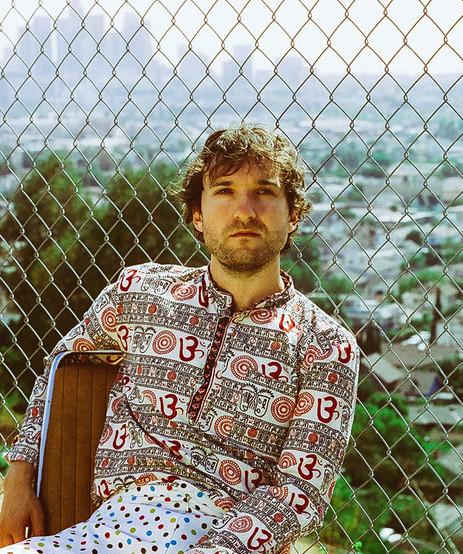
Justin Vernon’s Spotify BioJustin Vernon is a singer, songwriter, and producer most closely associated with the acclaimed indie band Bon Iver, which he launched as a solo project in 2007. The veteran Wisconsin musician had already amassed a significant back catalog by the time Bon Iver's home-recorded debut album, For Emma, Forever Ago, achieved breakout success in 2008. Features with Kanye West and a pair of Grammy Awards for Bon Iver's eponymous 2011 album followed, as Vernon expanded the project into a full band that experimented widely beyond its indie folk roots. He simultaneously branched out with side projects like Volcano Choir, Gayngs, and Big Red Machine, while also positioning himself as an in-demand collaborator and producer. Vernon steered Bon Iver into avant-garde territory on 2016's 22, A Million and 2019's I, I, yet they retained enough of a mainstream sound to be featured on hits by Taylor Swift and Zach Bryan, and to have Bruce Springsteen guest on one of their own songs. In 2023, Vernon… released Epoch, an archival box set devoted to his pre-Bon Iver band DeYarmond Edison.
Born Justin DeYarmond Edison Vernon in Eau Claire, Wisconsin, he formed his first band, Mount Vernon, in 1997, while still in high school. Later, while attending college at University of Wisconsin-Eau Claire, he released a solo album as J.D. Vernon in 2001. By this point, Mount Vernon had morphed into the atmospheric Americana group DeYarmond Edison and found some regional success with a pair of self-released albums in 2004 and 2005. A subsequent move to Raleigh, North Carolina was meant to further the band's career, but ultimately ended in disappointment. After a split with both his band and his girlfriend, Vernon retreated to Wisconsin and rented a remote cabin in the woods.
After a period of writing and reflection, he emerged with a set of rugged, soulful, and mostly acoustic songs to which he attached the name Bon Iver, a deliberate misspelling of the French phrase "bon hiver," which translates to "good winter." Recorded and performed entirely on his own, For Emma, Forever Ago was initially self-released in 2007 and garnered enough grassroots attention to land Vernon a label deal with Jagjaguwar. Re-released in 2008 (by Jagjaguwar in the U.S. and 4AD in the U.K.), Bon Iver's debut became a touchstone of the burgeoning indie folk movement and received widespread acclaim, with many of its songs finding prominent placements in film and television. In an unlikely collaboration, rapper Kanye West invited Vernon to guest on his critically lauded 2010 album My Beautiful Dark Twisted Fantasy, introducing him to an even broader audience.
Vernon had already begun to depart from Bon Iver's raw acoustic folk sound on the 2009 EP Blood Bank, and the project's full-length follow-up went a step further as he transformed it into more of an ensemble. Released in 2011, Bon Iver trended toward ambient soft rock and featured contributions from saxophonist Colin Stetson, pedal steel player Greg Leisz, and percussionist S. Carey, the latter of whom became one of the band's primary members. It debuted at number two on the Billboard 200, garnering acclaim and a Grammy Award for Best Alternative Music Album, with Bon Iver also winning Best New Artist. After touring the album, Vernon announced the group would be taking a hiatus in 2012. He had already branched out with other projects like Gayngs and Volcano Choir, the latter of whom released their second album in 2013. He also produced Kathleen Edwards' album Voyageur and worked again with West on his Yeezus album. In 2015, Bon Iver resumed playing at the inaugural Eaux Claires Music & Arts Festival, which was founded by Vernon and Aaron Dessner of the National. A year later, they delivered their long-awaited third album, the experimental 22, A Million. Relying heavily on samples, glitchy electronic textures, and brass, it was a bold sonic step forward for Bon Iver and was rewarded with chart-topping berths and yet more acclaim. Over the next few years, Vernon continued to collaborate widely, working with Bruce Hornsby, Mouse on Mars, Nas, and Eminem, while also forming a duo project with Aaron Dessner called Big Red Machine, who made their debut in 2018. Bon Iver's fourth album, I, I, was released the following year. Autumnal in theme, it retained the experimental nature of the band's later works while returning to the more recognizable song structures of their early days.
Though identifying as a band, the Bon Iver name remained synonymous with Vernon and he continued to use it on high-profile collaborations including his guest spot on Taylor Swift's 2020 hit "Exile," from her chart-topping Folklore album. Later that year, he was featured on several more songs from Swift's follow-up Evermore which, like its predecessor, was produced by frequent collaborator Dessner. Bon Iver released a handful of their own singles in 2020 including "AUATC" (Ate Up All Their Cake)," a song that featured guests like Bruce Springsteen and Jenny Lewis.
Over the next few years, he appeared alternately as Bon Iver or Justin Vernon on songs by the Japanese House, Bonny Light Horseman, the National, Travis Scott, and Zach Bryan. In 2023, he collated the entire catalog of his early band DeYarmond Edison into an elaborate box set titled Epoch. ~ Timothy Monger, Rovi
Viberate is a music analytics platform built for A&Rs, artist managers, labels, booking agents, marketers, and artists.
It helps music professionals track artist growth, analyze audience data, monitor playlist activity, compare artists, follow song performance, and identify opportunities across the music market.
Public artist pages provide a free preview of selected artist data. Paid plans provide access to deeper analytics, historical data, charts, comparisons, playlist tools, exports, alerts, reports, and additional professional features.
Yes. Public Viberate artist pages provide selected artist analytics and music data for free.
Viberate also offers a 7-day free trial of the full platform. A credit card is required to start the trial. The trial includes access to the complete product so users can test deeper artist analytics, historical views, playlist insights, comparisons, charts, exports, alerts, and reporting features before choosing a paid plan.
Viberate provides artist analytics across streaming, playlists, social media, video, radio airplay, songs, and audience markets.
Users can analyze Spotify performance, Spotify and Apple Music playlists, YouTube activity, TikTok and Instagram growth, radio spins, song performance, audience locations, demographics, rankings, and overall artist momentum.
Artist profiles also connect to music charts, similar artists, and comparison tools, helping users benchmark performance and evaluate artists in context.
Viberate updates key artist and track data daily.
For followed artists and tracks, selected data is refreshed multiple times per day. This helps teams monitor playlist changes, streaming movement, audience growth, releases, and campaign performance with more current data.
Update frequency can vary depending on the metric and data source.
Yes. Viberate lets users compare up to five artists side by side across streaming, social media, audience, and engagement metrics.
Users can compare fanbase growth, audience demographics, locations, Spotify performance, social metrics, and other artist data over selected time periods.
Artist comparison can be used for A&R scouting, benchmarking, booking decisions, campaign planning, and evaluating artists with similar audiences or market positions.