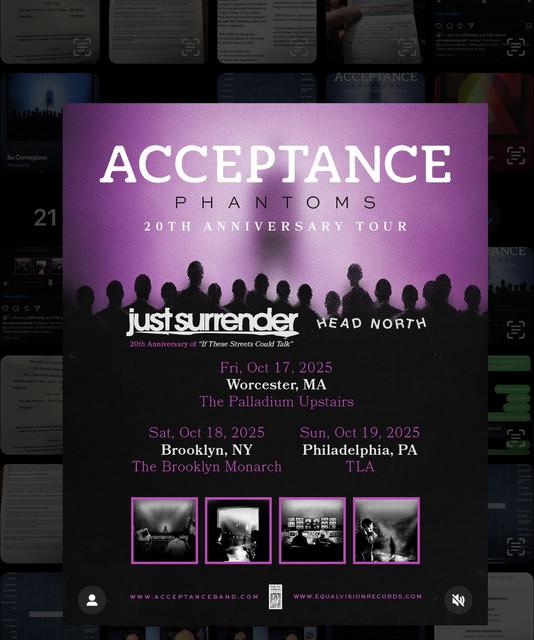
Just Surrender

Punk
Punk Rock
Pop Punk
 Viberate Rank: 134579
 Viberate Rank: 134579
 Monthly ListenersFollowers
 Subscribers
 Followers
 Followers
 FansTop Spotify Songs
| Track | 7-Day Streams | |
|---|---|---|
1 | 16.62K | |
2 | 6.06K | |
3 | 5.28K | |
4 | 4.21K | |
5 | 3.02K |
Top YouTube VideosMonthly ListenersFeatured in Playlists| Playlist | Followers | |
|---|---|---|
1 | 2000's Emo & Pop Punk Jorden Z | 53.69K |
2 | Pop Punk drbsk8salot | 42.59K |
3 | Emo Night 🤘 Anne Domalski | 19.27K |
4 |  Pop Punk Playlist! Pure Noise Records | 17.98K |
5 |  Emo Throwback LIFE OR DEATH | 13.57K |
Audience| City | Monthly Listeners | |
|---|---|---|
1 | | 1.51K |
2 | | 1.39K |
3 | | 1.35K |
4 | | 1.26K |
5 | | 1.11K |
See full performance history, audience data, playlist activity, rankings, comparisons, and more in Viberate music analytics. Start with a free trial, then continue with a paid plan.
Just Surrender’s Spotify BioEmo-rocking pop-punk act Just Surrender formed in 2003, originally dubbed A Second Chance. The group sprang up around high-school buddies bassist/vocalist Jason Maffucci, guitarist Andrew Meunier, and drummer Steve Miller before the search for a suitable fourth member eventually ended with the addition of guitarist/vocalist Dan Simons. Based out of Dover Plains, NY, the crew recorded a four-song EP with producer John Naclerio (Brand New, Senses Fail), and within months of posting some songs online, their music had logged nearly half a million listens and their tradeoff vocals earned the band comparisons to Taking Back Sunday. As gigs at the Chance Theater in nearby Poughkeepsie were getting visibly bigger, fellow New Yorkers Autopilot Off took notice and brought the young group out on tour. This quickly led to other higher-profile shows with bands like Bayside, Hawthorne Heights, Matchbook Romance, The Early November, and more. In March 2005, A Second Chance inked a deal with Broken… English Records -- co-owned by Naclerio and Autopilot Off's Chris Hughes -- and changed their name to Just Surrender (due to trademark concerns) soon after. Their full-length and label debut, If These Streets Could Talk, was released in July 2005 and the usual rounds of touring commenced. Meunier parted ways with Just Surrender in early 2007.
In fall of 2019, Jason began singing with a new project, With Abandon ~ Corey Apar, Rovi
Viberate is a music analytics platform built for A&Rs, artist managers, labels, booking agents, marketers, and artists.
It helps music professionals track artist growth, analyze audience data, monitor playlist activity, compare artists, follow song performance, and identify opportunities across the music market.
Public artist pages provide a free preview of selected artist data. Paid plans provide access to deeper analytics, historical data, charts, comparisons, playlist tools, exports, alerts, reports, and additional professional features.
Yes. Public Viberate artist pages provide selected artist analytics and music data for free.
Viberate also offers a 7-day free trial of the full platform. A credit card is required to start the trial. The trial includes access to the complete product so users can test deeper artist analytics, historical views, playlist insights, comparisons, charts, exports, alerts, and reporting features before choosing a paid plan.
Viberate provides artist analytics across streaming, playlists, social media, video, radio airplay, songs, and audience markets.
Users can analyze Spotify performance, Spotify and Apple Music playlists, YouTube activity, TikTok and Instagram growth, radio spins, song performance, audience locations, demographics, rankings, and overall artist momentum.
Artist profiles also connect to music charts, similar artists, and comparison tools, helping users benchmark performance and evaluate artists in context.
Viberate updates key artist and track data daily.
For followed artists and tracks, selected data is refreshed multiple times per day. This helps teams monitor playlist changes, streaming movement, audience growth, releases, and campaign performance with more current data.
Update frequency can vary depending on the metric and data source.
Yes. Viberate lets users compare up to five artists side by side across streaming, social media, audience, and engagement metrics.
Users can compare fanbase growth, audience demographics, locations, Spotify performance, social metrics, and other artist data over selected time periods.
Artist comparison can be used for A&R scouting, benchmarking, booking decisions, campaign planning, and evaluating artists with similar audiences or market positions.