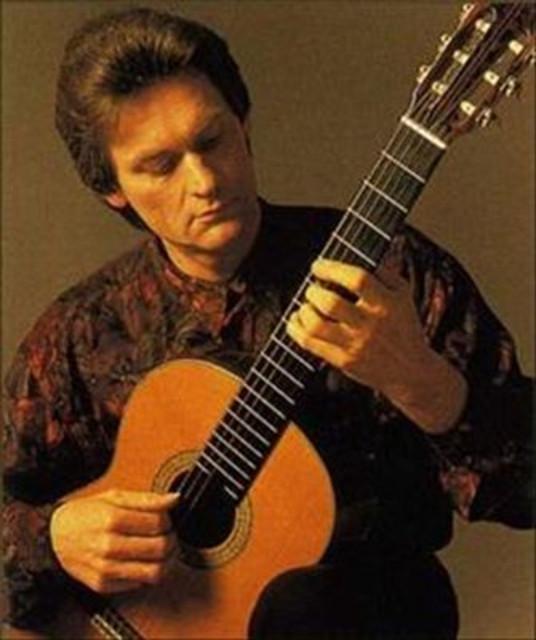
Julian Bream

Classical
Classical Crossover
Other European Music
 Viberate Rank: 84139
 Viberate Rank: 84139
 Monthly ListenersFollowers
 Subscribers
 Followers
 Followers
 FansTop Spotify Songs
| Track | 7-Day Streams | |
|---|---|---|
1 | 7.73K | |
2 | 7.32K | |
3 | 4.34K | |
4 | 4.17K | |
5 | 3.65K |
Top YouTube VideosMonthly ListenersFeatured in Playlists| Playlist | Followers | |
|---|---|---|
1 |  Classical Bangers 🎹🎻 Classical Bangers | 1.25M |
2 |  medieval vibes Spotify | 500.35K |
3 |  Easy Classical Spotify | 471.89K |
4 |  Classical Music for Reading Filtr Legacy Sweden | 144.35K |
5 |  Música Clásica Ligera Spotify | 76.42K |
Audience| City | Monthly Listeners | |
|---|---|---|
1 |  | 2.22K |
2 | | 2.05K |
3 |  | 1.87K |
4 |  | 1.38K |
5 |  | 1.22K |
See full performance history, audience data, playlist activity, rankings, comparisons, and more in Viberate music analytics. Start with a free trial, then continue with a paid plan.
Julian Bream’s Spotify BioJulian Bream was one of the 20th century's premier guitarists. He popularized the instrument over much of the world, fundamentally shaped its repertory, and was also a key figure in the revival of lute music.
Bream was born in London's Battersea neighborhood on July 15, 1933, and grew up in the suburban Hampton area. Bream's father was a commercial artist and an enthusiastic jazz guitarist who gave his son his first lessons on the instrument, but Bream was largely self-taught at first, imitating Django Reinhardt records he heard at a pub owned by his grandmother and giving himself lessons from a manual by jazz guitarist Eddie Lang. Later, he had lessons from Boris Perrott of the Philharmonic Society of Guitarists. Bream was giving classical guitar recitals by age 14. He matriculated at the Royal College of Music at 16, ostensibly studying piano and composition, but he landed prestigious dates for guitar recitals. Bream made his debut at Wigmore Hall in 1951. He spent two years in the… British army, joining the Royal Artillery Band and keeping a hand in music by moonlighting in London clubs. After his two-year term of service, Bream turned to the guitar full-time, touring Europe and then East Asia, India, Australia, and in 1958 and 1959, the U.S. He was often heard on film and radio drama soundtracks. Bream had taken up the lute while at the Royal College of Music, and he sometimes played that instrument in recitals. In 1960, he formed the Julian Bream Consort, one of Britain's first historical performance ensembles, with himself as lutenist; he took that group on tour to the U.S. as well.
From that point on, Bream was one of the world's top performers on both the guitar and the lute, appearing routinely in the world's top recital halls. His highly expressive style, influenced, he said, by Andrés Segovia and Francisco Tárrega, was popular among all kinds of audiences, and televised master classes and historical programs on the BBC boosted his appeal. He bounced back from a serious arm injury in a 1984 auto accident and appeared in 1991 at the BBC Proms, performing Malcolm Arnold's Guitar Concerto, with the performance was broadcast on BBC radio and television. Arnold was just one of a long list of contemporary composers to write new music for Bream; until he began commissioning new works, the guitar had played only a minor role in contemporary music. Other composers championed by Bream included Hans Werner Henze, Benjamin Britten (whose Nocturnal, written for Bream, has become a classical guitar standard), and Toru Takemitsu.
Bream made some 90 recordings, beginning in 1957 on the Deutsche Grammophon label with the album Julian Bream Plays Spanish Guitar Music. For many years, he was a fixture of the RCA Red Seal catalog. He made three duo albums with superstar guitarist John Williams and also recorded on the lute. Bream's long list of honors included six Grammy Awards, and he was made a Commander of the Order of the British Empire in 1985. He gave a 50th-anniversary recital at Wigmore Hall in 2001 and retired the following year; when he turned 80, he quipped that he was a better player than he had been at 70 but couldn't prove it. Bream was married twice, to Margaret Williamson and Isabel Sanchez, and had one adopted son; both marriages ended in divorce. Julian Bream died at his home in Wiltshire, England, on August 14, 2020.
Viberate is a music analytics platform built for A&Rs, artist managers, labels, booking agents, marketers, and artists.
It helps music professionals track artist growth, analyze audience data, monitor playlist activity, compare artists, follow song performance, and identify opportunities across the music market.
Public artist pages provide a free preview of selected artist data. Paid plans provide access to deeper analytics, historical data, charts, comparisons, playlist tools, exports, alerts, reports, and additional professional features.
Yes. Public Viberate artist pages provide selected artist analytics and music data for free.
Viberate also offers a 7-day free trial of the full platform. A credit card is required to start the trial. The trial includes access to the complete product so users can test deeper artist analytics, historical views, playlist insights, comparisons, charts, exports, alerts, and reporting features before choosing a paid plan.
Viberate provides artist analytics across streaming, playlists, social media, video, radio airplay, songs, and audience markets.
Users can analyze Spotify performance, Spotify and Apple Music playlists, YouTube activity, TikTok and Instagram growth, radio spins, song performance, audience locations, demographics, rankings, and overall artist momentum.
Artist profiles also connect to music charts, similar artists, and comparison tools, helping users benchmark performance and evaluate artists in context.
Viberate updates key artist and track data daily.
For followed artists and tracks, selected data is refreshed multiple times per day. This helps teams monitor playlist changes, streaming movement, audience growth, releases, and campaign performance with more current data.
Update frequency can vary depending on the metric and data source.
Yes. Viberate lets users compare up to five artists side by side across streaming, social media, audience, and engagement metrics.
Users can compare fanbase growth, audience demographics, locations, Spotify performance, social metrics, and other artist data over selected time periods.
Artist comparison can be used for A&R scouting, benchmarking, booking decisions, campaign planning, and evaluating artists with similar audiences or market positions.