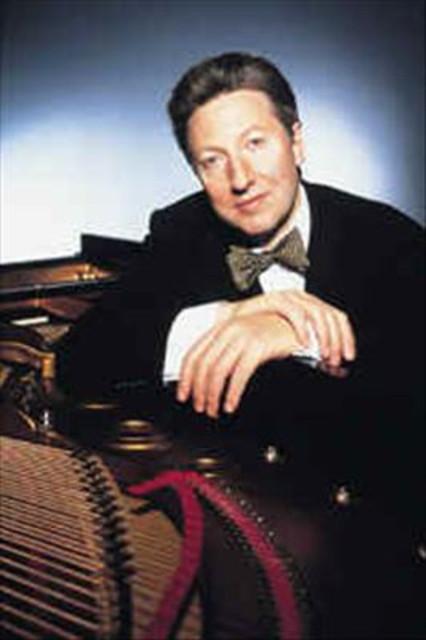
Josef Hofmann

Classical
Classical Crossover
 Viberate Rank: 460351
 Viberate Rank: 460351
 Monthly ListenersFollowers
 Subscribers
 Followers
 Followers
 FansTop Spotify SongsTop YouTube VideosMonthly ListenersFeatured in Playlists
| Playlist | Followers | |
|---|---|---|
1 |  Piano & Classical Jacob | 60.64K |
2 |  Solo Piano Sonic Tsao | 6.70K |
3 |  Jarvis Cocker's Sunday Service Anders Björk | 5.09K |
4 | Frédéric Chopin - Complete Works, 100 Pianists Ulysses' Classical | 2.25K |
5 |  Silent Film Music synnöve_granat | 2.10K |
Audience| City | Monthly Listeners | |
|---|---|---|
1 |  | 96 |
2 |  | 96 |
3 |  | 77 |
4 |  | 72 |
5 |  | 68 |
See full performance history, audience data, playlist activity, rankings, comparisons, and more in Viberate music analytics. Start with a free trial, then continue with a paid plan.
Josef Hofmann’s Spotify BioJosef Hofmann was one of the top pianists during the first half of the 20th century. He was admired for his wide dynamic range, flawless technique, and for his spontaneous and exciting sense of musicality.
Hofmann was born in Kraków, Poland, in 1876, and his parents were both musicians. His father, Kazimierz, taught harmony and counterpoint, and conducted at the Kraków Theater, and his mother, Matylda, was a singer who also performed at the Kraków Theater. Hofmann began learning music theory from his father when he was just three years old. He learned quickly and was also found to be just as gifted in other subjects, such as science and mathematics. At the age of five, he performed his debut recital in Warsaw, and two years later he toured Europe. In 1886, he moved with his family to Berlin, where he would have access to the leading music educators of the time. The following year, he performed a sensational debut at the Metropolitan Opera House. The performance was a huge success and… critics compared Hofmann to Mozart and Mendelssohn. He also visited the labs of Thomas Edison in New Jersey and made wax cylinder recordings before returning to Germany. In 1892, Hofmann began studying composition with Heinrich Urban, and piano with Moritz Moszkowski. However, Moszkowski and Hofmann did not get along very well, which led the young pianist to audition for Anton Rubinstein, who was impressed and accepted him as his only student. After two years of studies with Rubinstein, Hofmann performed his teacher's Fourth Piano Concerto in Dresden with Rubinstein conducting.
For the next 30 years or so, Hofmann composed and toured extensively throughout Russia, Europe, and North and South America. His abilities were commonly regarded as unsurpassable, and he influenced countless piano students who aspired to play like him. Rachmaninov dedicated his Third Piano Concerto to Hofmann in 1909, but the pianist never performed it because he said it had "too many notes." From 1926 to 1938, he served as director at the Curtis Institute of Music in Philadelphia. He also continued touring, but it was around this time that he became an alcoholic, which ultimately led to his decline as a performer. Around 1940, Hofmann began reducing his performance schedule until his eventual retirement in 1946. He spent his final years conceptualizing and inventing for a broad spectrum of applications, ranging from automotive components to designs for Steinway piano actions. Hofmann passed away in Los Angeles in 1957, after suffering from pneumonia. ~ RJ Lambert, Rovi
Viberate is a music analytics platform built for A&Rs, artist managers, labels, booking agents, marketers, and artists.
It helps music professionals track artist growth, analyze audience data, monitor playlist activity, compare artists, follow song performance, and identify opportunities across the music market.
Public artist pages provide a free preview of selected artist data. Paid plans provide access to deeper analytics, historical data, charts, comparisons, playlist tools, exports, alerts, reports, and additional professional features.
Yes. Public Viberate artist pages provide selected artist analytics and music data for free.
Viberate also offers a 7-day free trial of the full platform. A credit card is required to start the trial. The trial includes access to the complete product so users can test deeper artist analytics, historical views, playlist insights, comparisons, charts, exports, alerts, and reporting features before choosing a paid plan.
Viberate provides artist analytics across streaming, playlists, social media, video, radio airplay, songs, and audience markets.
Users can analyze Spotify performance, Spotify and Apple Music playlists, YouTube activity, TikTok and Instagram growth, radio spins, song performance, audience locations, demographics, rankings, and overall artist momentum.
Artist profiles also connect to music charts, similar artists, and comparison tools, helping users benchmark performance and evaluate artists in context.
Viberate updates key artist and track data daily.
For followed artists and tracks, selected data is refreshed multiple times per day. This helps teams monitor playlist changes, streaming movement, audience growth, releases, and campaign performance with more current data.
Update frequency can vary depending on the metric and data source.
Yes. Viberate lets users compare up to five artists side by side across streaming, social media, audience, and engagement metrics.
Users can compare fanbase growth, audience demographics, locations, Spotify performance, social metrics, and other artist data over selected time periods.
Artist comparison can be used for A&R scouting, benchmarking, booking decisions, campaign planning, and evaluating artists with similar audiences or market positions.