José Luis Rodríguez

Pop
Latin Pop
Bolero
 Viberate Rank: 6994
 Viberate Rank: 6994
 Monthly ListenersFollowers
 Subscribers
 Followers
 Followers
 FansTop Spotify Songs
| Track | 7-Day Streams | |
|---|---|---|
1 | 427.89K | |
2 | 330.90K | |
3 | 63.69K | |
4 | 42.65K | |
5 | 40.26K |
Top YouTube Videos| Video | 7-Day Views | |
|---|---|---|
1 | 162.26K | |
2 | 130.61K | |
3 | 54.45K | |
4 | 48.96K | |
5 | 27.47K |
Monthly ListenersFeatured in Playlists| Playlist | Followers | |
|---|---|---|
1 |  Canciones del Recuerdo Spotify | 3.00M |
2 |  Los 80 México Spotify | 1.10M |
3 |  Viejitas pero Bonitas Spotify | 1.00M |
4 |  This Is Alejandro Fernández Spotify | 866.25K |
5 |  This Is Los Tigres Del Norte Spotify | 776.59K |
Audience| City | Monthly Listeners | |
|---|---|---|
1 |  | 175.95K |
2 |  | 153.28K |
3 |  | 75.99K |
4 |  | 65.70K |
5 | | 56.30K |
See full performance history, audience data, playlist activity, rankings, comparisons, and more in Viberate music analytics. Start with a free trial, then continue with a paid plan.
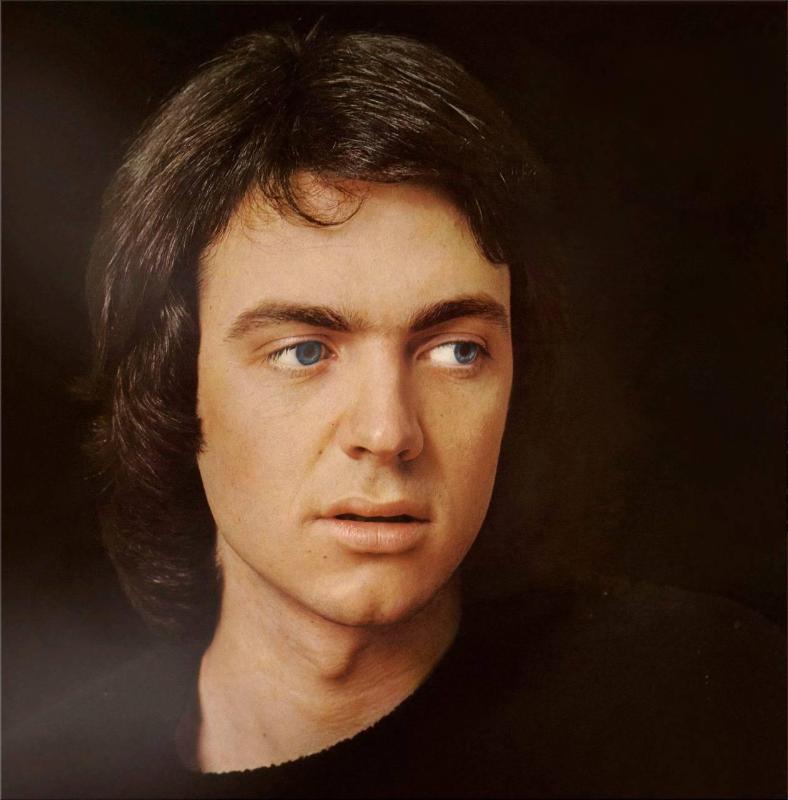
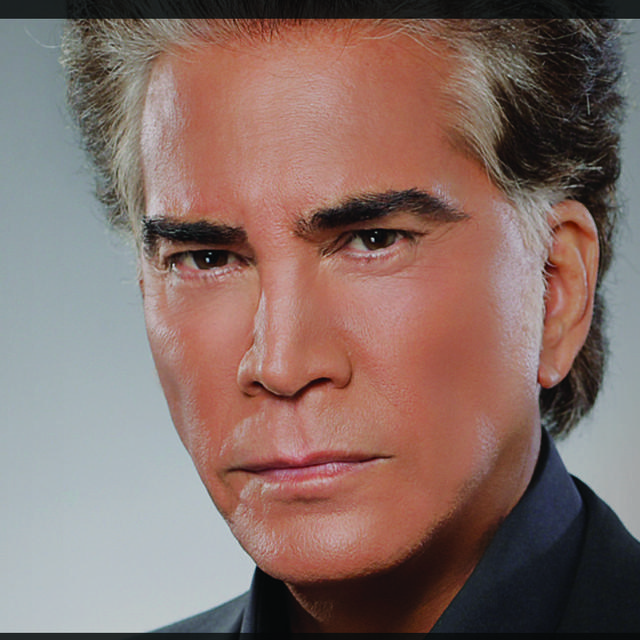
José Luis Rodríguez’s Spotify BioBest-selling Venezuelan vocalist, actor, and entrepreneur Jose Luis Rodríguez (aka El Puma) is among the most recognized interpreters of Latin folk song in the world. For more than five decades, his crystalline tenor has made hits of boleros, romanticas, mariachis, and pop songs. His success has been registered at radio, in concert halls across the globe, at retail, streaming, and as an actor on television and in film. Between 1987 and 2007, his albums were a chart fixture not only in Latin America but in the United States as well: He placed more than ten albums in the Top 200 and 21 singles on various Latin charts including "Baila Mi Rumba," "Dueño de Nada," "Pavo Real," and "Agárrense de las Manos." El Puma was so formidable during the '80s that CBS International lured him away from his label so that their male artists wouldn't have to compete on the charts with him. Beginning with 1979's Una Canción de España through 1997's Inolvidable, he netted six platinum and nine gold records.… In addition to his beloved voice, Rodríguez is an international television star. He has appeared in recurring roles in more than a dozen telenovelas. Later albums, including 2002's Mujer and his 2003 duo collaboration with Raul Di Blasio on Clave de Amor, were massive successes as well. After 2009's Mi Amigo el Puma, he retired from recording for eight years due to critical health concerns. He returned with the duets-offering Immenso in 2017, six months before undergoing life-saving surgery.
Jose Luis "El Puma" Rodríguez was born in Caracas in 1943. He was one of 12 children born to a Spanish father and a Venezuelan mother. He lost his father to cirrhosis of the liver when he was six. As a result of crippling poverty, Rodríguez did not attend school regularly because he had to work in order to help his family survive; he didn't learn to read until he was already an adult. He didn't even consider music until 1960 when, at 17, he joined a Platters' covers group called Los Zeppys. Three years later he was recruited to join Billo & His Caracas Boys, a revered Latin musical group founded in 1940. Rodríguez remained for four years, learned the ropes, and made his recording debut with the group in 1966, appearing on two albums, Nuestro Balance and Voces de Billo, Vol. I. He received critical notice for his interpretations of boleros and in interview cited his major vocal influences as Carlos Gardel, Pedro Infante, and Elvis Presley.
Rodríguez was hired away from Billo & His Caracas Boys by Venezuela's state-owned TV station to act in the telenovela Angelica. It was the beginning of a long career that resulted in dozens of roles, ranging from leading men (Cristina Bazán) to drug dealers (as Puma in 2016's Border Cartel). Though Rodríguez recorded a pair of solo albums for Velvet in 1966, it was 1969's Grito al Mundo that established him as a singer. Later that year, while acting, he was signed to a one-album deal with Epic. El Triunfador didn't chart but its singles received ample airplay. While acting claimed the majority of Rodríguez's time, he signed a multi-album deal with Venezuela's Top Hits label and remained there between 1972 and 1982. It was during this period he broke out internationally with hit albums such as El Hombre en la Cima (1972), De America... (1976), and the award-winning bestseller Una Canción de España (1977). During the '70s and early '80s, Rodríguez almost always had a single or an album on the airplay charts across Latin America and in Spain. The lead single for Una Canción de España was "Voy a Perder la Cabeza por Tu Amor," composed by the great Manuel Alejandro; the song was such a massive hit, it was chosen as the theme song and plot inspiration for the following year's telenovela Cristina Bazán.
In 1979, El Puma relocated to Miami, Florida in the United States. He also undertook his first U.S. tour, playing sold-out houses in Los Angeles, Miami, New York, Philadelphia, and Chicago. In 1981, CBS International lured him away from Top Hits. The rumor was, they didn't want their chief hitmaker, Julio Iglesias, to have to compete with the singer. CBS signed him in order to corner the market on male tenor ballad singers. His debut for the label was 1982's chart-topping international best-seller, Dueño de Nada. Comprised of ten songs -- eight of which were composed by Alejandro and Ana Magdalena -- Alejandro also produced the set. The album went multi-platinum. It marked the beginning of an association with CBS that resulted in five Top Ten albums in a row, including 1986's L'Idolo.
The hit records continued after El Puma left CBS for Mercury. The singer delivered two charting albums for the label: 1987's Señor Corazón was foreshadowed by its non-album single, "Peacock," a track so successful in Spain, it became El Puma's theme song, and 1989's Tengo Derecho a Ser Feliz also charted. He delivered the Latin pop full-length Esta Vez in 1990, followed by two collections of mariachi songs that all sold relatively well but failed to chart. After signing with Sony Discos in early 1991, Rodríguez began another auspicious chart run with El Puma en Ritmo. All of his records during that decade, including 1992's Piel de Hombre (that included "Torero," a smash duet with rival and friend Iglesias), 1994's Razones Para Una Sonrisa, 1996's La Llamada del Amor, and the three volumes of Inolvidable with Los Panchos (1997 - 2001), all placed inside the Top 20. In addition to recording and acting, the singer proved himself a shrewd businessman. In 1995 he founded the first Venezuelan music video channel, Bravo TV, whose name would later change to Puma TV. It promoted artists, models, and singers, and showcased a wide swathe of entertainment news and programming.
In 2000, Rodriguez was diagnosed with pulmonary fibromatosis, an incurable disease that decreases breathing capacity and usually leads to death. Undaunted, he continued to perform and to act, often sitting on-stage with an oxygen tank by his side as the disease progressed. Rodriguez also continued recording. Champagne appeared in 2002 on BMG in the U.S. followed -- and perhaps overshadowed -- by a massive 12-album reissue program, as did the charting European album Mujer on Ariola. A year later, Clave de Amor, a collaboration with Raul Di Blasio, also made the charts. In 2004, Rodríguez became a U.S. citizen. After two independently issued albums, Distancia and Sabor a Mexico in 2005, Rodriguez slowed down. In 2009 he joined the cast of the telenovela Gabriel, produced for Spanish-speaking audiences in the United States. That year also saw the release of Mi Amigo el Puma, his final recording of new material for eight years.
In 2012 and 2013, he served as a mentor and coach on the Argentinian and Peruvian editions of La Voz. A year later, he served as a judge on X Factor Chile. He continued to perform with decreasing frequency and stamina. All the while, even as he became more reclusive, El Puma refused to discuss his health. In 2016, he re-entered a recording studio with producer Ricardo Montaner. The result was Immenso, a series of contemporary duet recordings of his many hits. Artists included on this collaborative date were Spain's Chayanne, who performed on a new version of his 1989 smash "Culpable Soy Yo," that was issued as a pre-release single. Mexican vocalists Vincente Fernandez and Carlos Rivera appeared, as did Spanish singer Amaia Montero and Argentine vocalist Soledad Pastorutti. American guitarist Nile Rodgers accompanied Rodriguez on "Pavo Real." Immenso was released in April of 2017.
In December, El Puma underwent double-lung transplant surgery. Six months later, he granted a rare interview to Colombian radio station W Radio, stating he had been so weak before the surgery, he thought he would die any day. He also said he had been waiting several years for a miracle. Since the donor of his new lungs was not a singer, El Puma explained that he needed to retrain himself to sing. He set a 2020 goal for returning to the stage. ~ Thom Jurek, Rovi
Viberate is a music analytics platform built for A&Rs, artist managers, labels, booking agents, marketers, and artists.
It helps music professionals track artist growth, analyze audience data, monitor playlist activity, compare artists, follow song performance, and identify opportunities across the music market.
Public artist pages provide a free preview of selected artist data. Paid plans provide access to deeper analytics, historical data, charts, comparisons, playlist tools, exports, alerts, reports, and additional professional features.
Yes. Public Viberate artist pages provide selected artist analytics and music data for free.
Viberate also offers a 7-day free trial of the full platform. A credit card is required to start the trial. The trial includes access to the complete product so users can test deeper artist analytics, historical views, playlist insights, comparisons, charts, exports, alerts, and reporting features before choosing a paid plan.
Viberate provides artist analytics across streaming, playlists, social media, video, radio airplay, songs, and audience markets.
Users can analyze Spotify performance, Spotify and Apple Music playlists, YouTube activity, TikTok and Instagram growth, radio spins, song performance, audience locations, demographics, rankings, and overall artist momentum.
Artist profiles also connect to music charts, similar artists, and comparison tools, helping users benchmark performance and evaluate artists in context.
Viberate updates key artist and track data daily.
For followed artists and tracks, selected data is refreshed multiple times per day. This helps teams monitor playlist changes, streaming movement, audience growth, releases, and campaign performance with more current data.
Update frequency can vary depending on the metric and data source.
Yes. Viberate lets users compare up to five artists side by side across streaming, social media, audience, and engagement metrics.
Users can compare fanbase growth, audience demographics, locations, Spotify performance, social metrics, and other artist data over selected time periods.
Artist comparison can be used for A&R scouting, benchmarking, booking decisions, campaign planning, and evaluating artists with similar audiences or market positions.