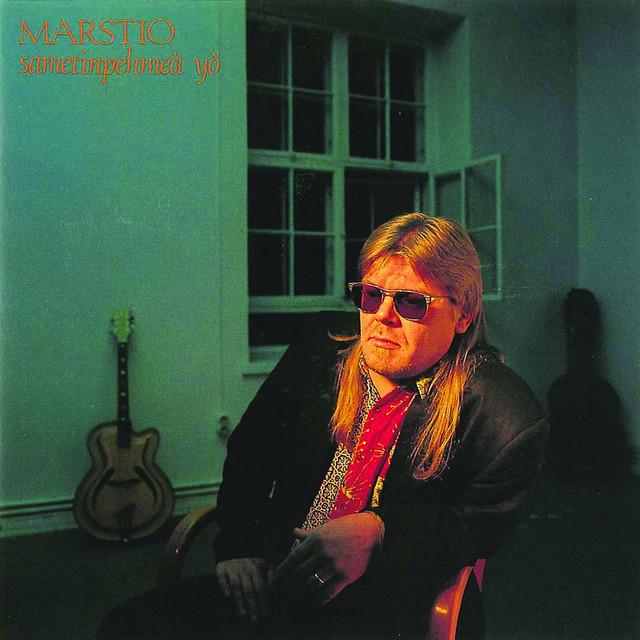
Jorma Kaariainen

Blues
Blues Rock
Pop Rock
Schlager
 Viberate Rank: 199073
 Viberate Rank: 199073
 Monthly ListenersFollowers
 Subscribers
 Followers
 Followers
 FansTop Spotify Songs
| Track | 7-Day Streams | |
|---|---|---|
1 | 25.20K | |
2 | 6.78K | |
3 | 4.99K | |
4 | 4.07K | |
5 | 2.22K |
Top YouTube VideosMonthly ListenersFeatured in Playlists| Playlist | Followers | |
|---|---|---|
1 |  Iskelmäklassikot Spotify | 48.57K |
2 | SUOMI KLASSIKOT Tomi Mäkiluoma | 27.16K |
3 | Surf Music 50's & 60's Eric Trabert | 13.82K |
4 |  OLVARin parhaat by Pelaajat.com Arttu Hämäläinen | 9.16K |
5 | ISKELMÄ HITIT Eveliina Holm | 8.79K |
Audience| City | Monthly Listeners | |
|---|---|---|
1 | | 18.15K |
2 | | 4.64K |
3 | | 2.31K |
4 | | 1.12K |
5 | | 1.06K |
See full performance history, audience data, playlist activity, rankings, comparisons, and more in Viberate music analytics. Start with a free trial, then continue with a paid plan.
Jorma Kaariainen’s Spotify BioJorma Kääriäinen is a Finnish rock singer and guitarist who garnered fame as the frontman of the Agents for over a decade, including a series of Top Ten hit albums around the turn of the century. In 2003 he embarked on a successful solo career that kept him near the top of the charts. Born on April 29, 1961, in Kajaani, Finland, he made his solo recording debut in the late '70s with a couple English-language blues-rock singles on Poko Rekords, along with the full-length album Blues (1979) under the billing of Freddie Falcon. A quarter century would pass before his next solo material. In the meantime, between 1992 and 2006, he was the vocalist and a guitarist in the Agents, a long-running and perennially popular Finnish blues-rock band. During his tenure with the band, the Agents released a series of hit albums, Agents Is Back! (1996), Agents Is More (1997), Agents Is Best (1998), Laulava Sydän (1999), Agents Is Here! (2001), the latter of which was a chart-topper and all but one of… which was at least a Top Ten hit. He reemerged as a solo recording artist in 2003 with the eponymous album Jorma Kääriäinen on EMI. The album was released in two versions, one in Finnish with red cover art, the other in English with blue cover art. His second album on EMI, Onnenlantti (2005), was like its predecessor a Top 30 hit. Its title track was released as a single. Third album Yhden Tähden Hotelli (2007) was far and away his most popular to date. It peaked at number three on the Finnish albums chart and includes the singles "Yksinäisten Miesten Kanjoni," "Yhden Tähden Hotelli," and "Memphis Tennessee." The follow-up album, Kädenjälki (2008), a collaboration with the Riku Niemi Orchestra, was also a number three hit. It includes the singles "Päivin Öin" and "Ohuella Langalla." ~ Jason Birchmeier
Viberate is a music analytics platform built for A&Rs, artist managers, labels, booking agents, marketers, and artists.
It helps music professionals track artist growth, analyze audience data, monitor playlist activity, compare artists, follow song performance, and identify opportunities across the music market.
Public artist pages provide a free preview of selected artist data. Paid plans provide access to deeper analytics, historical data, charts, comparisons, playlist tools, exports, alerts, reports, and additional professional features.
Yes. Public Viberate artist pages provide selected artist analytics and music data for free.
Viberate also offers a 7-day free trial of the full platform. A credit card is required to start the trial. The trial includes access to the complete product so users can test deeper artist analytics, historical views, playlist insights, comparisons, charts, exports, alerts, and reporting features before choosing a paid plan.
Viberate provides artist analytics across streaming, playlists, social media, video, radio airplay, songs, and audience markets.
Users can analyze Spotify performance, Spotify and Apple Music playlists, YouTube activity, TikTok and Instagram growth, radio spins, song performance, audience locations, demographics, rankings, and overall artist momentum.
Artist profiles also connect to music charts, similar artists, and comparison tools, helping users benchmark performance and evaluate artists in context.
Viberate updates key artist and track data daily.
For followed artists and tracks, selected data is refreshed multiple times per day. This helps teams monitor playlist changes, streaming movement, audience growth, releases, and campaign performance with more current data.
Update frequency can vary depending on the metric and data source.
Yes. Viberate lets users compare up to five artists side by side across streaming, social media, audience, and engagement metrics.
Users can compare fanbase growth, audience demographics, locations, Spotify performance, social metrics, and other artist data over selected time periods.
Artist comparison can be used for A&R scouting, benchmarking, booking decisions, campaign planning, and evaluating artists with similar audiences or market positions.