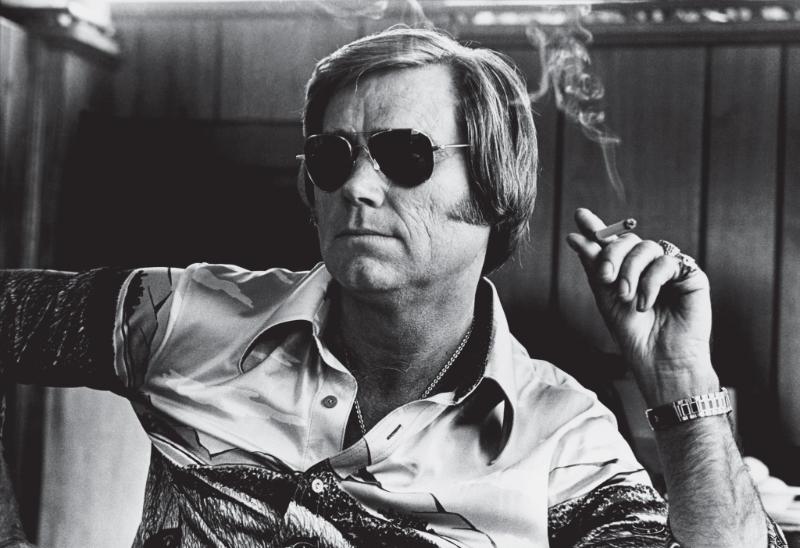
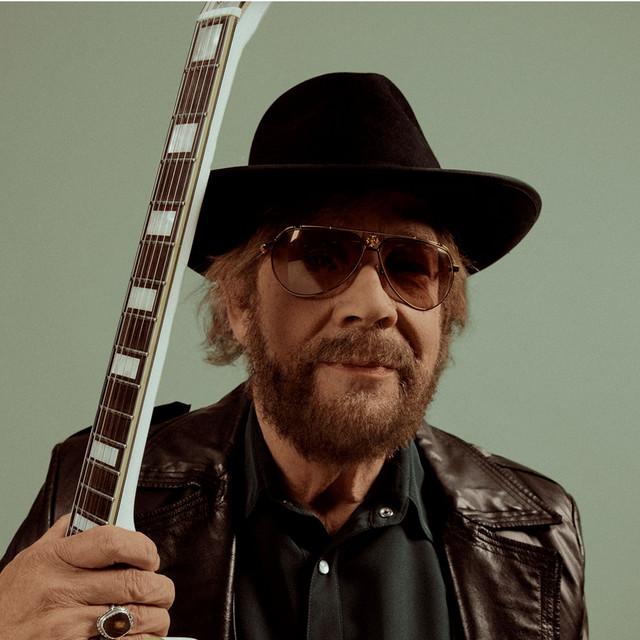
Johnny Paycheck

Country
Contemporary Country
Americana/Alt Country
 Viberate Rank: 22095
 Viberate Rank: 22095
 Monthly ListenersFollowers
 Subscribers
 Followers
 Followers
 FansTop Spotify Songs
| Track | 7-Day Streams | |
|---|---|---|
1 | 173.90K | |
2 | 130.48K | |
3 | 92.65K | |
4 | 89.85K | |
5 | 70.86K |
Top YouTube VideosMonthly ListenersFeatured in Playlists| Playlist | Followers | |
|---|---|---|
1 |  Classic Country Spotify | 659.18K |
2 |  70s Country Spotify | 320.72K |
3 |  Country Americano - O melhor Thiago Arruda | 251.56K |
4 |  Outlaw Spotify | 230.58K |
5 |  Old country classics and more Sam B. | 227.73K |
Audience| City | Monthly Listeners | |
|---|---|---|
1 | | 26.66K |
2 | | 18.36K |
3 | | 16.27K |
4 | | 16.01K |
5 | | 15.52K |
See full performance history, audience data, playlist activity, rankings, comparisons, and more in Viberate music analytics. Start with a free trial, then continue with a paid plan.
Johnny Paycheck’s Spotify BioThe first time that many people ever heard of Johnny Paycheck was in 1977, when his "Take This Job and Shove It" inspired one-man wildcat strikes all over America. The next time was in 1985, when he was arrested for shooting a man at a bar in Hillsboro, OH. That Paycheck is remembered for a fairly amusical novelty song and a violent crime (for which he spent two years in prison) is a shame, for it just so happens that he is one of the mightiest honky tonkers of his time. Born and raised in Greenfield, OH, Paycheck was performing in talent contests by the age of nine and riding the rails as a drifter by the time he turned 15. After a Navy stint landed him in the brig for two years, he arrived in Nashville, where he performed in the bands of Porter Wagoner, Faron Young, Ray Price, and George Jones. He recorded several singles under the name Donny Young, then, in 1965, cut his first sides as Johnny Paycheck for the Hilltop label. A year later, he and gadfly producer Aubrey Mayhew started… the Little Darlin' label, for which Paycheck recorded his greatest work. Marked by Lloyd Green's knockout steel guitar and Paycheck's broad, resonant vocals (not to mention his rounder's sense of humor) his Little Darlin' records of the 1960s have since become cult favorites. After splitting with Mayhew (and after running his life into the gutter) Paycheck made a celebrated comeback on Epic in the 1970s. "Take This Job and Shove It" was the most famous result, though ballads like "She's All I Got" and "Someone to Give My Love To" are far more indicative of his stylistic range.
Born Donald Lytle, Paycheck began playing guitar when he was six, and within three years, he was performing talent contests across the state. When he was 15, he ran away from home, hitchhiking, and hoboing his away across the country, singing in honky tonks and clubs along the way. By his late teens, he had joined the Navy, but while he was serving, he assaulted a superior officer and was convicted of court martial. As a result, he spent two years in the brig. Upon his release, he moved to Nashville, where made the acquaintance of Buddy Killen at Decca Records, who offered him a contract. At Decca, Paycheck released two rockabilly singles on the label under the name Donny Young; neither were hits. Shortly afterward, he moved to Mercury, where he released two country singles, which were also failures. By that time, he had begun supporting other musicians, playing bass and occasionally steel guitar with Porter Wagoner, Faron Young, and Ray Price. He frequently moved between employers because of his short-fused temper. Paycheck finally found his match in George Jones. He stayed with Jones for four years, fronting the Jones Boys between 1962 and 1966, and singing backup on George's hits "I'm a People," "The Race Is On," and "Love Bug."
Toward the end of his stint with Jones, Donald Lytle refashioned himself as Johnny Paycheck, taking his name from a Chicago heavyweight boxer. Late in 1965, he relaunched his solo career with the assistance of producer Aubrey Mayhew, who produced a pair of singles -- "A-11" and "Heartbreak Tennessee" -- for Hilltop Records. Though it only charted at number 26, "A-11" caused a sensation within the country community, earning several Grammy nominations as well as reviews that compared Paycheck to his mentor, Jones. In 1966, he and Mayhew formed Little Darlin' Records, primarily designing the label to promote Paycheck, but also recording Jeannie C. Riley, Bobby Helms, and Lloyd Green. That summer, "The Lovin' Machine" became Paycheck's first Top Ten hit. Also that year, he wrote Tammy Wynette's first hit, "Apartment #9," with Bobby Austin and Fuzzy Owen; Paycheck also wrote Ray Price's number three hit "Touch My Heart."
All of Paycheck's recordings for Little Darlin' Records rank among his grittiest, hardest country, but they weren't necessarily big hits. Between 1967 and 1969, Paycheck had eight more hit singles, with each record progressively charting at a lower position than its predecessor -- "Motel Time Again" reached number 13 in early 1967, while "If I'm Gonna Sink" climbed to number 73 in late 1968. Though "Wherever You Are" showed signs of a comeback in the summer of 1969, peaking at number 31, the label went bankrupt shortly after its release, partially due to Paycheck's declining commercial performance, partially due to his heavy drinking and erratic behavior. Over the course of the next year, he moved to California and sunk deeply into substance abuse. Meanwhile, Billy Sherrill at Epic Records had been searching for Paycheck with the hopes of producing his records. The label finally tracked him down in 1971 and offered him a contract, provided that he cleaned himself up. Paycheck accepted the offer and, with Sherrill's assistance, kicked his addictions.
Like many of Sherrill's records of the early '70s, his Paycheck recordings were heavily produced and often layered with stings. Though this was a shift from the hardcore country that Paycheck made on Little Darlin', the new approach was a hit -- his debut single for the label, "She's All I Got," became a number two hit upon its fall 1971 release. It was quickly followed by another Top Ten hit, "Someone to Give My Love To," and Paycheck was finally becoming a star. During the next four years, he had 12 additional hit singles -- including 1973's Top Ten singles "Something About You I Love" and "Mr. Lovemaker," and 1974's "For a Minute There" -- with the more accessible, pop-oriented songs Sherrill crafted for him, but Paycheck's wild ways hadn't changed all that much. In 1972, he was convicted of check forgery and, in 1976, was saddled with a paternity suit, tax problems, and bankruptcy. Accordingly, he shifted his musical style in the mid-'70s to put him in step with the renegade outlaw country movement.
Paycheck's first outlaw album, 1976's 11 Months and 29 Days (which happened to be the length of his suspended sentence for passing a bad check), featured a photo of him in a jail cell on the cover, signalling his change of direction. Initially, his outlaw records weren't hits, but early in 1977 he returned to the Top Ten with a pair of Top Ten singles, "Slide Off of Your Satin Sheets" and "I'm the Only Hell (Mama Ever Raised)." Later that year, he released his cover of David Allan Coe's "Take This Job and Shove It," which became his biggest hit, spending two weeks at number one; its B-side, "Colorado Kool-Aid," also charted at number 50. Soon, Paycheck's records were becoming near-parodies of his lifestyle, as the title "Me and the I.R.S." and "D.O.A. (Drunk on Arrival)" indicated. Nevertheless, he stayed at the top of the charts, with "Friend, Lover, Wife" and "Mabellene" both reaching number seven in late 1978 and early 1979.
Shortly after the twin success of those singles, his career began to crumble due to his excessive, violent behavior. In 1979, his former manager Glenn Ferguson began a prolonged and difficult legal battle. In 1981, a flight attendant for Frontier Airlines sued him for slander after he began a fight on a plane. The following year, he was arrested for alleged rape. The charges were later reduced and he was fined, but by that point, Epic had had enough and dropped him from the label. Paycheck moved over to AMI, where he had a number of small hit singles between 1984 and 1985. Later in 1985, he had a barroom brawl with a stranger in Hillsboro, OH, that ended with Paycheck shooting and injuring his opponent. The singer was arrested for aggravated assault and spent the next four years appealing the sentence while he recorded for Mercury Records. None of his singles for the label reached the Top 40, and he was dropped from the label in 1987. He spent 1988 at Desperado Records before signing with Damascus the following year, after his conversion to Christianity.
In 1989, Paycheck's appeals had expired and he was sentenced to the Chillicothe Correctional Institute. He spent two years at the prison, even performing a concert with Merle Haggard at the jail during his stint, before being released on parole in January 1991. Following his release, Paycheck kept a low profile, playing shows in Branson, MO, and recording for the small label Playback Records. After battling diabetes and emphysema for a number of years, Paycheck passed away in February 2003. He was 64. ~ Dan Cooper, Rovi
Viberate is a music analytics platform built for A&Rs, artist managers, labels, booking agents, marketers, and artists.
It helps music professionals track artist growth, analyze audience data, monitor playlist activity, compare artists, follow song performance, and identify opportunities across the music market.
Public artist pages provide a free preview of selected artist data. Paid plans provide access to deeper analytics, historical data, charts, comparisons, playlist tools, exports, alerts, reports, and additional professional features.
Yes. Public Viberate artist pages provide selected artist analytics and music data for free.
Viberate also offers a 7-day free trial of the full platform. A credit card is required to start the trial. The trial includes access to the complete product so users can test deeper artist analytics, historical views, playlist insights, comparisons, charts, exports, alerts, and reporting features before choosing a paid plan.
Viberate provides artist analytics across streaming, playlists, social media, video, radio airplay, songs, and audience markets.
Users can analyze Spotify performance, Spotify and Apple Music playlists, YouTube activity, TikTok and Instagram growth, radio spins, song performance, audience locations, demographics, rankings, and overall artist momentum.
Artist profiles also connect to music charts, similar artists, and comparison tools, helping users benchmark performance and evaluate artists in context.
Viberate updates key artist and track data daily.
For followed artists and tracks, selected data is refreshed multiple times per day. This helps teams monitor playlist changes, streaming movement, audience growth, releases, and campaign performance with more current data.
Update frequency can vary depending on the metric and data source.
Yes. Viberate lets users compare up to five artists side by side across streaming, social media, audience, and engagement metrics.
Users can compare fanbase growth, audience demographics, locations, Spotify performance, social metrics, and other artist data over selected time periods.
Artist comparison can be used for A&R scouting, benchmarking, booking decisions, campaign planning, and evaluating artists with similar audiences or market positions.