Johnny Green

Pop
Mainstream Pop
Big band Jazz
 Viberate Rank: 131131
 Viberate Rank: 131131
 Monthly ListenersFollowers
 Subscribers
 Followers
 Followers
 FansTop Spotify Songs
| Track | 7-Day Streams | |
|---|---|---|
1 | 11.39K | |
2 | 9.15K | |
3 | 9.05K | |
4 | 8.12K | |
5 | 7.33K |
Top YouTube VideosMonthly ListenersFeatured in Playlists| Playlist | Followers | |
|---|---|---|
1 |  jazz bar in nyc🎷 mishelle | 454.59K |
2 |  Hollywood's Big Night Spotify | 251.57K |
3 |  Haruki Murakami's vinyl collection Masamaro | 109.94K |
4 | Jazz Greatest Hits Jonathan Matura | 104.26K |
5 |  Showstoppers! Spotify | 88.87K |
Audience| City | Monthly Listeners | |
|---|---|---|
1 |  | 4.68K |
2 | | 3.02K |
3 | | 1.99K |
4 | | 1.91K |
5 | | 1.69K |
See full performance history, audience data, playlist activity, rankings, comparisons, and more in Viberate music analytics. Start with a free trial, then continue with a paid plan.
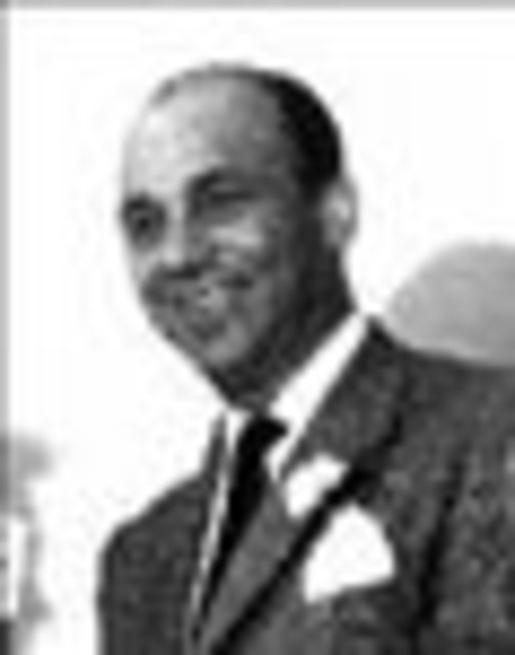
Johnny Green’s Spotify BioAmerican pop composer, bandleader, and pianist Johnny Green wrote the majority of his hit songs during the 1930s, including his most famous tune, "Body and Soul." Born in 1908 in N.Y.C., Green went on to attend the New York Military Academy, and then Harvard, where he composed "Coquette" with lyricist Gus Kahn, and worked occasionally as an arranger, including arranging for Guy Lombardo. After graduating in 1928, Green obeyed his father's wishes and got a job on Wall Street, but quit after about a year of this to pursue his lifelong interest in music. 1930 brought Green two successes: the song "I'm Yours," written with lyricist E.Y. "Yip" Harburg; and his masterpiece, "Body and Soul," originally written for a vocalist Green used to accompany, Gertrude Lawrence (he also was accompanist to Ethel Merman in the early '30s). The next three years brought several hits co-written with his main collaborator, lyricist Ed Heyman, including "Out of Nowhere," "Rain, Rain, Go Away" (written by the… duo with lyricist Mack David), "I Wanna Be Loved," and "I Cover the Waterfront." During this period, Green also worked as an arranger, composer, and conductor for Paramount Pictures' N.Y. studio until 1933, when he began touring the U.S. with his own dance band. Green was commissioned during the early '30s by popular bandleader Paul Whiteman and, as a result, wrote a work for orchestra and three pianos entitled "Night Club: Six Impressions."
From the mid-'30s through the early '40s, Green led radio bands on many popular shows, including The Jack Benny Show, The Packard Hour With Fred Astaire, and the Phillip Morris Radio Program. He also served as conductor and musical director of the Academy Awards several times from the mid-'40s through the mid-'50s. From the late '40s until the early '60s, Green was MGM Studios' musical director and, by the time he left this position, he had begun producing TV specials. He composed a symphonic suite, "Raintree County: Three Themes for Symphony Orchestra," in the early '60s, and went on to be director and conductor of a music series of the Los Angeles Philharmonic. One of his hit songs from 1934, "Easy Come, Easy Go," was used in 1970 film They Shoot Horses, Don't They? Green was married to actress and American swimming champion, Bonnie (Bunny) Waters, and is a member of the Songwriter's Hall of Fame. ~ Joslyn Layne, Rovi
Viberate is a music analytics platform built for A&Rs, artist managers, labels, booking agents, marketers, and artists.
It helps music professionals track artist growth, analyze audience data, monitor playlist activity, compare artists, follow song performance, and identify opportunities across the music market.
Public artist pages provide a free preview of selected artist data. Paid plans provide access to deeper analytics, historical data, charts, comparisons, playlist tools, exports, alerts, reports, and additional professional features.
Yes. Public Viberate artist pages provide selected artist analytics and music data for free.
Viberate also offers a 7-day free trial of the full platform. A credit card is required to start the trial. The trial includes access to the complete product so users can test deeper artist analytics, historical views, playlist insights, comparisons, charts, exports, alerts, and reporting features before choosing a paid plan.
Viberate provides artist analytics across streaming, playlists, social media, video, radio airplay, songs, and audience markets.
Users can analyze Spotify performance, Spotify and Apple Music playlists, YouTube activity, TikTok and Instagram growth, radio spins, song performance, audience locations, demographics, rankings, and overall artist momentum.
Artist profiles also connect to music charts, similar artists, and comparison tools, helping users benchmark performance and evaluate artists in context.
Viberate updates key artist and track data daily.
For followed artists and tracks, selected data is refreshed multiple times per day. This helps teams monitor playlist changes, streaming movement, audience growth, releases, and campaign performance with more current data.
Update frequency can vary depending on the metric and data source.
Yes. Viberate lets users compare up to five artists side by side across streaming, social media, audience, and engagement metrics.
Users can compare fanbase growth, audience demographics, locations, Spotify performance, social metrics, and other artist data over selected time periods.
Artist comparison can be used for A&R scouting, benchmarking, booking decisions, campaign planning, and evaluating artists with similar audiences or market positions.