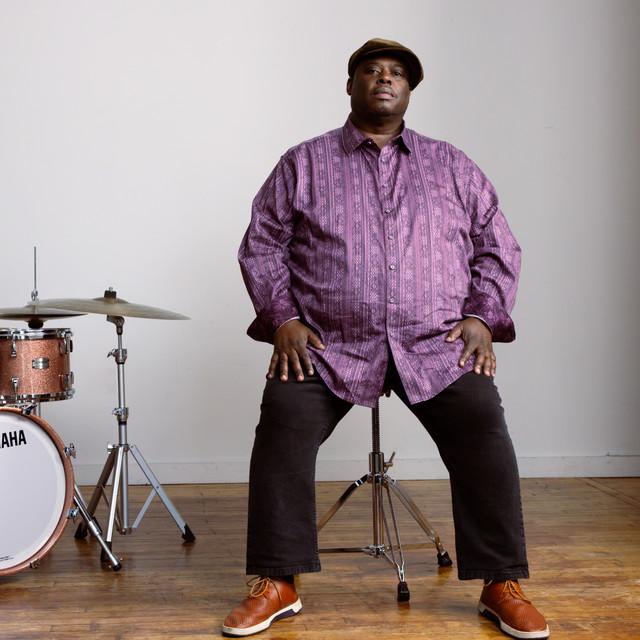
Johnathan Blake

Jazz
Avant-garde Jazz
Smooth Jazz
 Viberate Rank: 94903
 Viberate Rank: 94903
 Monthly ListenersFollowers
 Subscribers
 Followers
 Followers
 FansTop Spotify Songs
| Track | 7-Day Streams | |
|---|---|---|
1 | 67.56K | |
2 | 17.30K | |
3 | 7.42K | |
4 | 3.42K | |
5 | 3.09K |
Top YouTube VideosMonthly ListenersFeatured in Playlists| Playlist | Followers | |
|---|---|---|
1 |  Late Night Jazz Spotify | 2.18M |
2 |  Jazz Classics Blue Note Edition Spotify | 549.36K |
3 |  Good Morning Jazz Spotify | 449.09K |
4 |  Soft Jazz Spotify | 359.30K |
5 |  Modern Jazz Japan Spotify | 51.78K |
Audience| City | Monthly Listeners | |
|---|---|---|
1 |  | 1.51K |
2 |  | 1.24K |
3 | | 985 |
4 |  | 820 |
5 |  | 752 |
See full performance history, audience data, playlist activity, rankings, comparisons, and more in Viberate music analytics. Start with a free trial, then continue with a paid plan.
Johnathan Blake’s Spotify BioAn adept jazz drummer, Johnathan Blake has distinguished himself as both a first-call sideman and leader in his own right. Steeped in the Philly jazz traditions of players like Mickey Roker and Philly Joe Jones, Blake first emerged in the 2000s on the East Coast. Although primarily known for his work in the acoustic, post-bop style with outfits like the Mingus Big Band and veteran players like Tom Harrell and Kenny Barron, Blake has moved ably between straight-ahead and more genre-bending styles, contributing to projects by Jaleel Shaw, Omer Avital, Questlove, and others. A gifted composer, he has released his own inventive solo albums, including 2012's The Eleventh Hour and 2019's Trion. He made his leader debut for Blue Note with 2021's Homeward Bound, followed by Passage in 2023.
Born in 1976 in Philadelphia, Blake grew up in a musical, family the son of jazz violinist John Blake, Jr. He started playing drums at age ten, and by his teens was playing in the Lovett Hines Youth… Ensemble, during which time he also began to compose. Also as a teenager, he played with saxophonist Robert Landham in a youth jazz ensemble at the noted Philadelphia institution Settlement Music School, where he rubbed shoulders with contemporaries like Jaleel Shaw, Christian McBride, and Joey DeFrancesco. At night, he also gained valuable experience sitting in at local clubs with veteran legends like Shirley Scott and Mickey Roker. After graduating from George Washington High School, Blake further honed his skills in the jazz program at William Paterson University. There, he studied with such well-regarded teachers/performers as Rufus Reid, John Riley, Steve Wilson, and Horace Arnold. In 2006 he earned an ASCAP Young Jazz Composers Award, and the following year, he received his Masters from Rutgers University, where he focused on composition and studied with Ralph Bowen, Conrad Herwig, and Stanley Cowell.
While in school, he also continued to seek out professional opportunities, working with the Oliver Lake Big Band, Roy Hargrove, Russell Malone, and David Sanchez. As a member of the Mingus Big Band, Blake helped earn Grammy nominations for 2002's Tonight at Noon and 2005's I Am Three. He has also garnered the respect of jazz veterans, working with Randy Brecker, Joe Locke, and Ronnie Cuber, among others. He is also a longtime member of trumpeter Tom Harrell's group, having appeared on many of the trumpeter's albums, including 2007's Light On, 2009's Prana Dance, and 2011's Time of the Sun.
In 2012, Blake released his debut album as leader, The Eleventh Hour, which featured Harrell, as well as Robert Glasper, Jaleel Shaw, Ben Street, and others. More work followed with Harrell, including appearing on the trumpeter's albums like 2013's Colors of a Dream, 2015's First Impressions, and 2016's Some Gold, Something Blue. He also appeared on Dr. Lonnie Smith's 2016 album Evolution and played on pianist Kenny Barron's Grammy-nominated 2016 trio album, Book of Intuition, and 2018 octet date Concentric Circles.
Also in 2018, Blake returned to his solo work with Trion, featuring saxophonist Chris Potter and bassist Linda May Han Oh. He also reunited with Dr. Lonnie Smith for All in My Mind and paired with tenor saxophonist Eric Alexander for 2019's Leap of Faith. In March 2020, he joined pianist Barron and bassist Dave Holland on the elegant trio album Without Deception. That same year, he contributed to tenor saxophonist Oded Tzur's boundary-pushing album Here Be Dragons.
Blake signed to Blue Note Records at the end of the year and released his label debut Homeward Bound in 2021. He was accompanied on the widely acclaimed date by alto saxophonist Immanuel Wilkins, keyboardist David Virelles, vibraphonist Joel Ross, and upright bassist Dezron Douglas, a quintet named Pentad. Following festival and club tours of the U.S., Europe, and Asia in 2022, Blake returned to the studio with the same band and released Passage in August 2023. The uplifting sequel was dedicated to the memory of his father John Blake, Jr., a jazz violinist whose composition "Passage" provides the album with its title. The ten-track set also included five originals by Blake, as well as pieces by Douglas, Virelles, and Blake's late drum instructor and mentor Ralph Peterson, Jr. ~ Matt Collar
Viberate is a music analytics platform built for A&Rs, artist managers, labels, booking agents, marketers, and artists.
It helps music professionals track artist growth, analyze audience data, monitor playlist activity, compare artists, follow song performance, and identify opportunities across the music market.
Public artist pages provide a free preview of selected artist data. Paid plans provide access to deeper analytics, historical data, charts, comparisons, playlist tools, exports, alerts, reports, and additional professional features.
Yes. Public Viberate artist pages provide selected artist analytics and music data for free.
Viberate also offers a 7-day free trial of the full platform. A credit card is required to start the trial. The trial includes access to the complete product so users can test deeper artist analytics, historical views, playlist insights, comparisons, charts, exports, alerts, and reporting features before choosing a paid plan.
Viberate provides artist analytics across streaming, playlists, social media, video, radio airplay, songs, and audience markets.
Users can analyze Spotify performance, Spotify and Apple Music playlists, YouTube activity, TikTok and Instagram growth, radio spins, song performance, audience locations, demographics, rankings, and overall artist momentum.
Artist profiles also connect to music charts, similar artists, and comparison tools, helping users benchmark performance and evaluate artists in context.
Viberate updates key artist and track data daily.
For followed artists and tracks, selected data is refreshed multiple times per day. This helps teams monitor playlist changes, streaming movement, audience growth, releases, and campaign performance with more current data.
Update frequency can vary depending on the metric and data source.
Yes. Viberate lets users compare up to five artists side by side across streaming, social media, audience, and engagement metrics.
Users can compare fanbase growth, audience demographics, locations, Spotify performance, social metrics, and other artist data over selected time periods.
Artist comparison can be used for A&R scouting, benchmarking, booking decisions, campaign planning, and evaluating artists with similar audiences or market positions.