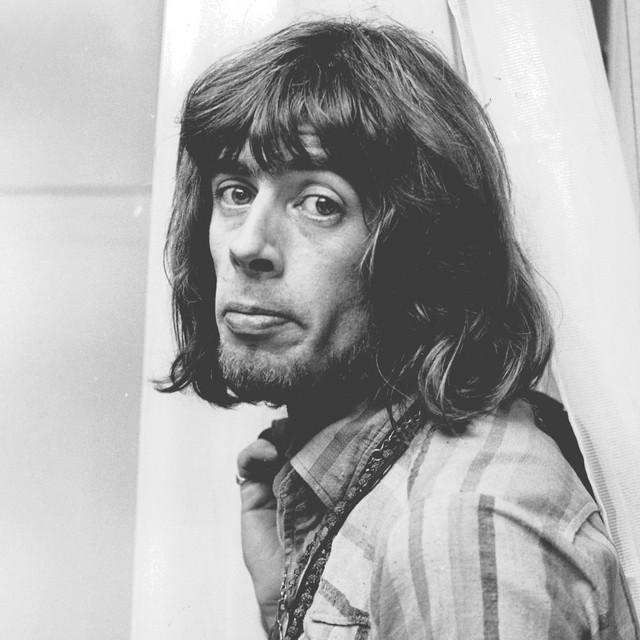
John Mayall

Blues
Blues Rock
Contemporary Blues
 Viberate Rank: 44615
 Viberate Rank: 44615
 Monthly ListenersFollowers
 Subscribers
 Followers
 Followers
 FansTop Spotify Songs
| Track | 7-Day Streams | |
|---|---|---|
1 | 19.92K | |
2 | 12.07K | |
3 | 10.23K | |
4 | 9.74K | |
5 | 8.63K |
Top YouTube VideosMonthly ListenersFeatured in Playlists| Playlist | Followers | |
|---|---|---|
1 |  Funky Heavy Bluesy Spotify | 820.62K |
2 |  sensual dark blues. totti444 | 152.91K |
3 |  Once Upon A Time In...Hollywood Radio Josh Gardner | 100.16K |
4 | While You Work (@whileyouwork) Eli Feghali | 81.75K |
5 |  This Is Gary Moore Spotify | 63.68K |
Audience| City | Monthly Listeners | |
|---|---|---|
1 |  | 2.10K |
2 |  | 2.06K |
3 | | 1.94K |
4 |  | 1.88K |
5 |  | 1.85K |
See full performance history, audience data, playlist activity, rankings, comparisons, and more in Viberate music analytics. Start with a free trial, then continue with a paid plan.
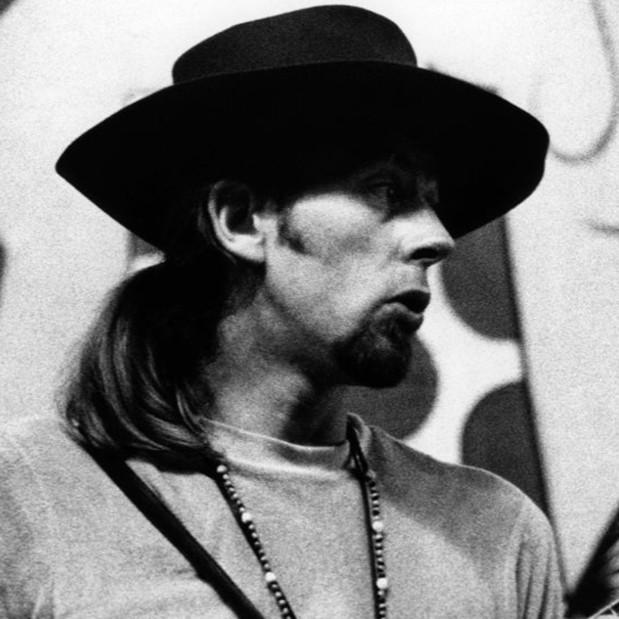
John Mayall’s Spotify BioJohn Mayall, OBE, was the godfather of the British blues. A generation older than most of his sidemen, the singer/songwriter and multi-instrumentalist was a mentor; his bands were both a lab and finishing school for iconic musicians -- particularly guitarists. Eric Clapton, Peter Green, and Mick Taylor served, as did bassists Jack Bruce and John McVie, and drummers Mick Fleetwood and Aynsley Dunbar, among dozens of others. Five of Mayall's first seven albums, including 1966's Blues Breakers with Eric Clapton, 1967's A Hard Road, and 1969's The Turning Point, all placed inside the British Top Ten. After emigrating to the U.S., Mayall cut several albums during the '70s including Ten Years Are Gone and Jazz Blues Fusion, which showcased veteran blues and jazz players including Harvey Mandel, Jesse Ed Davis, and Blue Mitchell. During the '80s, Mayall sold out houses across the globe, recorded for several labels, and employed top-shelf guitar slingers including Walter Trout, Sonny Landreth,… and Coco Montoya. Mayall issued a series of memorable recordings for Silvertone in the '90s including Wake Up Call, Spinning Coin, and Blues for the Lost Days. In 2016, he was inducted into the Blues Hall of Fame. In 2019, age 85, Mayall issued Nobody Told Me, a diverse set that garnered massive acclaim for his choice of guests, including Joe Bonamassa. In 2022, two months after his 88th birthday, he released the star-studded The Sun Is Shining Down.
Mayall was born in Cheshire in 1933. His father Murray was a guitarist and collector of jazz and blues 78s. He developed an early love for the sounds of American blues players such as Lead Belly and boogie woogie players such as Albert Ammons, Meade "Lux" Lewis, and Pinetop Smith. Inspired by them, he taught himself to play piano, guitars, and harmonica -- Mayall does not read music. After completing his O levels, he served in Korea; while on leave, he purchased his first electric guitar and knew what his vocation would be. After finishing his tour of duty, he enrolled at Manchester College of Art and began working with several gigging bands. After graduating he became an art designer, but friend and mentor Alexis Korner convinced him to chuck his job, become a full-time musician, and move to London.
Mayall's groups began working local blues and R&B spots including the Marquee and developed a following. The first edition of the Bluesbreakers cut their debut single, "Crawling Up a Hill" b/w "Mr. James" in 1964. That year they won a slot opening for John Lee Hooker on the elder bluesman's English tour. Mayall won a record deal with Decca in 1964 and cut his debut, John Mayall Plays John Mayall in 1965, shortly before Eric Clapton left the Yardbirds and signed on with the Bluesbreakers (John McVie was the group's bassist). Their first single "I'm Your Witchdoctor" b/w "Telephone Blues" was released in October of 1965. The previous August, Clapton displayed his own trademark restlessness and left for Greece with a bunch of relative musical amateurs and Peter Green was selected as his replacement. Clapton returned in November and got his job back, unceremoniously displacing Green. Blues Breakers with Eric Clapton was issued in July 1966. Its 12 tracks included covers of Otis Rush's "All Your Love" and Freddie King's "Hide Away," as well as five Mayall originals. The album peaked at six on the British chart and established Clapton's reputation as a guitarist internationally. Unbeknownst to Mayall, Clapton was already preparing his departure from the band and left in June to form Cream with Ginger Baker and former (and future) Mayall sideman, bassist Jack Bruce.
After being pursued by a repentant Mayall for a few weeks, Peter Green agreed to rejoin the Bluesbreakers. This incarnation proved almost equally as short-lived but prolific. They cut more than 40 songs. Their only album, A Hard Road, was issued in February of 1967. It peaked at eight nationally. Green, too, left shortly thereafter, and with bassist John McVie and former Mayall sideman Mick Fleetwood, formed the original incarnation of Fleetwood Mac with guitarist Jeremy Spencer.
While Mayall's personnel almost always overshadowed his own considerable abilities in the press, the multi-instrumentalist was adept in bringing out the best in his younger charges, especially as they sought to understand and play the electric Chicago blues. While forming a new version of the Bluesbreakers, Mayall was constantly experimenting and stretching blues forms to meet a future only he could hear. He issued the groundbreaking solo recording The Blues Alone in 1967, for which he wrote all the songs and played all instruments save for percussion, which was provided by Keef Hartley.
After the departure of McVie, Mayall's shifting tour lineup consisted of Taylor on lead guitar, saxists Dick Heckstall-Smith and Chris Mercer, Hartley on drums, and bassist Paul Williams, who left soon after and was replaced by Keith Tillman. While on tour that year, Mayall brought along a state of the art two-track portable tape machine and field recorded the band's performances. From over 60 hours of tape, he pasted together snippets to form a live album, released as Diary of a Band, Vols. 1 & Vol. 2 in 1968. They recalled Mayall bootlegs juxtaposed with long extended jams in intimate club settings, interspersed with on-stage dialogue (including confrontations with the crowd) and interview clips. The concept, combined with the organic sound, made for a truly revolutionary live album setting that offered stellar evidence of the sextet's considerable abilities. Of the dozens of live albums the bluesman has released, it stands as his most original.
1968's Bare Wires was the first Bluesbreakers outing to feature future Rolling Stones' guitarist Mick Taylor. It peaked at number three -- Mayall's highest-charting album to date, and spent 55 weeks on the list. That year, he broke up the Bluesbreakers (no less than 15 different incarnations existed between 1963 and 1970) and cut Blues from Laurel Canyon, his final Decca album. Based on an initial visit to the L.A. region's musical hot spot, the set was actually recorded in England. It included a dozen Mayall originals and was Taylor's swan song; he replaced Brian Jones in the Rolling Stones. Mayall had the U.S. on his mind. Late in 1969 he emigrated to the Los Angeles area and eventually purchased a home in Laurel Canyon.
1969's best-selling The Turning Point was recorded live at Bill Graham's Fillmore East for Polydor, with a new band and concept. The drummerless group featured Mayall on vocals, harmonica, and occasional electric guitar, Jon Mark on acoustic guitar, Steve Thompson on bass, and Johnny Almond on reeds and woodwinds. It peaked at 11 in the U.K. and number 41 in the States but was eventually certified gold thanks to the single "Room to Move." The same group cut the studio outing Empty Rooms a couple of months later. In 1971, Mayall released the double-length Back to the Roots. Recording sessions took place in California and London. Mayall invited former members of the Bluesbreakers, notably guitarists Clapton and Taylor, to sit in.
Canned Heat bassist Larry Taylor would join Mayall as one of three American musicians along with former Canned Heat guitarist/electric guitarist Harvey Mandel and electric violinist Sugarcane Harris. This lineup would record 1970's USA Union. In 1971, he issued the trio outing Memories with guitarist Jerry McGhee and bassist Taylor. 1972's Jazz Blues Fusion moved further afield; it featured Mayall in the company of trumpeter Blue Mitchell, saxophonist Clifford Solomon, guitarist Freddy Robinson, and bassist Larry Taylor. That group -- appended by drummer Keef Hartley and saxophonists Fred Jackson, Ernie Watts, and Charles Owens -- released Moving On later that year. Mayall continued to explore the connections between jazz and blues on the double-length Ten Years Are Gone in late 1973 with a septet that included those musicians, saxophonist Red Holloway, and bassist Victor Gaskin.
Mayall was on a roll. He released The Latest Edition in 1974. Produced by Tom Wilson, only Holloway returned from the previous outing. The rest of the lineup included Larry Taylor, drummer Soko Richardson, and guitarists Randy Resnick and Hi Tide Harris. 1975's New Year, New Band, New Company, marked Mayall's debut for ABC/Blue Thumb. Harris, Richardson, and Taylor returned, alongside electric pianist Jay Spell, guitarist Rick Vito, and vocalist Dee McKinney. Peaking at 140 on the Top 200, it was the leader's last charting album until 1990. That lack of commercial distinction didn't remotely reflect the quality of the music on offer, only the changing tastes of the record-buying public. Later that year, Mayall brought the band to New Orleans to work with producer/keyboardist Allen Toussaint. He appended the lineup with "Bayou Maharaja" James Booker on organ, a Crescent City horn section, and additional players. At the end of 1975, Mayall returned to Los Angeles and cut a series of genre-expanding sessions that were released as A Banquet in Blues the following year. Mayall produced the wildly eclectic, revolving-door set that translated blues through jazz and funk, and featured jazz luminaries such as drummer Ron McCurdy, bassist Larry Gales, Mitchell, McVie, and Mayall's fine road band.
In America at least, he continued to be a popular live attraction. Though his band remained flexible as ever; he managed to tour and sell tickets across the country and in England and appear at European blues festivals. He issued A Hard Core Package for ABC in 1977. Self-produced and arranged, Mayall enlisted guitarist James Quill Smith, a large horn section, and a female backing chorus. It remains the most unusual outing in his vast catalog. Later that year, Mayall released Lots of People. Alongside his core players, he enlisted unlikely session players including guitarist Gary Rowles and vocalists Pepper Watkins and Patti Smith. His final outing for ABC was 1978's The Last of the British Blues, using much of the same lineup. Interestingly, all of Mayall's records from the latter half of the '70s initially received mostly lukewarm reviews. All have since been critically reappraised as forward-thinking, even visionary recordings that expanded the reach of blues without watering them down. Mayall recorded a trio of outings for DJM Records beginning with No More Interviews in 1979. He followed with the Bob Johnston-produced Bottom Line and Road Show Blues in 1980 and 1981.
In 1982, Mayall founded a new road band with guitarists Coco Montoya and Walter Trout, bassist Bobby Haynes, and drummer Joe Yuele. In 1985 he hit the road with John McVie and Mick Taylor, issuing Return of the Bluesbreakers, essentially resurrecting the band's name. In 1988, Mayall's regular road band version of the Bluesbreakers released the seminal Chicago Line in 1988, his first studio-issued U.S. album in close to a decade.
When RCA formed its blues imprint Silvertone in 1990, Mayall was one of the artists they had in mind. They signed him in late 1992 and released the acclaimed Wake Up Call in April of 1993. Essentially reintroducing Mayall to a new generation, it featured him in the company of guests including Mick Taylor, Buddy Guy, Albert Collins, and Mavis Staples. While it didn't chart in the U.S., it reached number 61 in the U.K., his first entry there in more than two decades. Unfortunately, 1995's Spinning Coin -- despite universal acclaim as one of his finest outings in decades -- failed to set the charts afire. The Bluesbreakers included bassist Rick Cortes, Yuele on drums, and newcomer guitarist Buddy Whittington. The release did provide Mayall with a slew of touring opportunities that included international festivals and small clubs on both sides of the Atlantic. He followed with Blues for the Lost Days in 1997. Produced by John Porter, he used the same band with Tommy Eyre added as their keyboardist, and a horn section that included trombonist George Bohannon and old friends Clifford Solomon and Red Holloway. After Silvertone folded, Mayall closed the decade with Padlock on the Blues for Purple/Cleopatra. He co-produced it with daughter Maggie Mayall. In addition to his own band, the leader appended his set with guest spots from John Lee Hooker, Montoya, and sax man Ernie Watts.
In 2001 Eagle released the star-studded Along for the Ride, credited to John Mayall & Friends. The set featured his regular band with appearances from guests including Billy Gibbons, Steve Miller, Steve Cropper, Otis Rush, and former Bluesbreakers Fleetwood, Taylor, and Dick Heckstall-Smith, to mention a few. It charted across Europe and in the U.K. and placed at number four on the Top 200 in the U.S. and spent 18 weeks on the chart. The following year, the Bluesbreakers issued Stories. Whittington and Yuele remained in the group and were joined by Hank Van Sickle on bass and Tom Canning on keyboards. It topped the Blues albums charts in the U.S. and made the Top 200. Produced by David Z. Mayall, it featured originals and tunes from friends including Buddy and Julie Miller. In 2003, Eagle issued the film and recording package 70th Birthday Concert. It featured another all-star guest lineup that included Clapton, Mick Taylor, trumpeter Henry Lowther, and trombonist Chris Barber. It too reached number eight on the U.S. Top 200. In 2005, Mayall was appointed an OBE by Queen Elizabeth II.
2005's Road Dogs was the last LP to feature Canning in the lineup; co-produced by the entire band, it hit number four and remains one of Mayall's rawest albums. 2007's Palace of the King was completely devoted to songs that Freddie King wrote, inspired, or was "closely associated with." In addition to the Bluesbreakers, guitarist Robben Ford lent a hand on his own composition "Cannonball Shuffle" and the set went to number three at Blues Albums. At the end of 2008, Mayall announced he was disbanding the Bluesbreakers again to reduce his workload. That said, he wasted no time forming a new band that included guitarist Rocky Athas, bassist Greg Rzab, and drummer Jay Davenport -- with Canning assisting on organ -- and undertook a world tour. In September, that lineup recorded Tough, Mayall's final outing for Eagle. He was 75 years old.
He continued to tour and record well into his eighties. In 2014 he released A Special Life, his debut recording for Forty Below. It peaked at three on the Blues Albums list in the U.S. Recorded at Entourage Studios in North Hollywood, it featured singer and accordion player C.J. Chenier in a guest role. Mayall followed a year later with Find a Way to Care, a set that showcased his underrated and innovative keyboard playing on a set of originals and vintage covers including Percy Mayfield's "The River's Invitation." The set charted in four European countries and reached number five in the U.S. The outing's popularity cemented Mayall's induction into the Blues Hall of Fame in 2016. Talk About That, his third Top Five outing for Forty Below, arrived in late 2017. A much funkier affair with a horn section, it also charted across Europe.
In the spring of 2018, at age 85, Mayall contracted pneumonia and canceled a U.S. tour. That summer, sufficiently recovered, he hit the recording studio and emerged with the full-length Nobody Told Me in 2019. Its first single, "Distant Lonesome Train," was co-written with Joe Bonamassa, who also played guitar on it and another track. Other guests included Steve Van Zandt, Todd Rundgren, Alex Lifeson, Larry McCray, and Mayall's new road guitarist Carolyn Wonderland. Mayall embarked on a world tour after the album's release. It went all the way to number two at Blues Albums in the U.S. as well as charting in Europe.
In the early winter of 2021, the U.K.'s Snapper deluxe label released the mammoth limited-edition, 35-disc First Generation 1965-1974. Produced with Mayall's full cooperation, it included remastered editions of all of Mayall's and the Bluesbreakers recordings between those years, with bonus material including singles, EPs, and 29 previously unissued live and studio tracks including performances at the BBC. In included a 12x12 coffee table book featuring rare photos and full-size album cover art, a musical family tree, two posters, replicas of early fan club newsletters, and a lengthy, comprehensive liner essay by Neil Slaven.
In October, a month before his 88th birthday, Mayall announced his retirement from touring. In that same announcement, he stated that he had just completed The Sun Is Shining Down. Produced by Eric Corne (Sugaray Rayford), the set featured his longstanding quartet with Carolyn Wonderland on lead guitar accompanying a star-studded guest list that included Melvin Taylor, Buddy Miller, Mike Campbell, and Marcus King. It turned out to be John Mayall's curtain call. He died on July 22, 2024, at his California home at the age of 90. ~ Thom Jurek, Rovi
Viberate is a music analytics platform built for A&Rs, artist managers, labels, booking agents, marketers, and artists.
It helps music professionals track artist growth, analyze audience data, monitor playlist activity, compare artists, follow song performance, and identify opportunities across the music market.
Public artist pages provide a free preview of selected artist data. Paid plans provide access to deeper analytics, historical data, charts, comparisons, playlist tools, exports, alerts, reports, and additional professional features.
Yes. Public Viberate artist pages provide selected artist analytics and music data for free.
Viberate also offers a 7-day free trial of the full platform. A credit card is required to start the trial. The trial includes access to the complete product so users can test deeper artist analytics, historical views, playlist insights, comparisons, charts, exports, alerts, and reporting features before choosing a paid plan.
Viberate provides artist analytics across streaming, playlists, social media, video, radio airplay, songs, and audience markets.
Users can analyze Spotify performance, Spotify and Apple Music playlists, YouTube activity, TikTok and Instagram growth, radio spins, song performance, audience locations, demographics, rankings, and overall artist momentum.
Artist profiles also connect to music charts, similar artists, and comparison tools, helping users benchmark performance and evaluate artists in context.
Viberate updates key artist and track data daily.
For followed artists and tracks, selected data is refreshed multiple times per day. This helps teams monitor playlist changes, streaming movement, audience growth, releases, and campaign performance with more current data.
Update frequency can vary depending on the metric and data source.
Yes. Viberate lets users compare up to five artists side by side across streaming, social media, audience, and engagement metrics.
Users can compare fanbase growth, audience demographics, locations, Spotify performance, social metrics, and other artist data over selected time periods.
Artist comparison can be used for A&R scouting, benchmarking, booking decisions, campaign planning, and evaluating artists with similar audiences or market positions.