John Cale

Rock
Alternative Rock
Pop Rock
 Viberate Rank: 31714
 Viberate Rank: 31714
 Monthly ListenersFollowers
 Subscribers
 Followers
 Followers
 FansTop Spotify Songs
| Track | 7-Day Streams | |
|---|---|---|
1 | 139.83K | |
2 | 49.40K | |
3 | 31.07K | |
4 | 15.80K | |
5 | 13.81K |
Top YouTube VideosMonthly ListenersFeatured in Playlists| Playlist | Followers | |
|---|---|---|
1 |  EQUAL Spotify | 1.02M |
2 |  Spooky Spotify | 463.44K |
3 |  Fidi & Bumsi Spotify | 353.23K |
4 |  Oblique Spotify | 209.74K |
5 |  The Bear Soundtrack Brendan Noone | 200.66K |
Audience| City | Monthly Listeners | |
|---|---|---|
1 |  | 17.98K |
2 | | 10.81K |
3 | | 9.33K |
4 |  | 8.87K |
5 | | 8.16K |
See full performance history, audience data, playlist activity, rankings, comparisons, and more in Viberate music analytics. Start with a free trial, then continue with a paid plan.
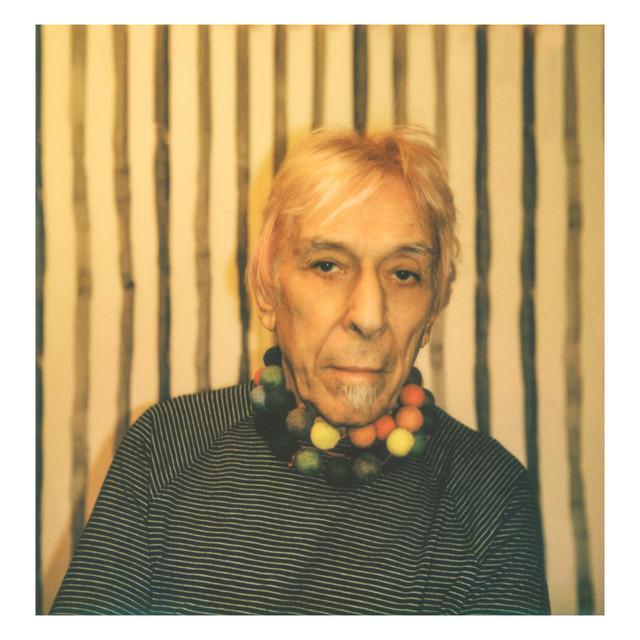
John Cale’s Spotify BioJohn Cale has enjoyed one of the most diverse and adventurous careers in rock music, building a bridge between the avant-garde, contemporary classical and art music, and the more imaginative wings of pop and rock. Cale's work as a founding member of the Velvet Underground would be enough to earn him an esteemed place in music history, but he's also celebrated as an important solo artist, a gifted songwriter and composer, a skilled instrumentalist, and a thoughtful producer who helmed seminal albums by Patti Smith, the Stooges, and the Modern Lovers. As for his own recordings, there is no consistent "John Cale Sound," but the bold eagerness to experiment and express his latest ideas is the through-line in his repertoire. He sounds as comfortable with sophisticated pop (1970's Vintage Violence and 1973's Paris 1919) and artful minimalism (1982's Music for a New Society and 1990's Lou Reed collaboration Songs for Drella) as he is with noisy, confrontational rock (1974's Fear and 1981's… Honi Soit) and electronic soundscapes (2003's HoboSapiens and 2024's Poptical Illusion).
The son of a coal miner and a schoolteacher, John Cale was born in Garnant, Carmarthenshire, Wales, on March 9, 1942. He was a child prodigy of sorts, performing an original piano composition on the BBC before he entered his teens, becoming the organ player at a local church, and joining the National Youth Orchestra of Wales on viola when he was 13. In the early '60s, he drifted toward the avant-garde, gaining a scholarship (with help from Aaron Copland and Leonard Bernstein) to study music in the United States. Moving to New York in 1963, Cale participated in an 18-hour piano recital with John Cage, as one of a team of pianists who performed Erik Satie's "Vexations" in full. (Pictures of Cale performing at the event made The New York Times, and he appeared on the popular game show I've Got a Secret along with the lone attendee who witnessed the entire performance.) More importantly, he became a member of LaMonte Young's minimalist ensemble the Theatre of Eternal Music (also known as the Dream Syndicate), whose use of repetitious drones would influence the arrangements of his next group, the Velvet Underground. (Inside the Dream Syndicate, Vol. 1: Day of Niagara [1965] is a 2000 release that preserves some of Cale's music with Young and his compatriots.)
Cale co-founded the Velvets with Lou Reed and guitarist Sterling Morrison in 1965. Cale met Reed when the latter was a struggling songwriter for Pickwick Records, a low-budget label that specialized in cut-rate collections of popular hits and similarly styled knock-offs. Cale's first experience in rock came when he was recruited to play shows with the Primitives, an ad hoc group put together to promote a gimmicky single written and recorded by Reed, "The Ostrich." (Fellow LaMonte Young collaborator Tony Conrad was also part of the lineup.) When Reed showed Cale that he wrote "The Ostrich" for a guitar with all strings tuned to the same note, he was intrigued, as he was using the same technique with LaMonte Young. Cale and Reed shared an ambition to bring the sensibilities of the creative underground to rock music, both musically and lyrically, and Cale began recording demos with Reed, helping him shape his bold original songs.
Over the next three years, the Velvet Underground broke down barriers between rock & roll, art, and the avant-garde. While Reed was the most important member of the band as the lead singer and primary songwriter, Cale was just as crucial in devising the group's sound. It was Cale who was responsible for many of the most experimental elements of their first two albums, The Velvet Underground & Nico and White Light/White Heat (1967): especially his droning viola parts on "Venus in Furs," "Heroin," and "Black Angel's Death Song"; his pounding piano on "I'm Waiting for the Man" and "All Tomorrow's Parties"; his deadpan narration of "The Gift"; and the white-noise organ of "Sister Ray." Cale was ousted from the band by Reed in the summer of 1968. Accounts still vary as to whether he was fired or he quit, but it's been most widely suggested that Reed's ego found Cale's talents threatening his leadership of the band. Morrison would say that Reed told him and Velvets drummer Maureen Tucker that if Cale didn't leave, he would leave instead; the pair reluctantly opted to side with Reed. The Velvets would continue to make great music for a couple of years, but their radical edge was blunted by Cale's absence.
Cale was soon busy producing ex-VU singer Nico's Baroque-gothic The Marble Index (1969) and the Stooges' self-titled debut album (also 1969). While they were about as different as two projects could be, both were extremely influential (though initially extremely low-selling) cult items, the former anticipating goth and art rock, and the latter laying the groundwork for punk and new wave. In 1970, Cale began his proper solo career with one of his best albums, Vintage Violence. Those expecting a slab of radicalism were in for a surprise; the material was the product of a low-key, accessible singer/songwriter working in the mold of the Band rather than the Velvets. Listeners didn't have to wait long for something a bit more experimental. Cale's next album, Church of Anthrax, was a primarily instrumental collaboration with minimalist composer Terry Riley. In some respects, these two records defined the poles of Cale's solo career. Even at his most accessible, his music had a moody, even morbid edge that precluded much radio airplay, and even at its most experimental, it was never as avant-garde as, say, LaMonte Young. Cale would reserve his most experimental outings for collaborations with Riley, Brian Eno, and, much further down the road, Lou Reed.
On his own, Cale was most concerned with crafting inventively arranged songs delivered in his lilting Welsh burr. It was in his arrangements and production that his musical training and avant-garde background were most evident, in their eclecticism (even drawing from country-rock and guest shots from Lowell George at times) and touches of classical music. Sometimes he'd take out his viola, but generally he focused on the more traditional instruments of guitar and keyboards. Toward the end of the '70s, his approach became harder-rocking and a bit confrontational, especially in concert, where he would adopt a number of flamboyant costumes and theatrical poses that verged on the offensive (such as in a notorious incident in which he appeared to kill a chicken on-stage, though it was in fact already dead). Generally he was most successful in a more subdued and brooding mode, as on Vintage Violence or, much later, Music for a New Society (1982).
Cale never abandoned his production activities, and several of the albums with him at the controls have endured as important and groundbreaking statements. His sessions with Jonathan Richman & the Modern Lovers (from the early '70s, but not released until a few years later) anticipated punk and new wave. Patti Smith's Horses (1975) was one of the best and most influential recordings of the '70s. There were also more albums with Nico, and records with Squeeze, Sham 69, and others; for a couple years in the early '70s, he was even a staff producer at Warner Bros., handling unlikely clients like Jennifer Warnes. After the mid-'80s, Cale slowed (but did not curtail) work on his own releases. His most high-profile outings in the 1990s were collaborations. Wrong Way Up (1990) matched him with Brian Eno, while Songs for Drella (1990), which got a lot more media ink, reunited him at long last with Lou Reed, with whom he had feuded on and off for a couple of decades. The album was a song-cycle tribute to their recently deceased mentor and ex-Velvet Underground manager Andy Warhol, and well-received both on record and in performance, it was one of the factors that finally led the pair to bury the hatchet and re-form the Velvet Underground for a 1993 live European tour and live album. These events were not quite as successful with critics as with fans, and predictably Reed and Cale were on the outs yet again by the end of the tour, with feuds over direction, leadership, and songwriting credits resurfacing with a vengeance.
Prospects for an American Velvet Underground tour never came to realization, Cale and Reed vowing never to work with each other again. The death of Sterling Morrison in 1995 ended any reunion hopes, although it did apparently serve to reconcile Reed and Cale, who played together when the Velvet Underground were inducted into the Rock & Roll Hall of Fame in 1996. Cale, however, didn't need Reed to keep busy. In the '90s, he continued to record as a soloist and a soundtrack composer. One of his most ambitious collaborations was The Last Day on Earth (1994), a song cycle and theatrical production written and performed with cult singer/songwriter Bobby Neuwirth. He kept up a busy schedule as a producer and sideman, leading sessions for Siouxsie and the Banshees, Happy Mondays, the Jesus Lizard, and Alejandro Escovedo, among many others, and performing on albums by the Replacements, Sister Double Happiness, Maureen Tucker, and Super Furry Animals. Cale released Nico, a tribute to his late Velvet Underground bandmate and frequent collaborator, in 1998. He continued to record regularly into the new millennium, releasing a pair of well-received studio albums, HoboSapiens (2003) and Black Acetate (2005). The Extra Playful EP arrived in 2011, followed in 2012 by a well-deserved career overview, Conflict & Catalysis: Productions & Arrangements 1966-2006, and a new studio album, Shifty Adventures in Nookie Wood.
Cale collaborated with filmmaker and artist Liam Young for Loop 60 Hz: Transmissions from the Drone Orchestra, which played on the multiple meanings of the word "drone." Performed at London's Barbican Theatre, the performance included music from Cale and his group that worked in "durational forms," while Young piloted a handful of small remote-control helicopters over the heads of the spectators. In early 2016, Cale released M:FANS, a collection of stark, electronic-based reworkings of the material from his outstanding 1982 album Music for a New Society. He presented three special concerts at the Brooklyn Academy of Music in 2017: the first two celebrated the 50th anniversary of the release of The Velvet Underground & Nico with the Wordless Music Orchestra, Maureen Tucker, and a number of special guests, while the third honored his solo career with a set chronicling the many eras of his music. The following year, Cale toured in China for the first time, and in 2019, he performed at the DMZ Peace Train Music Festival, an event staged in South Korea near the North Korean border in a bid to promote international unity. Welsh electronic artist Kelly Lee Owens asked Cale to contribute to "Corner of My Sky," a track that appeared on her 2020 album Inner Song.
Filmmaker Todd Haynes released The Velvet Underground in 2021, an ambitious documentary about the band's history and influence; Cale participated in the production of the film, appearing in an onscreen interview, while "17 XII 63 NYC the Fire Is a Mirror," a piece from his time with LaMonte Young's Theatre of Eternal Music, was heard in the movie and appeared on the soundtrack album. In January 2023, Cale released Mercy, his first collection of fresh material in a decade. Featuring guest appearances from Weyes Blood, Animal Collective, Actress, and Sylvan Esso, the album was steeped in electronics and musings about a chaotic world and the need for hope against the darkness. Cale's fans didn't have to wait nearly as long for his next LP -- he issued Poptical Illusion in June 2024. A bracing, relatively accessible blend of electronic and organic instrumentation, with Cale playing most of the instruments himself, Poptical Illusion was produced by Cale and his longtime manager and studio collaborator Nita Scott. ~ Richie Unterberger & Mark Deming, Rovi
Viberate is a music analytics platform built for A&Rs, artist managers, labels, booking agents, marketers, and artists.
It helps music professionals track artist growth, analyze audience data, monitor playlist activity, compare artists, follow song performance, and identify opportunities across the music market.
Public artist pages provide a free preview of selected artist data. Paid plans provide access to deeper analytics, historical data, charts, comparisons, playlist tools, exports, alerts, reports, and additional professional features.
Yes. Public Viberate artist pages provide selected artist analytics and music data for free.
Viberate also offers a 7-day free trial of the full platform. A credit card is required to start the trial. The trial includes access to the complete product so users can test deeper artist analytics, historical views, playlist insights, comparisons, charts, exports, alerts, and reporting features before choosing a paid plan.
Viberate provides artist analytics across streaming, playlists, social media, video, radio airplay, songs, and audience markets.
Users can analyze Spotify performance, Spotify and Apple Music playlists, YouTube activity, TikTok and Instagram growth, radio spins, song performance, audience locations, demographics, rankings, and overall artist momentum.
Artist profiles also connect to music charts, similar artists, and comparison tools, helping users benchmark performance and evaluate artists in context.
Viberate updates key artist and track data daily.
For followed artists and tracks, selected data is refreshed multiple times per day. This helps teams monitor playlist changes, streaming movement, audience growth, releases, and campaign performance with more current data.
Update frequency can vary depending on the metric and data source.
Yes. Viberate lets users compare up to five artists side by side across streaming, social media, audience, and engagement metrics.
Users can compare fanbase growth, audience demographics, locations, Spotify performance, social metrics, and other artist data over selected time periods.
Artist comparison can be used for A&R scouting, benchmarking, booking decisions, campaign planning, and evaluating artists with similar audiences or market positions.