John Butcher

Jazz
Free Jazz
 Viberate Rank: 578733
 Viberate Rank: 578733
 Monthly ListenersFollowers
 Subscribers
 Followers
 Followers
 FansTop Spotify Songs
| Track | 7-Day Streams | |
|---|---|---|
1 | 33 | |
2 | 32 | |
3 | 32 | |
4 | 22 | |
5 | 15 |
Top YouTube VideosMonthly ListenersFeatured in Playlists| Playlist | Followers | |
|---|---|---|
1 |  Avant-Jazz Spotify | 70.76K |
2 |  The Sound of Free Jazz The Sounds of Spotify | 10.46K |
3 |  JAZZ morrisonhaze | 3.11K |
4 |  Oceans of Sound: David Toop's Virgin Ambient compilations ckp101 | 1.78K |
5 | Best Of 2016: Top Tracks redditlistentothis | 1.64K |
Audience| City | Monthly Listeners | |
|---|---|---|
1 | | 11 |
2 |  | 9 |
3 |  | 6 |
4 | | 6 |
5 |  | 6 |
See full performance history, audience data, playlist activity, rankings, comparisons, and more in Viberate music analytics. Start with a free trial, then continue with a paid plan.
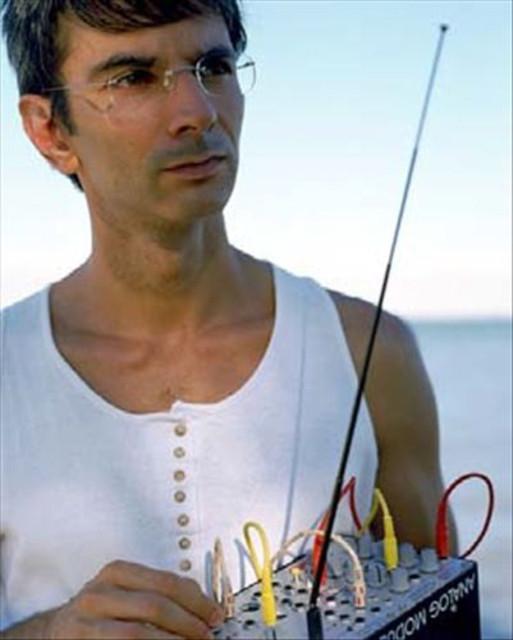
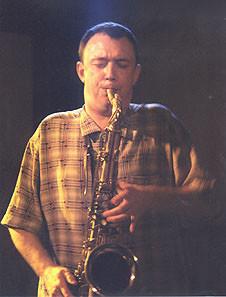
John Butcher’s Spotify BioDespite the fact that British saxophonist John Butcher came relatively late to free improvisation, his highly personal sound turned him into one of the key sax players of the late '90s onward. A very busy schedule and an impressive number of music associates have given him the exposure he needed to build a strong following among avant-garde music fans. Drawing from the techniques of Evan Parker and the philosophy of Derek Bailey, he freed his playing of unnecessary stamina to open new directions in the use of overtones and multiphonics.
Butcher had in mind to become a physicist and actually began his Ph.D. before turning to music full-time. Self-taught on the tenor and soprano saxophones since the late '70s, he began to play jazz, both conventional and unorthodox, while attending university in Surrey (England). There he met pianist Chris Burn, a musician who remained a frequent partner, and tasted group improvisation for the first time through Stockhausen's intuitive pieces. At the turn… of the decade, he moved to London for his Ph.D. and performed in jazz quartets and Burn's big band on the side. In 1982, in his early thirties, Butcher abandoned his thesis on the theoretical properties of charmed quarks and decided to turn professional and to do it in the realm of creative music.
Beginnings were rough, especially since the 1980s was not a good decade for experimentalists. He spent those years building friendships and associations with Burn (monthly concerts at the Workers' Music Association), John Russell, and Phil Durrant (a trio formed in 1984) and the group News from the Shed (Russell, Durrant, Radu Malfatti, and Paul Lovens). He released his first album in 1984 (Fonetiks, a duet with Burn) and started his own label, Acta, in 1987.
In the 1990s, Butcher split his time between structured improvisations within groups (Chris Burn's ensemble; the London Improvisers Orchestra; Polwechsel, which he joined in 1997), free improv in small groups, and solo work. In 1992, he released his first solo album, Thirteen Friendly Numbers. This release, plus his participation in Georg Graewe's Frisque Concordance and in John Stevens' last version of the Spontaneous Music Ensemble, finally brought him deserved attention from the specialized music press. His output increased and so did his reputation as a fantastic listener in free improv contexts. He became much sought after, appearing in the Phil Minton Quartet, Fred Van Hove's nonet, and dozens of other live projects. A North American tour in 1994 led to much networking with musicians from Chicago and the West Coast.
By 1998, Butcher had reached the status of main figure in modern saxophone. Throughout the decade, he perfected his playing, extending his technique and gradually moving away from statistical density to foray into silence and microsound, a tendency easy to pinpoint through his solo recordings Thirteen Friendly Numbers (1992), London & Cologne (1998), and Fixations (14) (2001). His trio with Axel Dörner and Xavier Charles (The Contest of Pleasures, 2001), exploring the inner depths of overtones, marked a new direction. On albums like 2003's Invisible Ear, he experimented with amplified feedback and overdubbing. Also during the decade, he released collaborations with percussionist Gino Robair, double bassist John Edwards, drummer Paal Nilssen-Love, and electro-acoustic improv pioneers AMM, among many others. He also released solo albums The Geometry of Sentiment (2007) and Resonant Spaces (2008).
Bell Trove Spools, recorded live in Houston and Brooklyn, was issued by Northern Spy in 2012. The label also released The Natural Order, his 2014 outing with Fred Frith. Live solo albums Live at White Cube and Nigemizu both appeared in 2015, and Butcher remained a prolific collaborator, working with artists such as guitarist Andy Moor, pianist Matthew Shipp, Portuguese group RED Trio, and percussionist Mark Sanders. ~ François Couture, Rovi
Viberate is a music analytics platform built for A&Rs, artist managers, labels, booking agents, marketers, and artists.
It helps music professionals track artist growth, analyze audience data, monitor playlist activity, compare artists, follow song performance, and identify opportunities across the music market.
Public artist pages provide a free preview of selected artist data. Paid plans provide access to deeper analytics, historical data, charts, comparisons, playlist tools, exports, alerts, reports, and additional professional features.
Yes. Public Viberate artist pages provide selected artist analytics and music data for free.
Viberate also offers a 7-day free trial of the full platform. A credit card is required to start the trial. The trial includes access to the complete product so users can test deeper artist analytics, historical views, playlist insights, comparisons, charts, exports, alerts, and reporting features before choosing a paid plan.
Viberate provides artist analytics across streaming, playlists, social media, video, radio airplay, songs, and audience markets.
Users can analyze Spotify performance, Spotify and Apple Music playlists, YouTube activity, TikTok and Instagram growth, radio spins, song performance, audience locations, demographics, rankings, and overall artist momentum.
Artist profiles also connect to music charts, similar artists, and comparison tools, helping users benchmark performance and evaluate artists in context.
Viberate updates key artist and track data daily.
For followed artists and tracks, selected data is refreshed multiple times per day. This helps teams monitor playlist changes, streaming movement, audience growth, releases, and campaign performance with more current data.
Update frequency can vary depending on the metric and data source.
Yes. Viberate lets users compare up to five artists side by side across streaming, social media, audience, and engagement metrics.
Users can compare fanbase growth, audience demographics, locations, Spotify performance, social metrics, and other artist data over selected time periods.
Artist comparison can be used for A&R scouting, benchmarking, booking decisions, campaign planning, and evaluating artists with similar audiences or market positions.