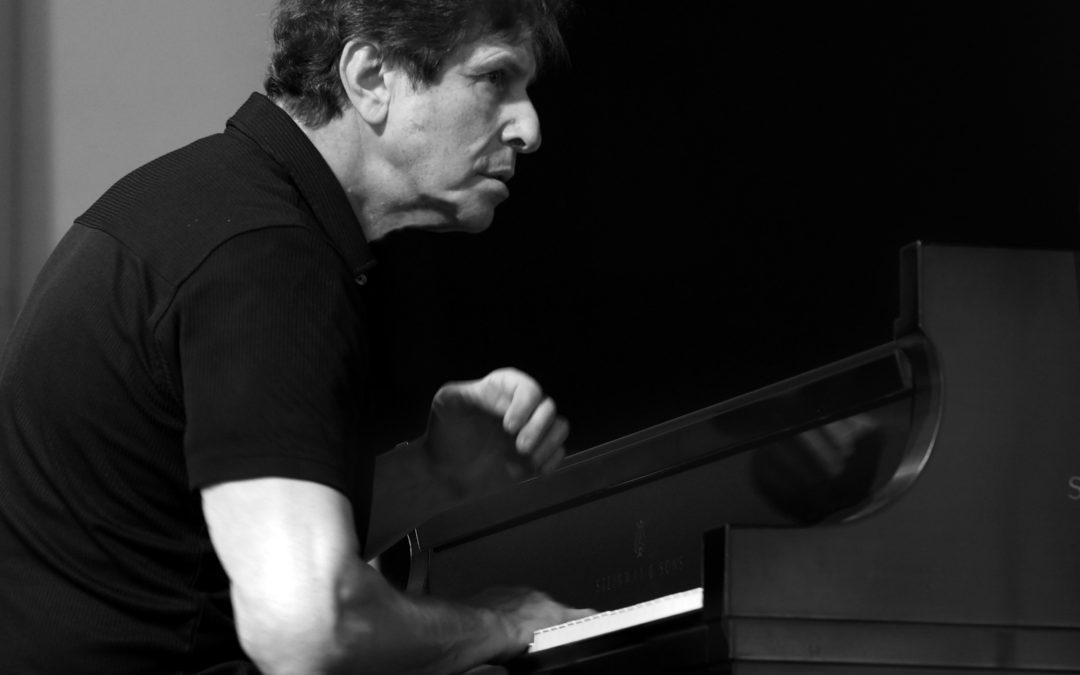
Joel Futterman

Jazz
Smooth Jazz
Free Jazz
 Viberate Rank: 941831
 Viberate Rank: 941831
 Monthly ListenersFollowers
 Subscribers
 Followers
 Followers
 FansTop Spotify Songs
| Track | 7-Day Streams | |
|---|---|---|
1 | 1 |
Top YouTube VideosMonthly ListenersFeatured in PlaylistsAudience| City | Monthly Listeners | |
|---|---|---|
1 | | 3 |
See full performance history, audience data, playlist activity, rankings, comparisons, and more in Viberate music analytics. Start with a free trial, then continue with a paid plan.
Joel Futterman’s Spotify BioPianist Joel Futterman is one of the few modern free improvisers who has been able to not only master the percussive density of Cecil Taylor, but inject his own flavor into the frantic yet intellectual style Taylor pioneered. During the latter half of the '90s, Futterman also added the curved soprano saxophone and Indian flute to his instrumental repertoire, becoming an impressive player on both. Yet his most obvious and highly developed virtuosity remains on the piano, the product of a rigorous daily practice schedule Futterman has maintained since the mid-'70s. Although Futterman's earliest roots lay in Chicago's AACM community, he remained largely secluded until the early '80s, and most of his music didn't become available until the '90s; when it did, however, Futterman finally began to receive his due.
Joel Futterman was born in Chicago on April 30, 1946, and was performing in jazz clubs with professional musicians by age 14; he also played behind Rahsaan Roland Kirk at a local jazz… festival. Futterman made contacts in the growing AACM community, but also began practicing alone in his apartment more and more obsessively. Feeling he had exhausted the Chicago scene, he and his wife moved to Virginia Beach, VA, in 1973, where Futterman could continue working out his own personal style in relative isolation from outside influence. In the early '80s, Futterman released three LPs on his own JDF label, and his trio performed frequently with saxophonist Jimmy Lyons, a longtime member of the Cecil Taylor Unit. Some of their performances were issued in the early '90s by Ear-Rational, Bellaphon, and Konnex. Sadly, Lyons succumbed to cancer in 1986 and a grief-stricken Futterman retired from live concert work.
A fan and sometime musician named Philip Egert convinced Futterman to return to public performance, and helped him find labels to release past and future recorded work. As Lyons' archival releases began to appear, Futterman entered the studio with trumpeter Raphe Malik in 1990; two albums from those sessions, Berlin Images (Silkheart) and To the Edge (Konnex), appeared in 1992. Naked Colours, issued in 1994 on Silkheart, featured multi-instrumentalist Hal Russell, and in 1995 Futterman issued his first all-solo album, Silhouettes. Futterman next formed a group with tenor saxophonist Kidd Jordan, which proved to be one of his most fruitful associations. Their first album together was Nickelsdorf Konfrontation, recorded live in Austria and issued by Silkheart in 1996. New Orleans Rising followed in 1997 on Konnex, and Southern Extreme appeared in 1998 on Drimala, finding Futterman and Jordan teaming with AACM charter member Alvin Fielder on drums. After another solo outing (Who Are You, also on Drimala), Futterman recorded a trio of well-received albums for the Kali label in 1999: Revelation was a duo with Jordan, Relativity a duo with guitarist Jimmy Williams, and Authenticity a trio adding bassist William Parker to the latter partnership. In 2000, Futterman teamed with Paul Murphy on another album for Kali, simply titled Paul Murphy-Joel Futterman Quartet. ~ Steve Huey, Rovi
Viberate is a music analytics platform built for A&Rs, artist managers, labels, booking agents, marketers, and artists.
It helps music professionals track artist growth, analyze audience data, monitor playlist activity, compare artists, follow song performance, and identify opportunities across the music market.
Public artist pages provide a free preview of selected artist data. Paid plans provide access to deeper analytics, historical data, charts, comparisons, playlist tools, exports, alerts, reports, and additional professional features.
Yes. Public Viberate artist pages provide selected artist analytics and music data for free.
Viberate also offers a 7-day free trial of the full platform. A credit card is required to start the trial. The trial includes access to the complete product so users can test deeper artist analytics, historical views, playlist insights, comparisons, charts, exports, alerts, and reporting features before choosing a paid plan.
Viberate provides artist analytics across streaming, playlists, social media, video, radio airplay, songs, and audience markets.
Users can analyze Spotify performance, Spotify and Apple Music playlists, YouTube activity, TikTok and Instagram growth, radio spins, song performance, audience locations, demographics, rankings, and overall artist momentum.
Artist profiles also connect to music charts, similar artists, and comparison tools, helping users benchmark performance and evaluate artists in context.
Viberate updates key artist and track data daily.
For followed artists and tracks, selected data is refreshed multiple times per day. This helps teams monitor playlist changes, streaming movement, audience growth, releases, and campaign performance with more current data.
Update frequency can vary depending on the metric and data source.
Yes. Viberate lets users compare up to five artists side by side across streaming, social media, audience, and engagement metrics.
Users can compare fanbase growth, audience demographics, locations, Spotify performance, social metrics, and other artist data over selected time periods.
Artist comparison can be used for A&R scouting, benchmarking, booking decisions, campaign planning, and evaluating artists with similar audiences or market positions.