Joe Posada

Jazz
Latin Jazz
Other Latin Music
 Viberate Rank: 181841
 Viberate Rank: 181841
 Monthly ListenersFollowers
 Subscribers
 Followers
 Followers
 FansTop Spotify Songs
| Track | 7-Day Streams | |
|---|---|---|
1 | 5.47K | |
2 | 2.06K | |
3 | 1.06K | |
4 | 488 | |
5 | 445 |
Top YouTube VideosMonthly ListenersFeatured in Playlists| Playlist | Followers | |
|---|---|---|
1 |  TEXANAS DEL RECUERDO Fidel Picaso | 25.39K |
2 | TEJANO HITS 🍺PURO PINCHE PARTY🍺 Andrew Ojeda | 9.96K |
3 |  Música Tejana (Puro Tejano Mix) OA ❤️🔥🎧 | 3.25K |
4 | Tejanas del Recuerdo Victor Buentello | 2.34K |
5 | Tejano music Monica | 1.83K |
Audience| City | Monthly Listeners | |
|---|---|---|
1 | | 1.90K |
2 | | 1.28K |
3 | | 1.07K |
4 | | 1.06K |
5 | | 429 |
See full performance history, audience data, playlist activity, rankings, comparisons, and more in Viberate music analytics. Start with a free trial, then continue with a paid plan.
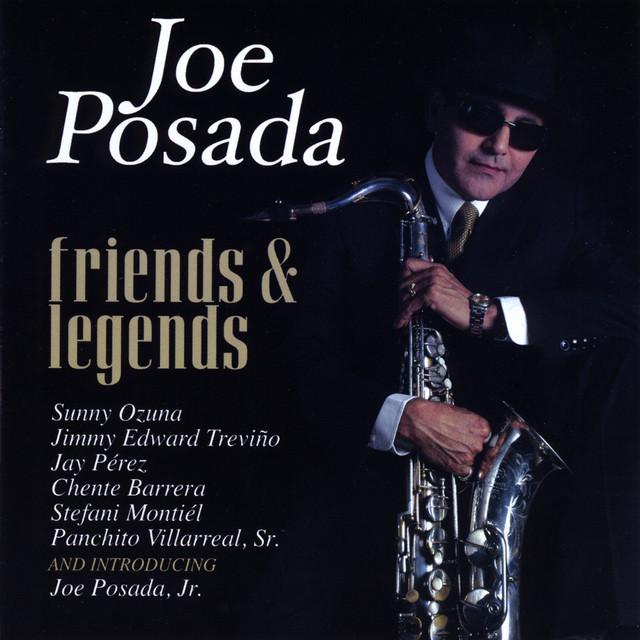
Joe Posada’s Spotify BioIn addition to being one of Tejano's greatest saxophone players, Joe Posada is the most skillful composer to fuse jazz and Tejano in the '90s. Citing John Coltrane, Jeff Lorber, and Alfonso Ramos as influences, his ability to integrate jazz chord progressions and scatting into the polka beat has brought Tejano one step closer to the multi-genre fusion claimed, but not always achieved, by the genre's boosters.
Posada was born in San Antonio in 1954, the same year orchestra leader Isidro Lopez integrated accordions into his ensemble in Alice, TX, an historic event in the birth of what is now called Tejano music. Raised in the predominantly Hispanic West Side, he began playing the sax at age 12. His parents weren't musicians, but his mother forced him to study music to keep him away from friends she disapproved of. He worked his way up through talent shows, neighborhood groups, and the like, finally getting stints with well-known local groups Rudy Tee & the Reno-Bops and Zapata. In 1973,… during what author Ramiro Burr calls Tejano's Golden Age, he graduated to the Royal Jesters, a premier Onda Chicana act of the day. He helped out with musical arrangements in addition to playing sax.
Posada joined ex-Jester David Marez in his band People in 1977, doing occasional lead vocals, leading rehearsals and collecting money after gigs. Feeling he had the maturity to set out on his own, he left the group in 1979. He formed his own band, Quinto Sol, in 1982, naming it for the fifth sun in the Aztec calendar. He and Quinto Sol signed with Cara Records in 1982 and recorded five albums for the label during the '80s, often cutting brassy rancheras written by Johnny Perez or Joe Revelez. He punctuated his songs with sax solos ranging from cool to fiery depending on the situation, and applied his powerful, if not always subtle, baritone to romantic lyrics. His music remained on the progressive side of Tejano, preferring wind instruments to accordion.
Posada had begun composing in the mid-'70s, but he guarded his songs, unwilling to give control of publishing to Cara president Bob Grever. But on January 1, 1990, Capitol/EMI purchased Cara, and the new executives let him control his own publishing. Posada didn't record his songs immediately, relying on tunes by Humberto Ramon and Revelez for his 1991 CD Playin' It with Style, which featured the ranchera "Valiente" ("Valiant"), a big hit with a singalong chorus that foreshadowed Tejano/jazz fusion efforts to come. He truly came into his own as a composer on 1993's Breakaway, for which he wrote all the songs. He went the extra mile for his listeners, recording a salsa track, a sax instrumental, and the jazz-soul title track. But it was his 1994 release Canción para Mi Padre ("Song for My Father") that found him integrating jazz and polka seamlessly, putting him light years ahead of the formulaic cookie-cutter bands. The 1996 release J Posada is a bit misleading -- only his son, Gen-Xer Joe Posada, Jr., is pictured on the cover, but the elder Posada sings lead on eight of the ten tracks.
The late '90s found Posada Sr. pursuing a music degree in San Antonio and doing an increasing number of jazz gigs on his own and with Small World and Los Jazz Vatos. ~ Douglas Shannon, Rovi
Viberate is a music analytics platform built for A&Rs, artist managers, labels, booking agents, marketers, and artists.
It helps music professionals track artist growth, analyze audience data, monitor playlist activity, compare artists, follow song performance, and identify opportunities across the music market.
Public artist pages provide a free preview of selected artist data. Paid plans provide access to deeper analytics, historical data, charts, comparisons, playlist tools, exports, alerts, reports, and additional professional features.
Yes. Public Viberate artist pages provide selected artist analytics and music data for free.
Viberate also offers a 7-day free trial of the full platform. A credit card is required to start the trial. The trial includes access to the complete product so users can test deeper artist analytics, historical views, playlist insights, comparisons, charts, exports, alerts, and reporting features before choosing a paid plan.
Viberate provides artist analytics across streaming, playlists, social media, video, radio airplay, songs, and audience markets.
Users can analyze Spotify performance, Spotify and Apple Music playlists, YouTube activity, TikTok and Instagram growth, radio spins, song performance, audience locations, demographics, rankings, and overall artist momentum.
Artist profiles also connect to music charts, similar artists, and comparison tools, helping users benchmark performance and evaluate artists in context.
Viberate updates key artist and track data daily.
For followed artists and tracks, selected data is refreshed multiple times per day. This helps teams monitor playlist changes, streaming movement, audience growth, releases, and campaign performance with more current data.
Update frequency can vary depending on the metric and data source.
Yes. Viberate lets users compare up to five artists side by side across streaming, social media, audience, and engagement metrics.
Users can compare fanbase growth, audience demographics, locations, Spotify performance, social metrics, and other artist data over selected time periods.
Artist comparison can be used for A&R scouting, benchmarking, booking decisions, campaign planning, and evaluating artists with similar audiences or market positions.