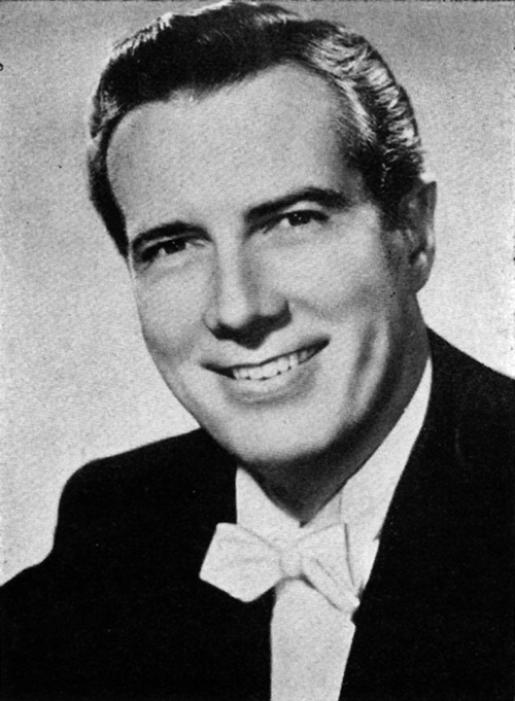
Jerome Hines

Classical
Opera
 Viberate Rank: 479332
 Viberate Rank: 479332
 Monthly ListenersFollowers
 Subscribers
 Followers
 Followers
 FansTop Spotify SongsTop YouTube VideosMonthly ListenersFeatured in Playlists
| Playlist | Followers | |
|---|---|---|
1 |  Algumas das melodias prediletas do prof. Olavo de Carvalho Mateus Batista | 1.41K |
Audience| City | Monthly Listeners | |
|---|---|---|
1 |  | 21 |
2 | | 21 |
3 |  | 20 |
4 |  | 15 |
5 |  | 14 |
See full performance history, audience data, playlist activity, rankings, comparisons, and more in Viberate music analytics. Start with a free trial, then continue with a paid plan.
Jerome Hines’ Spotify BioJerome Hines was one of the best known and most durable of American bass-baritones, known for his rich, powerful, unforced voice and his psychologically penetrating acting performances.
Jerome Albert Link Heinz (as he was born) loved singing but was turned down by his junior high school glee club because his voice didn't blend.
He studied at the University of California Los Angeles, with a degree in science, having taken chemistry, physics, and mathematics. He taught chemistry at UCLA for a year, then worked as a chemist for an oil company.
However, while he had been at UCLA he took singing lessons from Gennaro Curci, and at the age of 20 debuted at the San Francisco Opera in 1941; during that season he sang as Monterone in Verdi's Rigoletto and in Tannhäuser. After that, he was invited to sing with several orchestras, including the Los Angeles Philharmonic, and with the New Orleans Opera, which convinced him to concentrate on singing as his career. He won the Caruso Award in 1946,… resulting in his Metropolitan Opera audition and debut in 1947 as The Sergeant in Mussorgsky's Boris Godunov. Irving Kolodin's review made as much mention of his tall height as of his "able singing." In December, he was given the role of Méphistophélès in Gounod's Faust. The New York Times judged that the role was "still somewhat beyond him" but praised his singing ability and said that "much can be expected" of him.
He soon proved himself a reliable comprimario singer the next season, appearing 45 times in ten roles, including the Grand Inquisitor in Don Carlos, Don Basilio in Il Barbiere di Siviglia, the Commendatore in Don Giovanni, and Nick Swallow in Peter Grimes. He also appeared in these years in Rio de Janeiro, Buenos Aires, and Mexico City. His reputation soared when he was selected by conductor Arturo Toscanini to sing some of his concerts and appear in his 1953 recording of Beethoven's Missa Solemnis.
Also in 1953 he made major European appearances at the Glyndebourne and Edinburgh Festivals.
Complications in his career development arose in 1951, when the Montreal-born American bass-baritone George London appeared at the Met. With the presence of London, Hines, and Ezio Pinza -- singers so great that in a later day they would surely have been marketed as the "Three Basses" -- it took Hines a few more years before he moved out of roles like the Grand Inquisitor and the Sergeant into the leading roles, like Philip II and Boris himself.
In the mid-1950s, he added the major Wagnerian bass-baritone parts to his repertoire, including Gurnemanz, King Marke, and Wotan, all of which he sang at Bayreuth. In 1962, he became the second American singer to portray Boris Godunov at the Bolshoi Opera in Moscow; George London had preceded him in 1960.
Hines went on to sing 45 roles in hundreds of performances at the Metropolitan. He holds the record for the most consecutive seasons there by any major artist at 41. His last appearance was on January 24, 1987 as Sparafucile in Rigoletto.
He was a highly religious man who is reputed to have walked out of a production at the Met due to his objections over the "lewd" qualities of the choreography. He wrote an opera, I Am the Way, on the life of Christ. His autobiography, This is my Story, this is my Song, was published in 1968, and he wrote two highly regarded books on the art of singing, Great Singers on Great Singing (1982) and The Four Voices of Man (1997).
Viberate is a music analytics platform built for A&Rs, artist managers, labels, booking agents, marketers, and artists.
It helps music professionals track artist growth, analyze audience data, monitor playlist activity, compare artists, follow song performance, and identify opportunities across the music market.
Public artist pages provide a free preview of selected artist data. Paid plans provide access to deeper analytics, historical data, charts, comparisons, playlist tools, exports, alerts, reports, and additional professional features.
Yes. Public Viberate artist pages provide selected artist analytics and music data for free.
Viberate also offers a 7-day free trial of the full platform. A credit card is required to start the trial. The trial includes access to the complete product so users can test deeper artist analytics, historical views, playlist insights, comparisons, charts, exports, alerts, and reporting features before choosing a paid plan.
Viberate provides artist analytics across streaming, playlists, social media, video, radio airplay, songs, and audience markets.
Users can analyze Spotify performance, Spotify and Apple Music playlists, YouTube activity, TikTok and Instagram growth, radio spins, song performance, audience locations, demographics, rankings, and overall artist momentum.
Artist profiles also connect to music charts, similar artists, and comparison tools, helping users benchmark performance and evaluate artists in context.
Viberate updates key artist and track data daily.
For followed artists and tracks, selected data is refreshed multiple times per day. This helps teams monitor playlist changes, streaming movement, audience growth, releases, and campaign performance with more current data.
Update frequency can vary depending on the metric and data source.
Yes. Viberate lets users compare up to five artists side by side across streaming, social media, audience, and engagement metrics.
Users can compare fanbase growth, audience demographics, locations, Spotify performance, social metrics, and other artist data over selected time periods.
Artist comparison can be used for A&R scouting, benchmarking, booking decisions, campaign planning, and evaluating artists with similar audiences or market positions.