Jeffrey Biegel

Classical
Chamber Music
 Viberate Rank: 272548
 Viberate Rank: 272548
 Monthly ListenersFollowers
 Subscribers
 Followers
 Followers
 FansTop Spotify Songs
| Track | 7-Day Streams | |
|---|---|---|
1 | 5.35K | |
2 | 2.25K | |
3 | 1.03K | |
4 | 983 | |
5 | 911 |
Top YouTube Videos| Video | 7-Day Views | |
|---|---|---|
1 | 176 | |
2 | 39 | |
3 | 38 | |
4 | 38 | |
5 | 14 |
Monthly ListenersFeatured in Playlists| Playlist | Followers | |
|---|---|---|
1 |  Easy Listening Classical For Study, Work, Relaxing, Chillout, Anything But Serious Listening Ulysses' Classical | 99.24K |
2 |  dark academia (classical + instrumental) hannah lawless | 51.09K |
3 |  Sad,very sad, classical music Peer Wijntjes | 12.86K |
4 | Classical Music for Studying - Músicas Clássicas para estudar milaarduini | 9.91K |
5 |  Calm classical Orlando Sergio YV | 7.44K |
Audience| City | Monthly Listeners | |
|---|---|---|
1 |  | 239 |
2 |  | 191 |
3 |  | 179 |
4 | | 174 |
5 | | 163 |
See full performance history, audience data, playlist activity, rankings, comparisons, and more in Viberate music analytics. Start with a free trial, then continue with a paid plan.
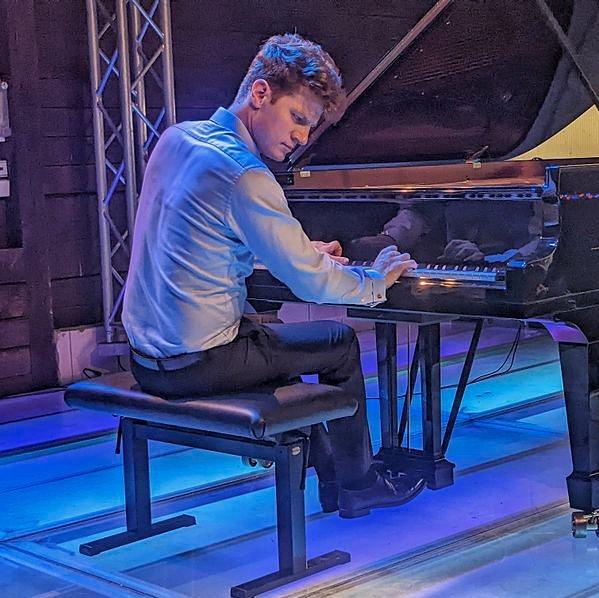
Jeffrey Biegel’s Spotify BioArriving on the scene at a time when an artist's success often came out of nowhere only to shrink just as quickly, pianist Jeffrey Biegel managed to persevere, fashioning a career of steady success studded with concerts at major venues like Avery Fisher Hall and with front-rank ensembles like the Philadelphia Orchestra and Boston Pops. He has appeared on such television programs as Good Morning America, and he also blazed a few trails: in July 1997, Biegel was the first pianist to give a live Internet recital. That same year, he performed the rarely heard original 1924 version of Gershwin's Rhapsody in Blue with the Boston Pops, an event covered by ABC television, CNN, and NPR. Biegel's repertory is as bulky as it is eclectic, taking in concertos and solo works by Mozart, Beethoven, and Rachmaninov, among many others, and scores of contemporary composers like Keith Emerson and William Bolcom, including over two-dozen commissioned works. Biegel is also a composer, music editor, and… educator.
A corrective surgery at age three cured Biegel of deafness and an inability to speak. He studied music at Juilliard with the iconic Adele Marcus. In 1985, Biegel won the William Kappell International Piano Competition, and four years later, he captured first prize at the prestigious Paris-based Marguerite Long-Jacques Thibaud International Competition. Biegel's first recording was issued in 1993, a Marco Polo disc of César Cui's 25 Preludes, Op. 64 (later reissued on Naxos). Biegel's growing fame was further boosted by his pioneering Internet recital, a CD of which was issued by the Angelok label. In 2000, Biegel premiered Ellen Taaffe Zwilich's Millennium Fantasy with the Cincinnati Symphony Orchestra, the result of a two-year multiple-orchestra commissioning project. Other such high-profile premieres followed, including Biegel's first performance of Lowell Liebermann's Concerto No. 3 with the Milwaukee Symphony Orchestra on May 12, 2006.
That year, Biegel premiered and recorded the rarely heard and neglected Leroy Anderson Piano Concerto, issued in 2008 on an acclaimed all-Anderson Naxos album. Biegel, no stranger to chamber music, formed Trio21 in 2010 with violinist Kinga Augustyn and cellist Robert deMaine. That year, Biegel was chosen as the first artist to record for the Steinway & Sons label, resulting in the album Bach on a Steinway. The composers who have written works specifically for him include Zwilich, Richard Danielpour (Mirrors, for piano and orchestra), and Jeremy Lubbock (Moods, for piano and strings).
Among Biegel's compositions are the choral work The World in Our Hands, written with his nine-year-old (at the time) son Craig, and Three Reflections: Freedom (JFK), Justice (RBG), Equality (MLK), which he premiered in a concerto version in 2022. In 2024, Biegel was heard on the album A Dream So Bright: Choral Music of Jake Runestad, performing that composer's Dreams of the Fallen with the True Concord Voices and Orchestra. Biegel is a member of the piano faculty at the Brooklyn Conservatory of Music. ~ Robert Cummings & Keith Finke, Rovi
Viberate is a music analytics platform built for A&Rs, artist managers, labels, booking agents, marketers, and artists.
It helps music professionals track artist growth, analyze audience data, monitor playlist activity, compare artists, follow song performance, and identify opportunities across the music market.
Public artist pages provide a free preview of selected artist data. Paid plans provide access to deeper analytics, historical data, charts, comparisons, playlist tools, exports, alerts, reports, and additional professional features.
Yes. Public Viberate artist pages provide selected artist analytics and music data for free.
Viberate also offers a 7-day free trial of the full platform. A credit card is required to start the trial. The trial includes access to the complete product so users can test deeper artist analytics, historical views, playlist insights, comparisons, charts, exports, alerts, and reporting features before choosing a paid plan.
Viberate provides artist analytics across streaming, playlists, social media, video, radio airplay, songs, and audience markets.
Users can analyze Spotify performance, Spotify and Apple Music playlists, YouTube activity, TikTok and Instagram growth, radio spins, song performance, audience locations, demographics, rankings, and overall artist momentum.
Artist profiles also connect to music charts, similar artists, and comparison tools, helping users benchmark performance and evaluate artists in context.
Viberate updates key artist and track data daily.
For followed artists and tracks, selected data is refreshed multiple times per day. This helps teams monitor playlist changes, streaming movement, audience growth, releases, and campaign performance with more current data.
Update frequency can vary depending on the metric and data source.
Yes. Viberate lets users compare up to five artists side by side across streaming, social media, audience, and engagement metrics.
Users can compare fanbase growth, audience demographics, locations, Spotify performance, social metrics, and other artist data over selected time periods.
Artist comparison can be used for A&R scouting, benchmarking, booking decisions, campaign planning, and evaluating artists with similar audiences or market positions.