Jay Graydon

Rock
Pop Rock
 Viberate Rank: 180664
 Viberate Rank: 180664
 Monthly ListenersFollowers
 Subscribers
 Followers
 Followers
 FansTop Spotify Songs
| Track | 7-Day Streams | |
|---|---|---|
1 | 5.20K | |
2 | 3.29K | |
3 | 2.12K | |
4 | 1.84K | |
5 | 1.04K |
Top YouTube VideosMonthly ListenersFeatured in Playlists| Playlist | Followers | |
|---|---|---|
1 |  Best Songs Of All Time Marlon Roth | 20.89K |
2 |  Smooth Jazz Fusion Evosound | 19.52K |
3 |  Crossover 105.1 Favorites Jason Suarez | 16.53K |
4 |  YACHT ROCK - CERTIFIED PLAYLIST jdryznar | 15.94K |
5 | Easy Rock 96.3 collinj33 | 14.76K |
Audience| City | Monthly Listeners | |
|---|---|---|
1 |  | 1.10K |
2 | | 448 |
3 |  | 314 |
4 | | 292 |
5 |  | 205 |
See full performance history, audience data, playlist activity, rankings, comparisons, and more in Viberate music analytics. Start with a free trial, then continue with a paid plan.
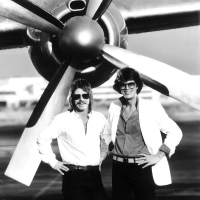
Jay Graydon’s Spotify BioA Grammy-winning guitarist, songwriter, and producer, Jay Graydon is known for his extensive credits in the pop, rock, and R&B genres. He first emerged as a session player in the '70s, establishing his reputation as a gifted soloist for Boz Scaggs, Steely Dan, and others. He formed a lasting partnership with David Foster, penning the 1979 Grammy Award-winning Earth, Wind & Fire hit "After the Love Has Gone." He also penned George Benson's 1981 Grammy-winning hit "Turn Your Love Around." Along with his own work, including 1980's Airplay with Foster and 1993's Airplay for the Planet, Graydon has worked with such artists as Chicago, Air Supply, Cher, Christopher Cross, Barry Manilow, Herbie Hancock, and Al Jarreau, among others.
Born October 8, 1949, in Burbank, California, to Grace and Joe Graydon, Jay Graydon made his professional music debut at the age of two singing with his father on his TV show. Graydon comes from a musical family -- his brother Gary plays guitar nonprofessionally… and his father was a singer and songwriter. As he grew up, his interest expanded to include electronics and bowling. In the early '60s, Joe Graydon had a Saturday radio show on KDAY and Jay would engineer his show, playing the records, running the tape machines, and airing commercials. His father recorded for various record labels and Jay would accompany him to the recording studio, asking the audio engineers questions. One Christmas, he was given a mono tape recorder, mixer, and two mikes that he used to record local bands.
At the age of 14, Graydon started playing the guitar. With Dennis Kelly and Joe Lopez, he formed the Veltones with drummer Doug Wagner, who was later replaced by Bob Carrafield. They played pop/R&B and surf music and did some recording, but nothing was released commercially. During his high school years, Graydon took music classics and learned big-band arrangement from Robert Rose. While in college, he got a call from Seven Souls keyboard player Bob Hogins, who was a former bandmate. Joining the band, Graydon learned a lot about "feel." Trombone player Glenn Farris invited him to audition for Don Ellis' big band. Working with such top players honed Graydon's skills. It was during this period that he played with a veritable who's-who in '70s rock and R&B, including Boz Scaggs, Cher, Paul Anka, and more. In 1977, he gained some notice playing the solo on Steely Dan's "Peg" off their album Aja.
During an early-'70s club date backing singer Maxine Weldon, Graydon met keyboardist David Foster. Foster came backstage and introduced himself. A couple days later, he called Graydon to invite him to a recording session and to bring along his ARP 2600 synthesizer, guitar, and amp. Graydon and Foster would work together on innumerable sessions in the years to come. Together, along with Chicago's Bill Champlin, they wrote "After the Love Is Gone," which was recorded by Earth, Wind & Fire in 1979 and won the Grammy for Best R&B Song. Graydon and Foster also formed the band Airplay as a showcase for their material, bringing on board vocalist Tommy Funderburk, drummer Jeff Porcaro, bassist David Hungate, and others. The group's eponymous debut, Airplay, arrived in 1980 on RCA. The album found them reworking several songs they had penned for other artists, including "After the Love Has Gone."
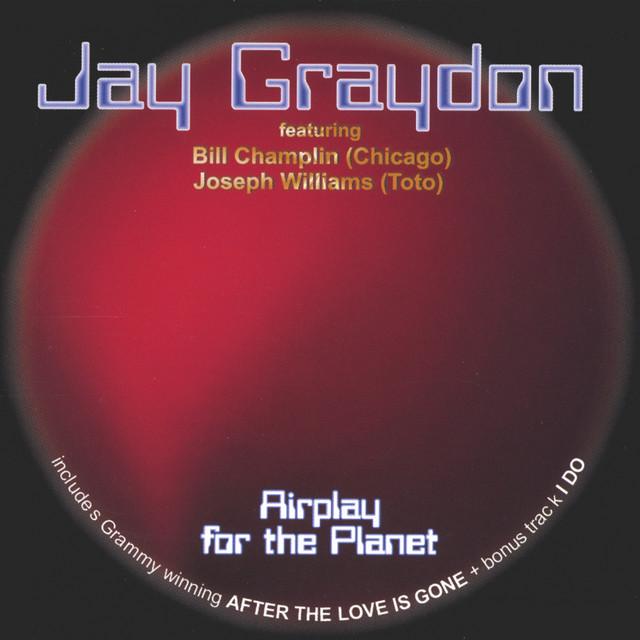
While Airplay was short-lived (a song "Stressed Out [Close to the Edge]" popped up on the St. Elmo's Fire soundtrack in 1985), both Graydon and Foster continued to enjoy fruitful careers, with Graydon working on projects with artists like Al Jarreau, Herbie Hancock, Sheena Easton, DeBarge, Kenny Rogers, and others. In 1981, he picked up a second Grammy for Best R&B Song for penning George Benson's Hot 100 and R&B chart hit "Turn Your Love Around." He was also involved with the soundtracks to Ghostbusters and Miami Vice. In 1993, he released the album Airplay for the Planet, which featured contributions from Chicago's Bill Champlin and Toto's Joseph Williams. He also recorded a surf album under the name Rake and the Surftones. Graydon co-wrote "She's in Love," a track on Brenda Russell's 2000 album Paris Rain. Another album, Bebop, arrived in 2001. He also formed the group JaR with Randy Goodrum, releasing the 2008 album Scene 29. A remastered version of Airplay for the Planet appeared in 2017. ~ Matt Collar & Ed Hogan, Rovi
Viberate is a music analytics platform built for A&Rs, artist managers, labels, booking agents, marketers, and artists.
It helps music professionals track artist growth, analyze audience data, monitor playlist activity, compare artists, follow song performance, and identify opportunities across the music market.
Public artist pages provide a free preview of selected artist data. Paid plans provide access to deeper analytics, historical data, charts, comparisons, playlist tools, exports, alerts, reports, and additional professional features.
Yes. Public Viberate artist pages provide selected artist analytics and music data for free.
Viberate also offers a 7-day free trial of the full platform. A credit card is required to start the trial. The trial includes access to the complete product so users can test deeper artist analytics, historical views, playlist insights, comparisons, charts, exports, alerts, and reporting features before choosing a paid plan.
Viberate provides artist analytics across streaming, playlists, social media, video, radio airplay, songs, and audience markets.
Users can analyze Spotify performance, Spotify and Apple Music playlists, YouTube activity, TikTok and Instagram growth, radio spins, song performance, audience locations, demographics, rankings, and overall artist momentum.
Artist profiles also connect to music charts, similar artists, and comparison tools, helping users benchmark performance and evaluate artists in context.
Viberate updates key artist and track data daily.
For followed artists and tracks, selected data is refreshed multiple times per day. This helps teams monitor playlist changes, streaming movement, audience growth, releases, and campaign performance with more current data.
Update frequency can vary depending on the metric and data source.
Yes. Viberate lets users compare up to five artists side by side across streaming, social media, audience, and engagement metrics.
Users can compare fanbase growth, audience demographics, locations, Spotify performance, social metrics, and other artist data over selected time periods.
Artist comparison can be used for A&R scouting, benchmarking, booking decisions, campaign planning, and evaluating artists with similar audiences or market positions.