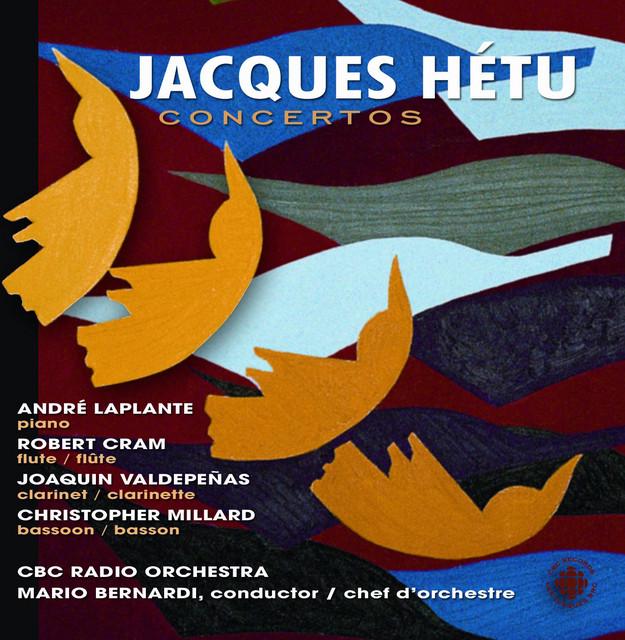
Jacques Hétu

Classical
Chamber Music
 Viberate Rank: 825034
 Viberate Rank: 825034
 Monthly ListenersFollowers
 Subscribers
 Followers
 Followers
 FansTop Spotify SongsTop YouTube VideosMonthly ListenersFeatured in Playlists
| Playlist | Followers | |
|---|---|---|
1 |  Sad,very sad, classical music Peer Wijntjes | 12.86K |
2 |  Ultimate Dark/Sad Classical brilliantos | 1.20K |
Audience| City | Monthly Listeners | |
|---|---|---|
1 | | 29 |
2 | | 9 |
3 | | 9 |
4 | | 7 |
5 |  | 6 |
See full performance history, audience data, playlist activity, rankings, comparisons, and more in Viberate music analytics. Start with a free trial, then continue with a paid plan.
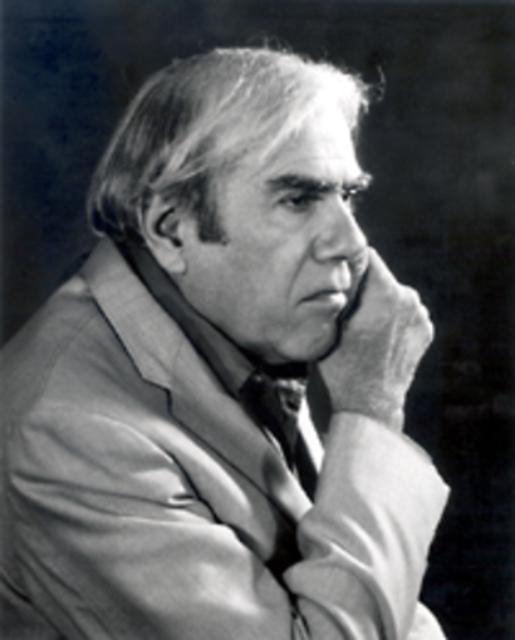
Jacques Hétu’s Spotify BioJacques Hétu remains one of Canada's most frequently performed composers, with a lyrical style in a tonal idiom. He was also an educator who taught for many years at leading Quebec universities. Hétu's works are abundantly represented on recordings. In 2024, his orchestral-choral Symphony No. 5, Op. 81 was performed on the album Two Orchestras, One Symphony.
Hétu was born in Trois-Rivières, Quebec, Canada, on August 8, 1938. He took up the piano at 15 to avoid problems at home and made quick progress, soon beginning to compose as well. He studied composition for a year at the University of Ottawa and then moved to the Montreal Conservatory for five years, where he took composition and counterpoint courses with Clermont Pépin. Hétu studied in the summer of 1959 with Lukas Foss at the Berkshire Music Center (now the Tanglewood Music Center). In 1961, he took several prizes that enabled him to go to Paris for further study with Henri Dutilleux and Olivier Messiaen; he earned a diploma at… the École Normale de Musique in 1963.
Back in Quebec, Hétu took a position at the Université Laval in Quebec City and taught there until 1977. His music followed serialist procedures at the beginning, and he scored a breakthrough when his Variations for Piano, Op. 8, was recorded by famed Canadian pianist Glenn Gould in 1967. Hétu wrote five symphonies; the third, which appeared in 1971, moved in the direction of tonality, well in advance of most composers in other countries who made a similar stylistic shift. He was ostracized by colleagues but took solace from the many performers who had commissioned music from him. Hétu had considerable success with a series of concertos for various instruments; his Trumpet Concerto of 1972 was performed by the New York Philharmonic and conductor Kurt Masur, with the group's own trumpeter, Philip Smith, as soloist. He also wrote a good deal of chamber music, including several works for guitar (and a concerto for two guitars), as well as large choral pieces. His Légendes for orchestra, Op. 76, incorporates French Canadian folk influences. Hétu's (apparent) last work was the Symphony No. 5, a programmatic evocation of Paris during the years of Nazi rule.
Hétu taught at the Université de Montréal and later, from 1979 to 2000, at the Université de Québec à Montréal, heading its music department for two stretches in the '80s. He died of lung cancer in Saint-Hippolyte, Quebec, on February 9, 2010. Hétu was named an Officer of the Order of Canada by the Canadian government. ~ James Manheim, Rovi
Viberate is a music analytics platform built for A&Rs, artist managers, labels, booking agents, marketers, and artists.
It helps music professionals track artist growth, analyze audience data, monitor playlist activity, compare artists, follow song performance, and identify opportunities across the music market.
Public artist pages provide a free preview of selected artist data. Paid plans provide access to deeper analytics, historical data, charts, comparisons, playlist tools, exports, alerts, reports, and additional professional features.
Yes. Public Viberate artist pages provide selected artist analytics and music data for free.
Viberate also offers a 7-day free trial of the full platform. A credit card is required to start the trial. The trial includes access to the complete product so users can test deeper artist analytics, historical views, playlist insights, comparisons, charts, exports, alerts, and reporting features before choosing a paid plan.
Viberate provides artist analytics across streaming, playlists, social media, video, radio airplay, songs, and audience markets.
Users can analyze Spotify performance, Spotify and Apple Music playlists, YouTube activity, TikTok and Instagram growth, radio spins, song performance, audience locations, demographics, rankings, and overall artist momentum.
Artist profiles also connect to music charts, similar artists, and comparison tools, helping users benchmark performance and evaluate artists in context.
Viberate updates key artist and track data daily.
For followed artists and tracks, selected data is refreshed multiple times per day. This helps teams monitor playlist changes, streaming movement, audience growth, releases, and campaign performance with more current data.
Update frequency can vary depending on the metric and data source.
Yes. Viberate lets users compare up to five artists side by side across streaming, social media, audience, and engagement metrics.
Users can compare fanbase growth, audience demographics, locations, Spotify performance, social metrics, and other artist data over selected time periods.
Artist comparison can be used for A&R scouting, benchmarking, booking decisions, campaign planning, and evaluating artists with similar audiences or market positions.