Isabelle Aubret

Pop
Mainstream Pop
French Folk
 Viberate Rank: 177751
 Viberate Rank: 177751
 Monthly ListenersFollowers
 Subscribers
 Followers
 Followers
 FansTop Spotify Songs
| Track | 7-Day Streams | |
|---|---|---|
1 | 6.41K | |
2 | 2.61K | |
3 | 2.16K | |
4 | 2.07K | |
5 | 619 |
Top YouTube VideosMonthly ListenersFeatured in Playlists| Playlist | Followers | |
|---|---|---|
1 |  french songs that everyone knows carl | 219.74K |
2 | Vintage French Music Kyan Nademi | 142.57K |
3 |  Eurovision Winners Spotify | 109.32K |
4 |  soft french songs for early mornings mel 🪽 | 45.33K |
5 | ESC TOP HITS Robert Stenberg | 44.61K |
Audience| City | Monthly Listeners | |
|---|---|---|
1 | | 780 |
2 |  | 541 |
3 |  | 297 |
4 |  | 255 |
5 |  | 251 |
See full performance history, audience data, playlist activity, rankings, comparisons, and more in Viberate music analytics. Start with a free trial, then continue with a paid plan.
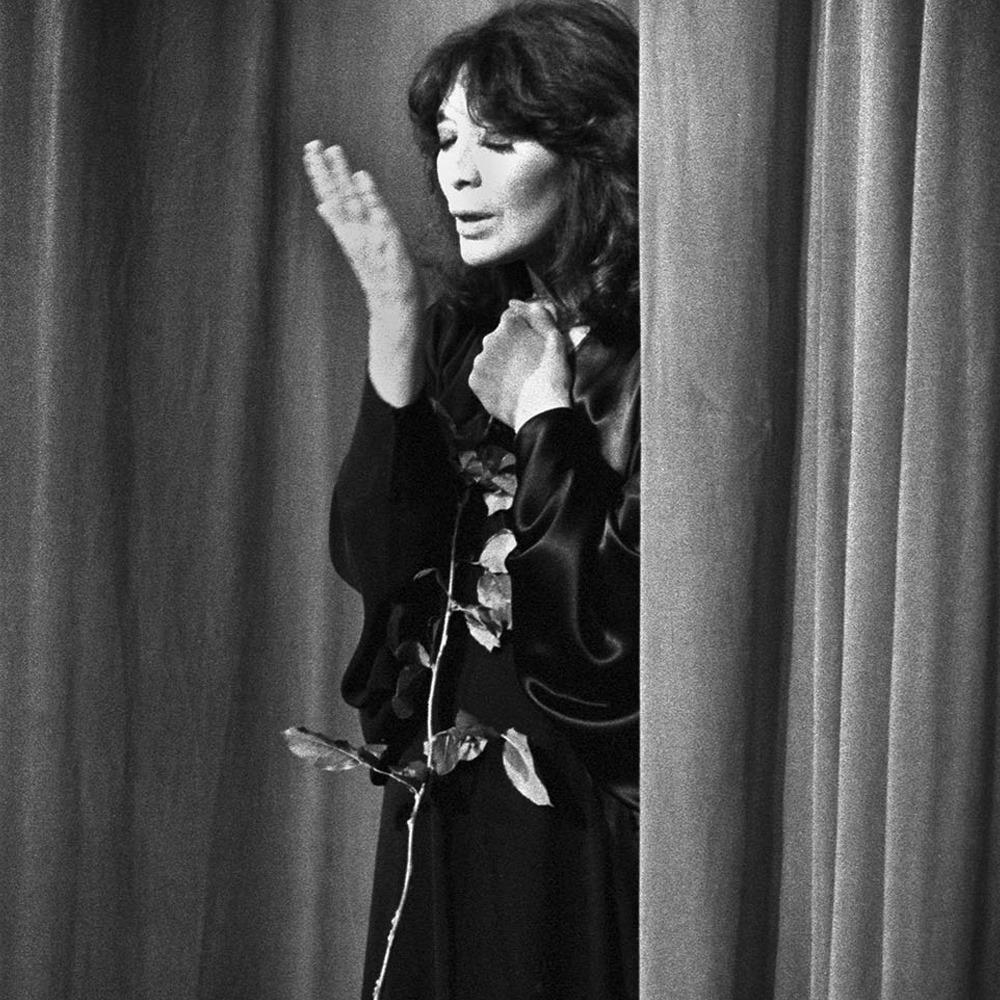
Isabelle Aubret’s Spotify BioThe winner of the 1962 Eurovision Song Contest for her home country, France, Isabelle Aubret was born Thérèse Coquerelle in Lille on July 27, 1938. A promising gymnast as a child, she won the French national championships in 1952 but, by her late teens, she had turned her attention to singing. Discovered by the music director of a local radio station, she was recruited as featured vocalist to a Le Havre orchestra and, in 1960, she won a singing competition at the Paris Olympia. There she came under the wing of the hall's director, Bruno Coquatrix, who secured her a cabaret spot in the Pigalle. Aubret released her debut single in 1961, "Nous les Amoureux" -- the following year, French vocalist Jean-Claude Pascal would win the Eurovision Song Contest (for Luxembourg) with the same song. Aubret herself entered France's domestic Eurovision qualifiers for the first time that same year, when she finished second. The following year, however, her performance of "Un Premier Amour" was… victorious, both nationally and on the international stage.
A tour with singer Jean Ferrat (who wrote her hit "Deux Enfants au Soliel") brought Aubret further attention, as did several high-profile shows with Sacha Distel. She was also support act at Jacques Brel's legendary Olympia shows in March 1963; her career came to a shattering halt, however, when she was involved in a serious car accident. She would be laid up for much of the next three years, but both Ferrat and Brel ensured she would not be forgotten. Ferrat wrote her a new song, "C'Est Beau la Vie," which she recorded despite being totally incapacitated at the time, while Brel gifted her with the lifetime rights to one of her favorite songs of his, "La Fanette." In 1965, still convalescing, Aubret made a heroic return to the stage, opening for Salvatore Adamo at the Olympia, but it was 1968 before she was truly back in action, when she returned to Eurovision and finished in third place with "La Source."
She toured throughout the remainder of the 1960s and, in 1970, she returned to the domestic Eurovision qualifiers when she performed a duet with Daniel Bératta on the runner-up "Olivier Olivia." But she was clearly on her way down in the public eye, a victim of both changing musical tastes and her own avowedly left-wing politics. Singles "The Partisan" and "Casa Forte" were scarcely promoted, and she was all but blackballed from national TV. A new album in 1973, Le Soleil Est dans une Orange, marked the beginning of her rehabilitation, and in 1976 she was back in the Eurovision qualifiers, performing "Je Te Connais Déjà." The song was unsuccessful, but an appearance that same year at the Tokyo Musical Festival saw her awarded the Best Singer award. Four years later, Japanese fans voted her the World's Best Singer, while her albums Berceuse pour une Femme (1977) and Une Vie (1979) were both major successes.
Tragedy struck again in 1981 when Aubret broke both legs while rehearsing a trapeze act with boxer Jean-Claude Bouttier. Although she continued recording sporadically, and even returned to Eurovision one last time, performing "France France" in the 1983 qualifying contest, it would be 1984 before she released another album, Le Monde Chante, and 1986 before she could return to the road. This period also saw the release of the compilation Isabelle Aubret Chante Jacques Brel. Her political past was forgotten now, and French media finally embraced her. Released in 1985, the single "1789" was a success, while the album Vague à l'Homme was universally praised for its patronage of rising songwriters Romain Didier, Danielle Messia, and Allain Leprest. The latter also opened for her when she appeared at the Olympia in 1987 for her first Paris shows since the early '70s.
She marked the bicentenary of the French revolution with the album 1989, while the 1990s opened with another acclaimed long-player, a collection of English-language jazz standards, In Love. This was followed by what many regard as her finest album yet, a 1992 collection devoted to the work of French poet Louis Aragon. Another release that same year, Coup de Coeur, brought together Aubret's interpretations of some of her favorite French songwriters -- Brel and Ferrat, of course, but also Serge Gainsbourg, Francis Cabrel, Charles Trenet, Jean-Jacques Goldman, Henri Salvador, and Guy Béart. And she crowned the year by accepting the Légion d'Honneur award from French president Mitterrand. The hit album C'Est le Bonheur was released in 1993, while 1996 brought a live show dedicated (like the earlier album) wholly to the works of Louis Aragon. A boxed compilation of albums dedicated to Aragon, Brel, and Ferrat followed, before 1998 saw her tour France (and Quebec) with a new stage show, this time built exclusively around Brel. She saw out the 20th century with a new album dedicated to songs about Paris. ~ Dave Thompson, Rovi
Viberate is a music analytics platform built for A&Rs, artist managers, labels, booking agents, marketers, and artists.
It helps music professionals track artist growth, analyze audience data, monitor playlist activity, compare artists, follow song performance, and identify opportunities across the music market.
Public artist pages provide a free preview of selected artist data. Paid plans provide access to deeper analytics, historical data, charts, comparisons, playlist tools, exports, alerts, reports, and additional professional features.
Yes. Public Viberate artist pages provide selected artist analytics and music data for free.
Viberate also offers a 7-day free trial of the full platform. A credit card is required to start the trial. The trial includes access to the complete product so users can test deeper artist analytics, historical views, playlist insights, comparisons, charts, exports, alerts, and reporting features before choosing a paid plan.
Viberate provides artist analytics across streaming, playlists, social media, video, radio airplay, songs, and audience markets.
Users can analyze Spotify performance, Spotify and Apple Music playlists, YouTube activity, TikTok and Instagram growth, radio spins, song performance, audience locations, demographics, rankings, and overall artist momentum.
Artist profiles also connect to music charts, similar artists, and comparison tools, helping users benchmark performance and evaluate artists in context.
Viberate updates key artist and track data daily.
For followed artists and tracks, selected data is refreshed multiple times per day. This helps teams monitor playlist changes, streaming movement, audience growth, releases, and campaign performance with more current data.
Update frequency can vary depending on the metric and data source.
Yes. Viberate lets users compare up to five artists side by side across streaming, social media, audience, and engagement metrics.
Users can compare fanbase growth, audience demographics, locations, Spotify performance, social metrics, and other artist data over selected time periods.
Artist comparison can be used for A&R scouting, benchmarking, booking decisions, campaign planning, and evaluating artists with similar audiences or market positions.