Ingolf Turban

Classical
Chamber Music
 Viberate Rank: 401717
 Viberate Rank: 401717
 Monthly ListenersFollowers
 Subscribers
 Followers
 Followers
 FansTop Spotify Songs
| Track | 7-Day Streams | |
|---|---|---|
1 | 270 | |
2 | 29 | |
3 | 22 | |
4 | 22 | |
5 | 19 |
Top YouTube Videos| Video | 7-Day Views | |
|---|---|---|
1 | 3 |
Monthly ListenersFeatured in Playlists| Playlist | Followers | |
|---|---|---|
1 | Ignatious Pop 1 | 17.19K |
2 |  Legion - TV Show FX Joel | 9.76K |
3 |  Chamber Music for Self-Renewal synergy555 | 4.21K |
4 |  Legion Season 3 Zak Graber | 1.94K |
5 |  Clásicas-Instrumentales Daniela Donají DG | 1.86K |
Audience| City | Monthly Listeners | |
|---|---|---|
1 | | 26 |
2 | | 22 |
3 |  | 20 |
4 |  | 19 |
5 |  | 15 |
See full performance history, audience data, playlist activity, rankings, comparisons, and more in Viberate music analytics. Start with a free trial, then continue with a paid plan.
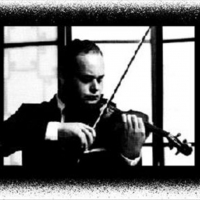
Ingolf Turban’s Spotify BioGerman violinist Ingolf Turban is best known for his spirited interpretations of the works of Paganini. He's recorded all six violin concertos and other Paganini works to great acclaim, but his association with the composer extends into other, somewhat unexpected areas: Turban named the chamber orchestra he founded I Virtuosi di Paganini in Paganini's memory and appeared in a television documentary in Germany, Paganini's Secret, in which he played the composer. Despite his devotion to Paganini, Turban commands a huge repertory of works by Mozart, Schumann, Joachim Raff, Ysaÿe, Wieniawski, Bruch, Reinecke, Respighi, Kreisler, and lesser knowns like Joseph Achron and Camillo Sivori. He has concertized throughout Europe and the U.S., and has made over 30 recordings, most of them available from Telos, Hänssler Classic, and Claves.
Ingolf Turban was born in Munich, Germany, on March 17, 1964. His mother was a pianist. From age 12 he studied with Gerhard Hetzel, and later teachers included… Jens Ellermann and Dorothy DeLay. He earned a degree at the Munich College of Music. In 1985 Turban was appointed concertmaster with the Munich Philharmonic Orchestra under Celibidache. He gave his solo debut with the MPO in 1986. Turban departed his concertmaster post in 1988 to launch a solo career.
He had immediate success, touring throughout Germany and parts of Europe. 1991 was a watershed year: he debuted at La Scala, and then made his U.S. debut at the Kennedy Center in Washington, D.C. In addition, Turban's acclaimed recording of Tartini's five sonatas for violin and basso continuo was issued that year by Claves. From 1995, Turban served as professor of violin at Stuttgart University of Music and Performing Arts. Turban began recording his acclaimed set of the Paganini concertos in March 2000, with the first releases appearing the following year on Telos.
In 2005 Turban founded I Virtuosi di Paganini, a chamber-sized string ensemble devoted to the works of Paganini and other composers of his era. The following year Turban left his Stuttgart post and accepted a professorship at the Munich University of Music and Theater. In 2006 Turban appeared in, and was musical consultant for, the film Paganini's Secret, which aired on the German ARD television network in 2007. That same year, Turban, along with guitarist Adriano Sebastiani, premiered six then-recently discovered works by Paganini for guitar and violin, the Sei Cantabile e Valtz. Among Turban's more acclaimed recordings is his 2011 CD of three sonatas by Schumann and works by Ferdinand David, on Telos.
Viberate is a music analytics platform built for A&Rs, artist managers, labels, booking agents, marketers, and artists.
It helps music professionals track artist growth, analyze audience data, monitor playlist activity, compare artists, follow song performance, and identify opportunities across the music market.
Public artist pages provide a free preview of selected artist data. Paid plans provide access to deeper analytics, historical data, charts, comparisons, playlist tools, exports, alerts, reports, and additional professional features.
Yes. Public Viberate artist pages provide selected artist analytics and music data for free.
Viberate also offers a 7-day free trial of the full platform. A credit card is required to start the trial. The trial includes access to the complete product so users can test deeper artist analytics, historical views, playlist insights, comparisons, charts, exports, alerts, and reporting features before choosing a paid plan.
Viberate provides artist analytics across streaming, playlists, social media, video, radio airplay, songs, and audience markets.
Users can analyze Spotify performance, Spotify and Apple Music playlists, YouTube activity, TikTok and Instagram growth, radio spins, song performance, audience locations, demographics, rankings, and overall artist momentum.
Artist profiles also connect to music charts, similar artists, and comparison tools, helping users benchmark performance and evaluate artists in context.
Viberate updates key artist and track data daily.
For followed artists and tracks, selected data is refreshed multiple times per day. This helps teams monitor playlist changes, streaming movement, audience growth, releases, and campaign performance with more current data.
Update frequency can vary depending on the metric and data source.
Yes. Viberate lets users compare up to five artists side by side across streaming, social media, audience, and engagement metrics.
Users can compare fanbase growth, audience demographics, locations, Spotify performance, social metrics, and other artist data over selected time periods.
Artist comparison can be used for A&R scouting, benchmarking, booking decisions, campaign planning, and evaluating artists with similar audiences or market positions.