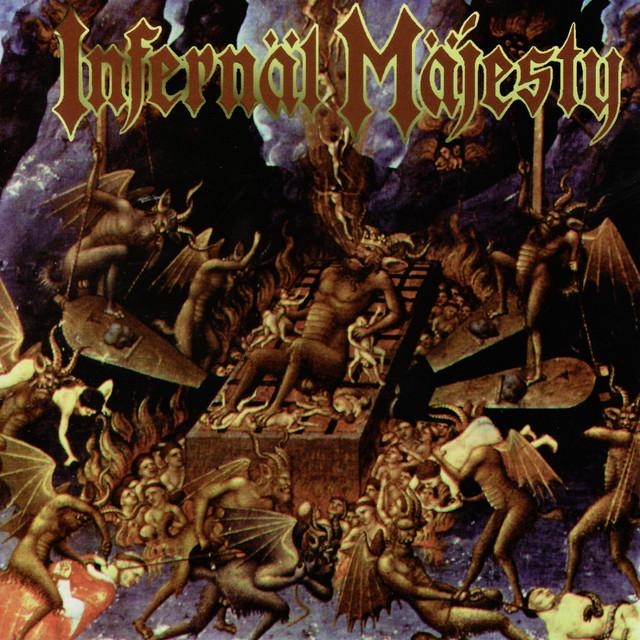
Infernal Majesty

Metal
Thrash Metal
 Viberate Rank: 234992
 Viberate Rank: 234992
 Monthly ListenersFollowers
 Subscribers
 Followers
 Followers
 FansTop Spotify Songs
| Track | 7-Day Streams | |
|---|---|---|
1 | 167 | |
2 | 96 | |
3 | 71 | |
4 | 51 | |
5 | 41 |
Top YouTube VideosMonthly ListenersFeatured in Playlists| Playlist | Followers | |
|---|---|---|
1 | Thrash Metal Up Your Ass Germonio | 6.86K |
2 | Thrash Daniel Höld | 4.50K |
3 | SATANIC BLACK METAL FROM HELL Mike Smith | 2.71K |
4 |  Black/Death/Trash Metal Leeloki | 2.69K |
5 | Trash Metal Classics Francis | 2.54K |
Audience| City | Monthly Listeners | |
|---|---|---|
1 |  | 26 |
2 |  | 25 |
3 |  | 23 |
4 |  | 18 |
5 | | 13 |
See full performance history, audience data, playlist activity, rankings, comparisons, and more in Viberate music analytics. Start with a free trial, then continue with a paid plan.
Infernal Majesty’s Spotify BioOriginally going by the name of Overlord, Toronto thrashers Infernal Majesty formed in 1986 and featured vocalist Chris Bailey, guitarists Kenny Hallman and Steve Terror, bassist Psycopath, and drummer Rick Nemes. A four-song demo was duly recorded and circulated to specialized magazines, eventually finding its way to Roadrunner Records, which chose to sign the band and issued their None Shall Defy debut in 1987. Although it received very positive reviews, yielded a video for the title track, and is still considered a minor classic of technical thrash metal, the album proved to be their last for Roadrunner, which dropped them with no explanation soon after its release. Bailey, Psycopath, and Nemes also left at this time (the last two starting a new band called Castle of Pain) and were replaced by new vocalist Justin (more on him later), bassist Chay McMullen, and drummer Kevin Harrison, but none of the revamped group's demos managed to attract a new record deal. Infernal Majesty… eventually went their separate ways, and Justin went on to grab headlines, when he was charged with slashing a young woman's wrists and drinking her blood! Labeled the "vampire trial," his bizarre behavior earned him seven months in prison and, wonder of wonders, the love of his former victim, with whom he later shacked up! In the meantime, Infernal Majesty (with a returning Chris Bailey) had experienced a resurgence of interest in 1996 when their debut was re-released on CD. And, following a short European touring stint, they scored a new deal with Hypnotic Records and released the Unholier Than Thou album in 1998, only to be swiftly dropped yet again. Unfazed, they self-released the live Chaos in Copenhagen in 1999. ~ Eduardo Rivadavia, Rovi
Viberate is a music analytics platform built for A&Rs, artist managers, labels, booking agents, marketers, and artists.
It helps music professionals track artist growth, analyze audience data, monitor playlist activity, compare artists, follow song performance, and identify opportunities across the music market.
Public artist pages provide a free preview of selected artist data. Paid plans provide access to deeper analytics, historical data, charts, comparisons, playlist tools, exports, alerts, reports, and additional professional features.
Yes. Public Viberate artist pages provide selected artist analytics and music data for free.
Viberate also offers a 7-day free trial of the full platform. A credit card is required to start the trial. The trial includes access to the complete product so users can test deeper artist analytics, historical views, playlist insights, comparisons, charts, exports, alerts, and reporting features before choosing a paid plan.
Viberate provides artist analytics across streaming, playlists, social media, video, radio airplay, songs, and audience markets.
Users can analyze Spotify performance, Spotify and Apple Music playlists, YouTube activity, TikTok and Instagram growth, radio spins, song performance, audience locations, demographics, rankings, and overall artist momentum.
Artist profiles also connect to music charts, similar artists, and comparison tools, helping users benchmark performance and evaluate artists in context.
Viberate updates key artist and track data daily.
For followed artists and tracks, selected data is refreshed multiple times per day. This helps teams monitor playlist changes, streaming movement, audience growth, releases, and campaign performance with more current data.
Update frequency can vary depending on the metric and data source.
Yes. Viberate lets users compare up to five artists side by side across streaming, social media, audience, and engagement metrics.
Users can compare fanbase growth, audience demographics, locations, Spotify performance, social metrics, and other artist data over selected time periods.
Artist comparison can be used for A&R scouting, benchmarking, booking decisions, campaign planning, and evaluating artists with similar audiences or market positions.