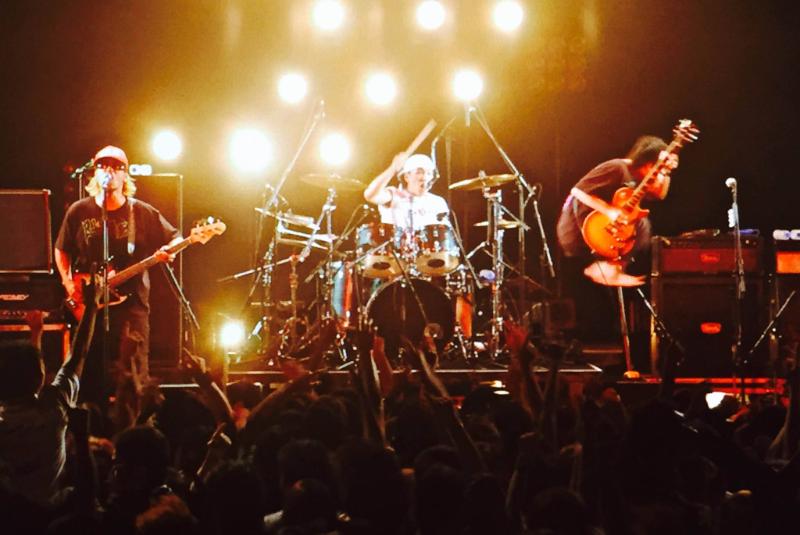
Husking Bee

Punk
Punk Rock
Hardcore Punk
Progressive Rock
 Viberate Rank: 135053
 Viberate Rank: 135053
 Monthly ListenersFollowers
 Subscribers
 Followers
 Followers
 FansTop Spotify Songs
| Track | 7-Day Streams | |
|---|---|---|
1 | 7.42K | |
2 | 3.48K | |
3 | 2.59K | |
4 | 2.57K | |
5 | 2.46K |
Top YouTube Videos| Video | 7-Day Views | |
|---|---|---|
1 | 28 | |
2 | 1 |
Monthly ListenersFeatured in Playlists| Playlist | Followers | |
|---|---|---|
1 |  Punk Japan Spotify | 135.78K |
2 |  STILL PUNK, STILL YOUNG Kazunori Mihara | 4.89K |
3 |  AIRJAM2000世代 / メロコア スカ エアジャム ハイスタ scafull スキャフル ブラフマンbrahman husking bee ハスキン low IQ 01 Hi-STANDARD mine | 2.30K |
4 |  BLUE SPRING (2001) - 青い春 Meo | 2.22K |
5 |  The Sound of J-Rock The Sounds of Spotify | 2.02K |
Audience| City | Monthly Listeners | |
|---|---|---|
1 | | 1.82K |
2 | | 1.18K |
3 | | 1.02K |
4 | | 541 |
5 | | 499 |
See full performance history, audience data, playlist activity, rankings, comparisons, and more in Viberate music analytics. Start with a free trial, then continue with a paid plan.
Husking Bee’s Spotify BioHusking Bee was a Japanese pop-punk/alternative rock band whose sound was characterized by the occasional usage of two vocalists and a frantic rhythm section. The group was popular in Japan and even won some renown in the U.S., but broke up in 2005 after a decade-plus run. Husking Bee was formed in 1994, although only bassist Tetsuya Kudo remained from the initial lineup, which was stabilized in 1995 with the inclusion of drummer Leona Hiramoto and vocalist/guitarist Isobe Masafumi. The trio soon gained enough recognition to record their first full-length ,Grip (1996), and have it produced by the label Pizza of Death of the prominent Japanese punkers Hi-Standard. Their second album, Put on Fresh Paint, was out in 1998, handled in Japan by Inu and Toy's Factory, and getting stateside distribution via Doghouse the next year. Two months prior to its American release, Husking Bee played the Texan SXSW festival, a popular destination for Japanese bands. In 2000 the band expanded to a… quartet, adding the second guitarist Kazuya Hirabayashi, who played on their third album, Four Color Problem, produced by Mark Trombino (blink-182 and Jimmy Eat World). The record was released in both Japan and the U.S., but failed to ignite the charts and became the group's last American release. Being dropped from Doghouse's roster prompted Husking Bee to switch from English to Japanese lyrics, their first song in their native language being "Shinri no Kaze" off the single Autumnal Tints (2001). Their fourth album, The Steady-State Theory (2002), mixed tunes in both languages -- as well as adding acoustic elements and more adrenaline to the songs, and the fifth album, Variandante (2004), was done entirely in Japanese, although Masafumi chalked it up to lack of time, promising to do the lyrics in Italian, which never happened. In 2004, the band became involved with the anime series Beck, about a young rock band, with Hirabayashi performing the singing parts for one of the characters and the Husking Bee's song "Brightest" featured in the series' second soundtrack, Keith, in 2005. After that, however, the band decide to throw in the towel, with the self-explanatory Anthology (2005) summing up their career. Hirabayashi went on to form Fine Lines. ~ Alexey Eremenko, Rovi
Viberate is a music analytics platform built for A&Rs, artist managers, labels, booking agents, marketers, and artists.
It helps music professionals track artist growth, analyze audience data, monitor playlist activity, compare artists, follow song performance, and identify opportunities across the music market.
Public artist pages provide a free preview of selected artist data. Paid plans provide access to deeper analytics, historical data, charts, comparisons, playlist tools, exports, alerts, reports, and additional professional features.
Yes. Public Viberate artist pages provide selected artist analytics and music data for free.
Viberate also offers a 7-day free trial of the full platform. A credit card is required to start the trial. The trial includes access to the complete product so users can test deeper artist analytics, historical views, playlist insights, comparisons, charts, exports, alerts, and reporting features before choosing a paid plan.
Viberate provides artist analytics across streaming, playlists, social media, video, radio airplay, songs, and audience markets.
Users can analyze Spotify performance, Spotify and Apple Music playlists, YouTube activity, TikTok and Instagram growth, radio spins, song performance, audience locations, demographics, rankings, and overall artist momentum.
Artist profiles also connect to music charts, similar artists, and comparison tools, helping users benchmark performance and evaluate artists in context.
Viberate updates key artist and track data daily.
For followed artists and tracks, selected data is refreshed multiple times per day. This helps teams monitor playlist changes, streaming movement, audience growth, releases, and campaign performance with more current data.
Update frequency can vary depending on the metric and data source.
Yes. Viberate lets users compare up to five artists side by side across streaming, social media, audience, and engagement metrics.
Users can compare fanbase growth, audience demographics, locations, Spotify performance, social metrics, and other artist data over selected time periods.
Artist comparison can be used for A&R scouting, benchmarking, booking decisions, campaign planning, and evaluating artists with similar audiences or market positions.