Hotel Books

Rock
Alternative Rock
Alternative Hip Hop
 Viberate Rank: 109917
 Viberate Rank: 109917
 Monthly ListenersFollowers
 Subscribers
 Followers
 Followers
 FansTop Spotify Songs
| Track | 7-Day Streams | |
|---|---|---|
1 | 16.11K | |
2 | 5.51K | |
3 | 4.07K | |
4 | 3.25K | |
5 | 3.06K |
Top YouTube VideosMonthly ListenersFeatured in Playlists| Playlist | Followers | |
|---|---|---|
1 |  spoken word, poetry etc. shona oliver | 26.74K |
2 |  Math rock/midwest emo Jusu | 19.61K |
3 |  Punk/Rock Ricki Castanieto | 18.40K |
4 |  Spoken Word Music / Poetry lienneay | 16.67K |
5 |  sad andrea is sad Andrea Russett | 15.73K |
Audience| City | Monthly Listeners | |
|---|---|---|
1 | | 965 |
2 | | 852 |
3 | | 809 |
4 | | 728 |
5 | | 672 |
See full performance history, audience data, playlist activity, rankings, comparisons, and more in Viberate music analytics. Start with a free trial, then continue with a paid plan.
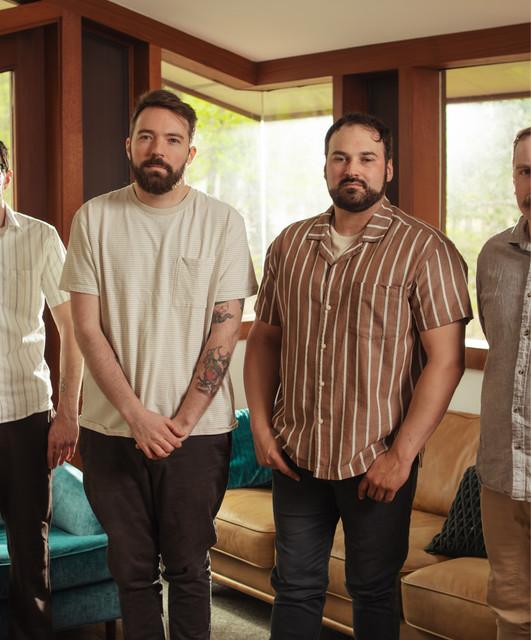
Hotel Books’ Spotify BioFormed in 2011 in Porterville, California, Hotel Books is the project of spoken word poet Cameron Smith. Delivering his intense, cathartic poetry over a musical blend of ambient, post-hardcore, and emo, Smith and his bandmates have toured extensively throughout the U.S., Europe, and Australia. Smith was drawn to both the fringe aspect of spoken word poetry and to the chance to focus on writing lyrics unhindered by melody. A devout Christian, he sees Hotel Books as a way to tell his personal story without excluding nonbelievers. Employing a rotating cast of bandmembers throughout the years, they recorded a series of four EPs beginning with Call Me Human in late 2011, all released on Smith's own Dead Letters Collective label. After signing with InVogue Records in 2014, the band released the double EP I'm Almost Happy Here, But I Never Feel at Home in July of that year. Hotel Books' first full-length, Run Wild, Young Beauty, and Smith's poetry book Most Nights, I Wish It Was You were both… released via InVogue in 2015. The book acted as a sort of companion piece to Run Wild, Young Beauty, containing poems derived from both new and old Hotel Books songs as well as short stories from 2011. A follow-up album, Run Wild, Stay Alive, was released the following summer. Smith issued his third LP, Equivalency, in 2017. ~ Timothy Monger, Rovi
Viberate is a music analytics platform built for A&Rs, artist managers, labels, booking agents, marketers, and artists.
It helps music professionals track artist growth, analyze audience data, monitor playlist activity, compare artists, follow song performance, and identify opportunities across the music market.
Public artist pages provide a free preview of selected artist data. Paid plans provide access to deeper analytics, historical data, charts, comparisons, playlist tools, exports, alerts, reports, and additional professional features.
Yes. Public Viberate artist pages provide selected artist analytics and music data for free.
Viberate also offers a 7-day free trial of the full platform. A credit card is required to start the trial. The trial includes access to the complete product so users can test deeper artist analytics, historical views, playlist insights, comparisons, charts, exports, alerts, and reporting features before choosing a paid plan.
Viberate provides artist analytics across streaming, playlists, social media, video, radio airplay, songs, and audience markets.
Users can analyze Spotify performance, Spotify and Apple Music playlists, YouTube activity, TikTok and Instagram growth, radio spins, song performance, audience locations, demographics, rankings, and overall artist momentum.
Artist profiles also connect to music charts, similar artists, and comparison tools, helping users benchmark performance and evaluate artists in context.
Viberate updates key artist and track data daily.
For followed artists and tracks, selected data is refreshed multiple times per day. This helps teams monitor playlist changes, streaming movement, audience growth, releases, and campaign performance with more current data.
Update frequency can vary depending on the metric and data source.
Yes. Viberate lets users compare up to five artists side by side across streaming, social media, audience, and engagement metrics.
Users can compare fanbase growth, audience demographics, locations, Spotify performance, social metrics, and other artist data over selected time periods.
Artist comparison can be used for A&R scouting, benchmarking, booking decisions, campaign planning, and evaluating artists with similar audiences or market positions.