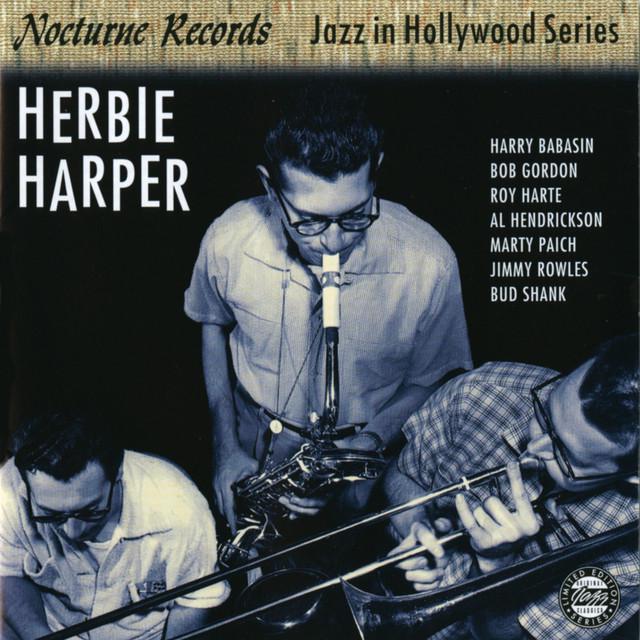
Herbie Harper

Jazz
Big band Jazz
Smooth Jazz
 Viberate Rank: 528393
 Viberate Rank: 528393
 Monthly ListenersFollowers
 Subscribers
 Followers
 Followers
 FansTop Spotify Songs
| Track | 7-Day Streams | |
|---|---|---|
1 | 1.30K | |
2 | 1.30K | |
3 | 379 | |
4 | 221 | |
5 | 69 |
Top YouTube VideosMonthly ListenersFeatured in Playlists| Playlist | Followers | |
|---|---|---|
1 |  Detective Jazz/ Crime Jazz/ Neo-Noir Jazz Braulio | 57.64K |
2 |  Noir Detective Outis | 33.20K |
3 |  Film noir | Jazz noir - Quiet dark jazz - Contemporary Post-bob The Playlist Factory | 26.59K |
4 |  Dark Jazz & Jazz Noir Jon Chang | 23.72K |
5 |  LINDY HOP Dance Music Li Smuki | 22.75K |
Audience| City | Monthly Listeners | |
|---|---|---|
1 | | 60 |
2 |  | 46 |
3 | | 44 |
4 |  | 44 |
5 | | 42 |
See full performance history, audience data, playlist activity, rankings, comparisons, and more in Viberate music analytics. Start with a free trial, then continue with a paid plan.
Herbie Harper’s Spotify BioA fine trombonist active in the West Coast jazz scene of the 1950s, Herbie Harper spent most of his playing time after 1955 as a studio musician, although he occasionally re-emerged in the jazz world. After playing with Charlie Spivak's Orchestra (1944-1947), Harper settled in Los Angeles, where he gigged with Teddy Edwards and had short-time associations with Benny Goodman, Charlie Barnet, and Stan Kenton (1950). In addition to recording in the 1950s with June Christy, Kenton, Maynard Ferguson, Benny Carter, and Barnet, Herbie Harper led five albums of his own during 1954-1957 for Nocturne, Tampa, Bethlehem, and Mode. He mostly worked in the studios afterwards, but emerged to play with Bob Florence's big band and, in the 1980s, he recorded for SeaBreeze and with Bill Perkins for VSOP. ~ Scott Yanow, Rovi
Viberate is a music analytics platform built for A&Rs, artist managers, labels, booking agents, marketers, and artists.
It helps music professionals track artist growth, analyze audience data, monitor playlist activity, compare artists, follow song performance, and identify opportunities across the music market.
Public artist pages provide a free preview of selected artist data. Paid plans provide access to deeper analytics, historical data, charts, comparisons, playlist tools, exports, alerts, reports, and additional professional features.
Yes. Public Viberate artist pages provide selected artist analytics and music data for free.
Viberate also offers a 7-day free trial of the full platform. A credit card is required to start the trial. The trial includes access to the complete product so users can test deeper artist analytics, historical views, playlist insights, comparisons, charts, exports, alerts, and reporting features before choosing a paid plan.
Viberate provides artist analytics across streaming, playlists, social media, video, radio airplay, songs, and audience markets.
Users can analyze Spotify performance, Spotify and Apple Music playlists, YouTube activity, TikTok and Instagram growth, radio spins, song performance, audience locations, demographics, rankings, and overall artist momentum.
Artist profiles also connect to music charts, similar artists, and comparison tools, helping users benchmark performance and evaluate artists in context.
Viberate updates key artist and track data daily.
For followed artists and tracks, selected data is refreshed multiple times per day. This helps teams monitor playlist changes, streaming movement, audience growth, releases, and campaign performance with more current data.
Update frequency can vary depending on the metric and data source.
Yes. Viberate lets users compare up to five artists side by side across streaming, social media, audience, and engagement metrics.
Users can compare fanbase growth, audience demographics, locations, Spotify performance, social metrics, and other artist data over selected time periods.
Artist comparison can be used for A&R scouting, benchmarking, booking decisions, campaign planning, and evaluating artists with similar audiences or market positions.