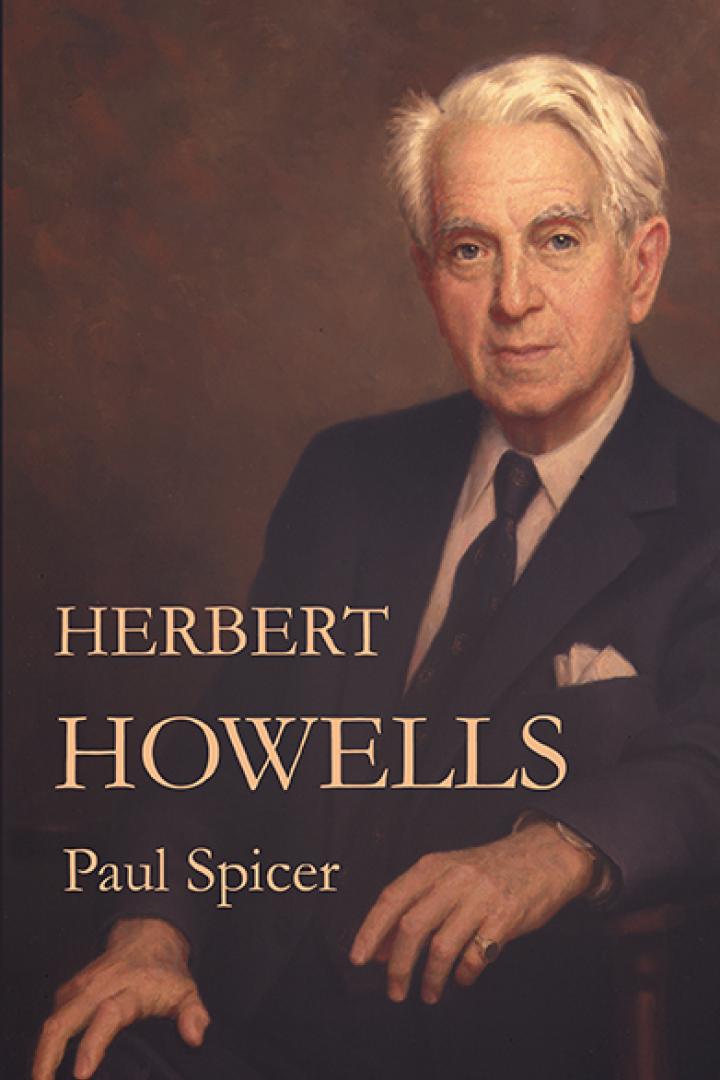
Herbert Howells

Classical
Classical Crossover
Choral
 Viberate Rank: 223308
 Viberate Rank: 223308
 Monthly ListenersFollowers
 Subscribers
 Followers
 Followers
 FansTop Spotify Songs
| Track | 7-Day Streams | |
|---|---|---|
1 | 6.76K | |
2 | 2.29K | |
3 | 1.28K | |
4 | 1.12K | |
5 | 835 |
Top YouTube VideosMonthly ListenersFeatured in Playlists| Playlist | Followers | |
|---|---|---|
1 |  Easy Listening Classical For Study, Work, Relaxing, Chillout, Anything But Serious Listening Ulysses' Classical | 99.25K |
2 |  Traditional Church Hymns Ethan West | 29.14K |
3 | Ave Maria Nick Soon | 17.10K |
4 |  Church Music/Choirs lvoegeli2000 | 15.48K |
5 |  Sad,very sad, classical music Peer Wijntjes | 12.85K |
Audience| City | Monthly Listeners | |
|---|---|---|
1 | | 2.75K |
2 | | 553 |
3 |  | 438 |
4 | | 386 |
5 |  | 382 |
See full performance history, audience data, playlist activity, rankings, comparisons, and more in Viberate music analytics. Start with a free trial, then continue with a paid plan.
Herbert Howells’ Spotify BioHerbert Howells decided at a young age that he wanted to compose music and then sought out musical training. His most important teacher was the cathedral organist at Gloucester, Herbert Brewer, and he became Brewer's assistant. At the age of 20, he entered and won an open scholarship competition at the Royal College of Music.
His main teachers were Charles Wood in counterpoint and Charles Villiers Stanford in composition. He is said to have been Stanford's favorite pupil and Stanford conducted Howells' Piano concerto No. 1 at a Queen's Hall concert in 1913. Meanwhile, Howells' Mass in Dorian Mode was sung in Westminster Cathedral. In 1916, his piano quintet became the first work to be published under the Carnegie Trust.
He obtained a position as a sub-organist at Salisbury Cathedral, but had to give it up because of ill health, which had already kept him out of military service during World War I. He was not expected to live, but did recover and in 1920 was able to resume his career. He… started teaching composition at the Royal College of Music in 1920.
His compositional style quickly emerged: it is in the tradition of modal, folk-based music that is sometimes called "English pastoralist," continuing the trends of Elgar and Ralph Vaughan Williams. His imagination was often stimulated by particular places and by people he knew. This holds true even for his large body of church music, which was not inspired by religious sentiments ("I am not a religious man any more than Ralph was," he once said). It is probable that he wrote so much church music simply because he liked choral writing and his style is rich and melodic.
Although he wrote a substantial amount of fine instrumental and orchestral music, his choral and other vocal music is considered the work most likely to keep his memory alive. His masterwork is usually considered to be the Hymnus paradisi, a quasi-requiem he wrote out of the grief suffered when he lost his nine-year-old son in 1938. It is a visionary work, with the kind of deep but quiet feeling that is also associated with Frederick Delius.
He received other teaching appoinments as well. After Holst's death in 1934, Howells was chosen to succeed him as director of music at St. Paul's School and in 1954, he was named King Edward VII Professor of Music at the University of London. He was made Commander of the British Empire in 1953 by Queen Elizabeth II. He retired from his St. Paul's position and the University of London post in 1964, but retained his professorship at the Royal College of Music and held classes there almost right up to his death at the age of 90.
Viberate is a music analytics platform built for A&Rs, artist managers, labels, booking agents, marketers, and artists.
It helps music professionals track artist growth, analyze audience data, monitor playlist activity, compare artists, follow song performance, and identify opportunities across the music market.
Public artist pages provide a free preview of selected artist data. Paid plans provide access to deeper analytics, historical data, charts, comparisons, playlist tools, exports, alerts, reports, and additional professional features.
Yes. Public Viberate artist pages provide selected artist analytics and music data for free.
Viberate also offers a 7-day free trial of the full platform. A credit card is required to start the trial. The trial includes access to the complete product so users can test deeper artist analytics, historical views, playlist insights, comparisons, charts, exports, alerts, and reporting features before choosing a paid plan.
Viberate provides artist analytics across streaming, playlists, social media, video, radio airplay, songs, and audience markets.
Users can analyze Spotify performance, Spotify and Apple Music playlists, YouTube activity, TikTok and Instagram growth, radio spins, song performance, audience locations, demographics, rankings, and overall artist momentum.
Artist profiles also connect to music charts, similar artists, and comparison tools, helping users benchmark performance and evaluate artists in context.
Viberate updates key artist and track data daily.
For followed artists and tracks, selected data is refreshed multiple times per day. This helps teams monitor playlist changes, streaming movement, audience growth, releases, and campaign performance with more current data.
Update frequency can vary depending on the metric and data source.
Yes. Viberate lets users compare up to five artists side by side across streaming, social media, audience, and engagement metrics.
Users can compare fanbase growth, audience demographics, locations, Spotify performance, social metrics, and other artist data over selected time periods.
Artist comparison can be used for A&R scouting, benchmarking, booking decisions, campaign planning, and evaluating artists with similar audiences or market positions.