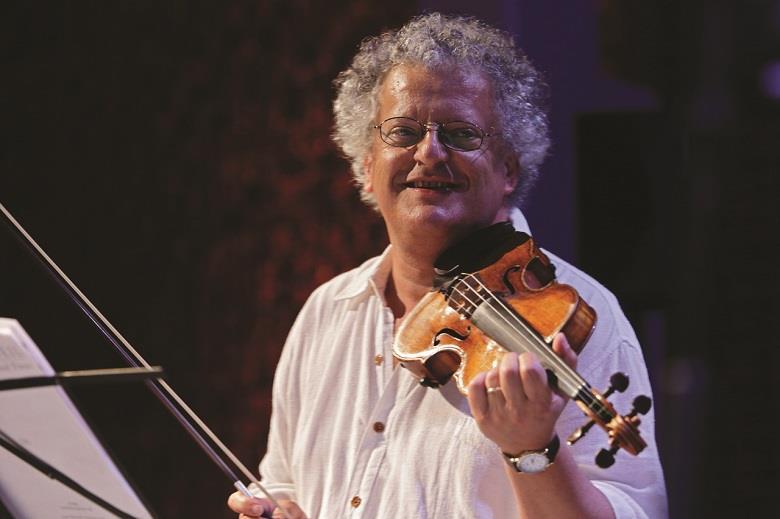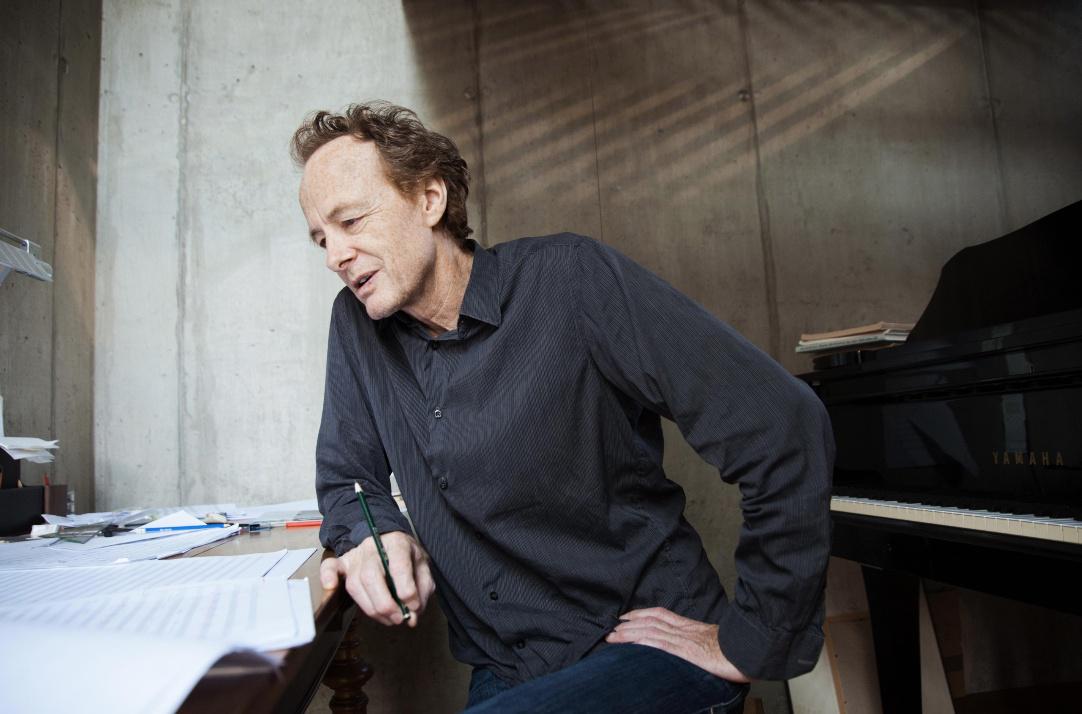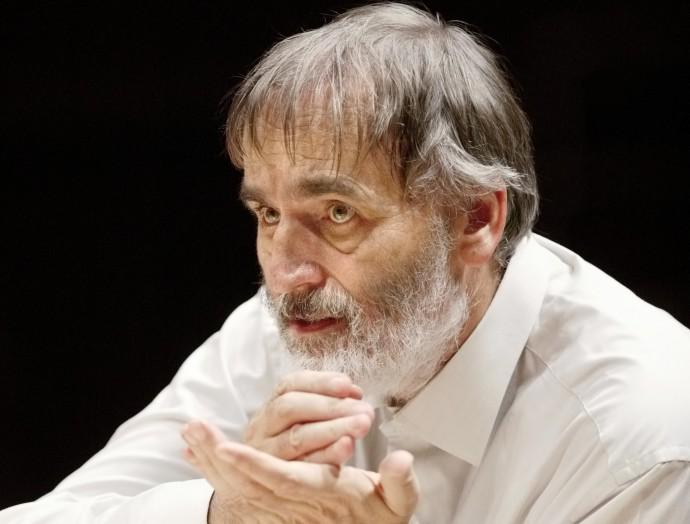
Helmut Lachenmann

Classical
Classical Crossover
 Viberate Rank: 400086
 Viberate Rank: 400086
 Monthly ListenersFollowers
 Subscribers
 Followers
 Followers
 FansTop Spotify SongsTop YouTube VideosMonthly ListenersFeatured in Playlists
| Playlist | Followers | |
|---|---|---|
1 |  The Sound of Everything The Sounds of Spotify | 53.81K |
2 |  Danny L Harle's HUGE PLAYLIST Danny L Harle | 13.97K |
3 |  ECM Records: 1001 - 1999 Ulysses' Classical | 6.46K |
4 |  Reflektor Viertausendhertz | 4.38K |
5 |  An Anthology Of Noise And Electronic Music Vols 1-7 mickydazzler | 3.85K |
Audience| City | Monthly Listeners | |
|---|---|---|
1 | | 40 |
2 |  | 28 |
3 |  | 26 |
4 |  | 22 |
5 |  | 16 |
See full performance history, audience data, playlist activity, rankings, comparisons, and more in Viberate music analytics. Start with a free trial, then continue with a paid plan.
Helmut Lachenmann’s Spotify Bio"Expression is created on the reverse face of that on which the composer is working...destruction, deflation, and disintegration. But during this process expressive energy radiates out in the first instance like a creative serenity -- freedom even." -- Helmut Lachenmann
To scratch the grain of one's own voice, to perpetually resist and violate the habitual, to defy nature, only to retrieve, redeem, and reinvent it through that defiance: this strangely antithetical strategy has fueled German composer Helmut Lachenmann's imagination for more than 30 years now. Some have described Lachenmann as a great ironist, occupying opposite perspectives at once; others like Richard Toop have even found in Lachenmann a musical masochist, "denying [himself] what [he] innately loves without seeking to deny the love itself" -- though Lachenmann himself has confessed the desire to "deny denial" as well. But whatever his stance, Lachenmann's music has been a vital voice in later twentieth-century Europe,… one tirelessly driven to reinvent musical sounds, meanings, and notational and performance techniques. The manner in which Lachenmann achieves his results, by working "on the reverse face of expression," is thoroughly individual, but has formidable literary and philosophical precedents -- such as Theodor Adorno's advice that "the splinter in your eye is your best defense," or Kafka's obsession with "that self-suiciding art." For Lachenmann, "composing is always deconstructing in a new way," a conflicted act of liberating and imprisoning sounds which ultimately seeks to purify and cast them anew.
Helmut Friedrich Lachenmann was born in Stuttgart on November 27, 1935, into a family of evangelical ministers. His talent on the piano and his precocious ear were noticed early, and eventually he went on to study composition with Johann Nepomuk David in Stuttgart. In 1957 Lachenmann attended the Darmstadt Summer Music Course, the modern music mecca of the day. There he met the composer Luigi Nono, who would become a tremendous influence; it was Nono who laid in Lachenmann's work the seed of political and social protest, of "music with a message." At first Lachenmann's "message" and method still involved "structure as a means to expressive ends"; hence his Souvenir (1941) for 41 instruments, Wiegenmusik (1963) for piano, and the String Trio of 1965.
But around this time, an inversion in Lachenmann's thinking took root: structure as a means to expressive ends became structure as an acute expressive device; sounds were no longer abstract expression or symbolic of ideals, but rather the results of physical effort. Lachenmann wanted "the manner in which [sounds] are generated [to be] at least as important as the resultant acoustic qualities themselves...hear the conditions under which a sound- or noise-action is carried out...hear what materials and energies are involved and what resistance is encountered."
Hence a radical turn soon after: 1968's temA for flute, mezzo-soprano, and cello is a sublime, strange struggle with noise; sounds are not "expressive," or rather their "code for use" has been violated -- but in the process the means of making sound become terribly expressive, both dire and astonishingly intimate. Lachenmann pursued his "botanical experiments" with solo instruments (for example, in Pression for cello and Guiro for piano, in which the pianist plays not a single "note") and chamber groups (Trio fluido and Gran torso for String Quartet). But soon the composer began to play this tactic of radical re-hearing towards the very institution of classical music itself -- the "aesthetic apparatus" of ideologies controlling taste and investment. In works like Tanzsuite mit Deutschlandlied, Ausklang, and Staub, Lachenmann aggressively confronts not just the means of sound-production, but the foundations of musical history itself.
Viberate is a music analytics platform built for A&Rs, artist managers, labels, booking agents, marketers, and artists.
It helps music professionals track artist growth, analyze audience data, monitor playlist activity, compare artists, follow song performance, and identify opportunities across the music market.
Public artist pages provide a free preview of selected artist data. Paid plans provide access to deeper analytics, historical data, charts, comparisons, playlist tools, exports, alerts, reports, and additional professional features.
Yes. Public Viberate artist pages provide selected artist analytics and music data for free.
Viberate also offers a 7-day free trial of the full platform. A credit card is required to start the trial. The trial includes access to the complete product so users can test deeper artist analytics, historical views, playlist insights, comparisons, charts, exports, alerts, and reporting features before choosing a paid plan.
Viberate provides artist analytics across streaming, playlists, social media, video, radio airplay, songs, and audience markets.
Users can analyze Spotify performance, Spotify and Apple Music playlists, YouTube activity, TikTok and Instagram growth, radio spins, song performance, audience locations, demographics, rankings, and overall artist momentum.
Artist profiles also connect to music charts, similar artists, and comparison tools, helping users benchmark performance and evaluate artists in context.
Viberate updates key artist and track data daily.
For followed artists and tracks, selected data is refreshed multiple times per day. This helps teams monitor playlist changes, streaming movement, audience growth, releases, and campaign performance with more current data.
Update frequency can vary depending on the metric and data source.
Yes. Viberate lets users compare up to five artists side by side across streaming, social media, audience, and engagement metrics.
Users can compare fanbase growth, audience demographics, locations, Spotify performance, social metrics, and other artist data over selected time periods.
Artist comparison can be used for A&R scouting, benchmarking, booking decisions, campaign planning, and evaluating artists with similar audiences or market positions.