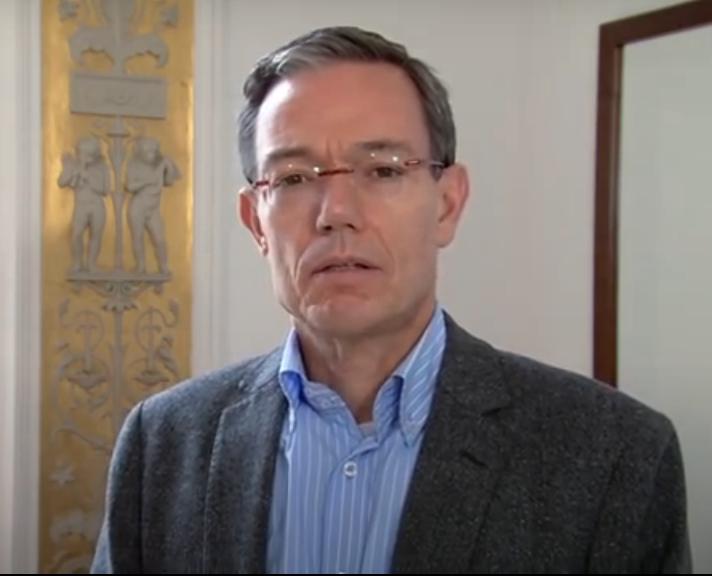
Helmut Krebs

Classical
Opera
 Viberate Rank: 621225
 Viberate Rank: 621225
 Monthly ListenersFollowers
 Subscribers
 Followers
 Followers
 FansTop Spotify Songs
| Track | 7-Day Streams | |
|---|---|---|
1 | 53 | |
2 | 53 | |
3 | 40 | |
4 | 22 | |
5 | 19 |
Top YouTube VideosMonthly ListenersFeatured in Playlists| Playlist | Followers | |
|---|---|---|
1 |  Mozart - Complete Chronological Catalogue based on Köchel catalogue K6 Ulysses' Classical | 9.54K |
2 |  Deutsche Grammophon hagelsrum | 4.68K |
3 |  Alex Ross's The Rest is Noise aidanosu | 2.70K |
4 | Deutsche Grammophon classifyapp | 2.35K |
5 | Operette / Operetta elke_juergen | 1.94K |
Audience| City | Monthly Listeners | |
|---|---|---|
1 | | 24 |
2 | | 11 |
3 |  | 11 |
4 | | 10 |
5 |  | 9 |
See full performance history, audience data, playlist activity, rankings, comparisons, and more in Viberate music analytics. Start with a free trial, then continue with a paid plan.
Helmut Krebs’ Spotify BioHelmut Krebs is one of the most important German tenors of the twentieth century. During his remarkably long career he retained a remarkably durable and unusually wide range and was a leader in the early music movement.
Authorities differ as to the place of his birth. His parents were from the German city of Dortmund, but it does appear he was born in Aachen, the name of Aix-la-Chapelle when Alsace was occupied by Germany, but which emerged from World War I back in French hands. It is likely that when he parents returned to their native city (80 miles northeast of Aachen) they registered him there to establish that Helmut was German by birth.
Helmut studied at the Dortmund Conservatory and when his family moved to Berlin while he was still a teenager he entered the Berlin Hochschule für Musik, where he was taught by Dr. Paul Lühmann. It was a Swiss tenor, Max Meili, who inspired Krebs to develop an unusual vocal technique that extended his range into the countertenor range without using… the falsetto voice. (Later, when singing in this range as the early music movement developed, Krebs insisted that falsetto singing -- which was the established norm for countertenors -- was musicologically incorrect. This view is now the majority view among early music scholars.)
He made his operatic debut in 1937 at the Grosse Volksoper in Berlin as Monostatos in The Magic Flute. He made his debut at the Städtische Oper Berlin in 1938. His career was interrupted in 1939 when he was called up for military service.
He survived World War II and made a second debut on the stage of the Düsseldorf Spieloper, singing such roles as Fenton in Nicolai's Merry Wives of Windsor and Chateauneuf in Lortzing's Zar und Zimmermann. During the 1947 - 1948 season, he was given a test engagement at the Berlin Staatsoper (the city's leading company) as David in Die Meistersinger. Conductor Joseph Keilberth engaged him as a member of the company. If one dates Krebs' membership in the Staatsoper from 1947, he remained a member of the company for over 40 years, one of the longest careers any singer has had at any major opera house.
It is pointless to list the names of the great international opera houses where he appeared as a guest artist, nor many of the operas in which he appeared. He could sing leading roles, but his unusual vocal coloration and high voice made him especially suitable for non-heroic tenor roles. He had an adventurous repertory, and was one of the first to sing music of Benjamin Britten in Germany. (He created, for instance, the German version of the title role of Albert Herring.) He sang in the first German presentation of Arnold Schoenberg's Moses und Aron as Aron in 1954, and was particularly known for his portrayal of the comic role of Prof. von Mucker in Henze's The Young Lord.
Early in his career he formed an personal and artistic friendship with the great baritone Dietrich Fischer-Dieskau and the two often performed together, often memorably as in performances of Bach cantatas and Lieder programs.
Krebs was famous for his portrayal of Mozart's operatic roles and his performances of Mozart's concert arias. He had a particular interest in the music of Heinrich Schütz (whose birthday Krebs shared), and sang in virtually all the choral works of Johann Sebastian Bach with tenor solo parts. During his lifetime he recorded often for the Archiv early music label. He has also been an esteemed teacher and was made a Kammersänger of Vienna in 1963.
Viberate is a music analytics platform built for A&Rs, artist managers, labels, booking agents, marketers, and artists.
It helps music professionals track artist growth, analyze audience data, monitor playlist activity, compare artists, follow song performance, and identify opportunities across the music market.
Public artist pages provide a free preview of selected artist data. Paid plans provide access to deeper analytics, historical data, charts, comparisons, playlist tools, exports, alerts, reports, and additional professional features.
Yes. Public Viberate artist pages provide selected artist analytics and music data for free.
Viberate also offers a 7-day free trial of the full platform. A credit card is required to start the trial. The trial includes access to the complete product so users can test deeper artist analytics, historical views, playlist insights, comparisons, charts, exports, alerts, and reporting features before choosing a paid plan.
Viberate provides artist analytics across streaming, playlists, social media, video, radio airplay, songs, and audience markets.
Users can analyze Spotify performance, Spotify and Apple Music playlists, YouTube activity, TikTok and Instagram growth, radio spins, song performance, audience locations, demographics, rankings, and overall artist momentum.
Artist profiles also connect to music charts, similar artists, and comparison tools, helping users benchmark performance and evaluate artists in context.
Viberate updates key artist and track data daily.
For followed artists and tracks, selected data is refreshed multiple times per day. This helps teams monitor playlist changes, streaming movement, audience growth, releases, and campaign performance with more current data.
Update frequency can vary depending on the metric and data source.
Yes. Viberate lets users compare up to five artists side by side across streaming, social media, audience, and engagement metrics.
Users can compare fanbase growth, audience demographics, locations, Spotify performance, social metrics, and other artist data over selected time periods.
Artist comparison can be used for A&R scouting, benchmarking, booking decisions, campaign planning, and evaluating artists with similar audiences or market positions.